Portable record player – the Oscar goes to Teppaz… the sound of modernity … and freedom … the sound of the Sixties …
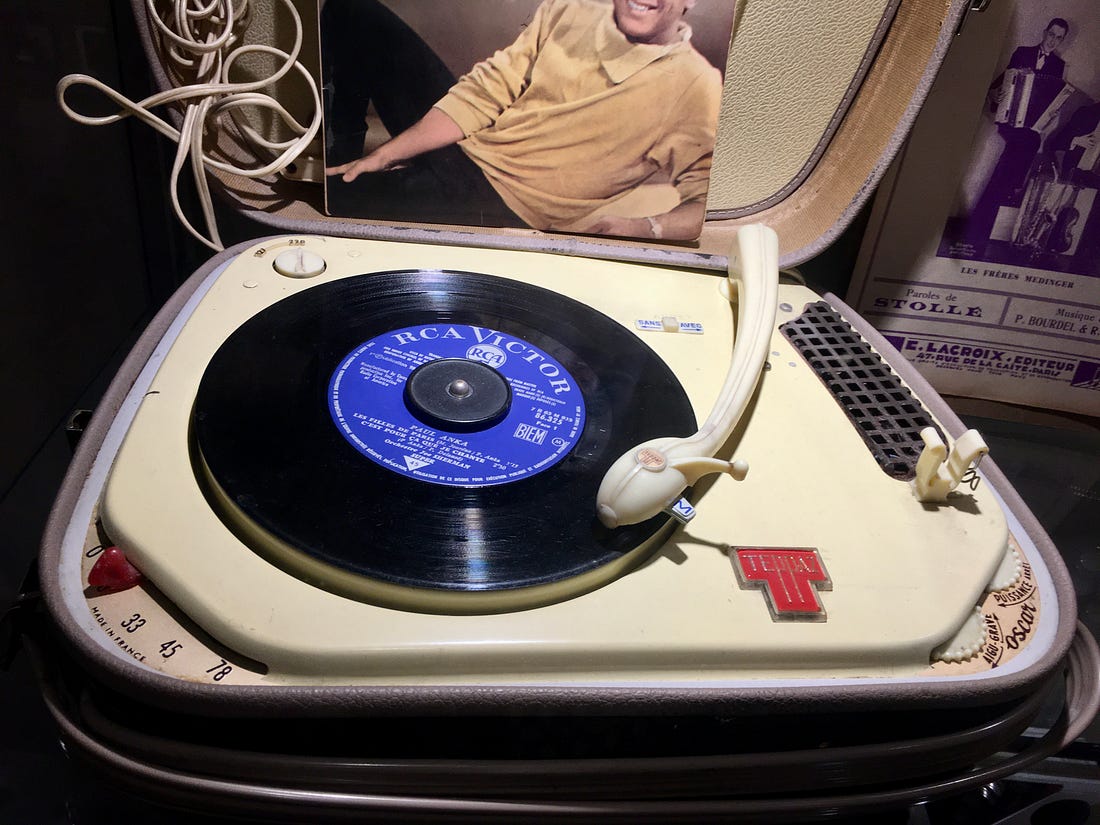
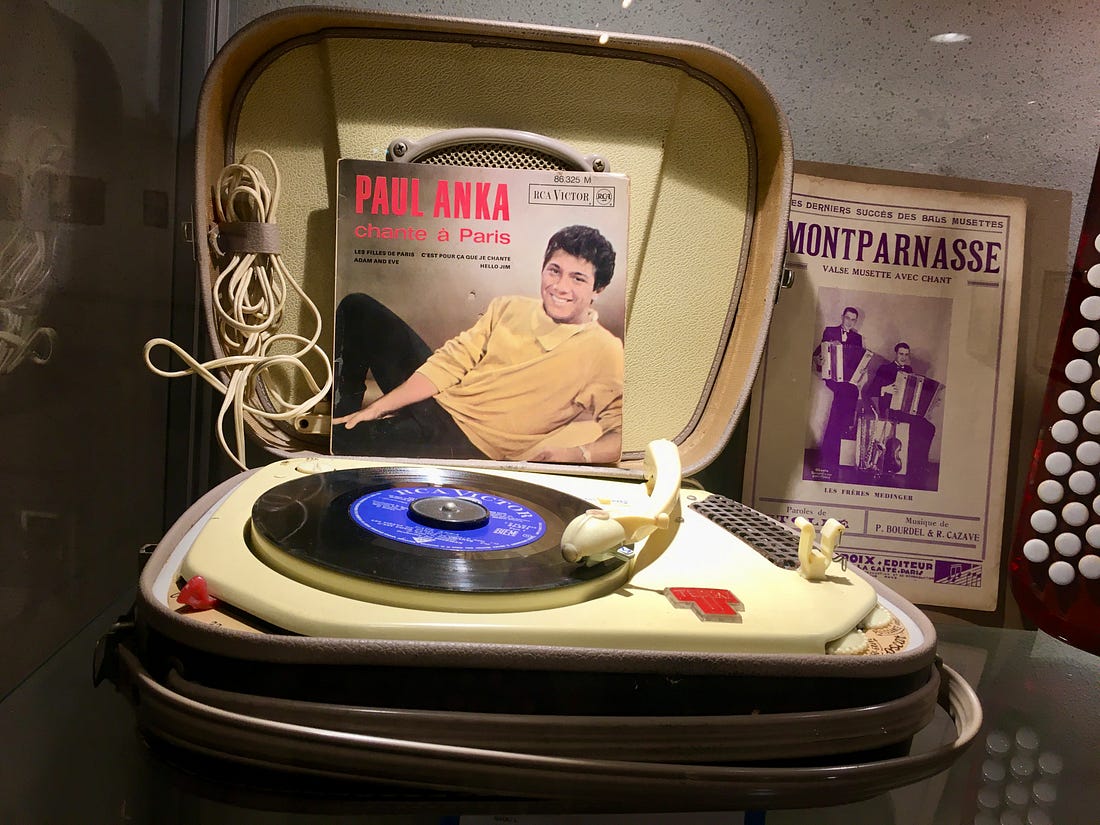
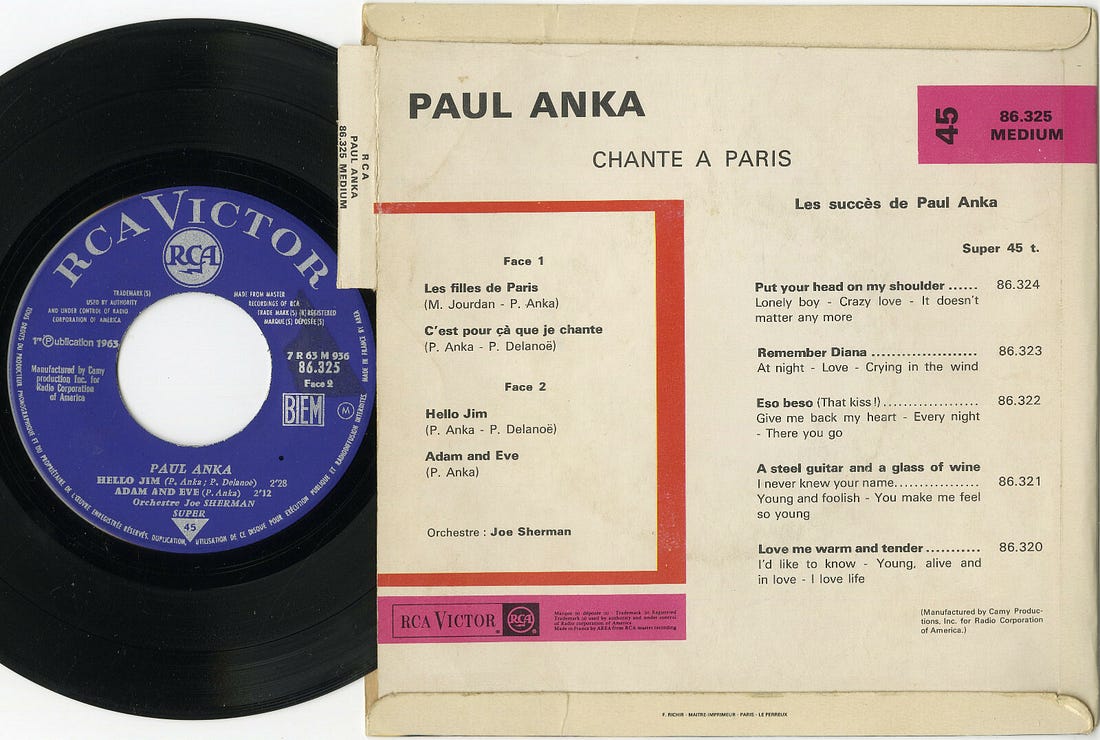
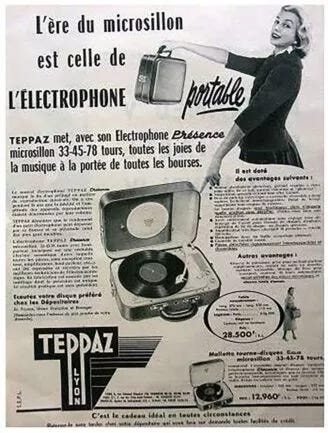
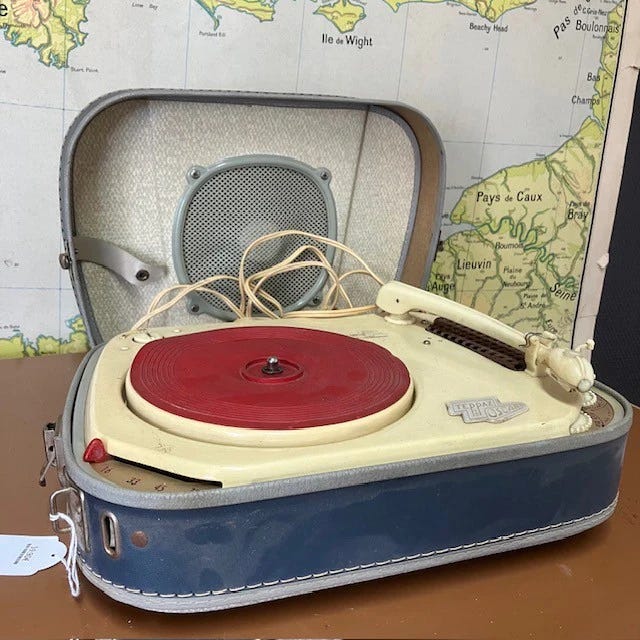
For only one day in my life, 50 years ago, I saw, touched, and heard the most incredible music machine of my life. I saw it for the second time yesterday, in April 2025, and I was just as mesmerized. But it was behind a glass exhibition case – untouchable and silent – with a 1963 Paul Anka record on the turntable. The Oscar for Best French Export Company in 1962 goes to Marcel Teppaz and his manufacturing business, called Teppaz. His most successful product was the “Oscar” model of his innovative portable record player, the medium for listening to vinyl microgroove records. It was a small briefcase with a turntable – the “Portable Teppaz” – which became an icon of postwar innovation and pop culture. In the 1950s and 1960s, few objects captured the spirit of youthful freedom and musical exploration in France like the Portable Teppaz Oscar. The Portable Teppaz Oscar was one of the first truly portable record players, allowing music lovers across France to bring their records into parks, onto riverbanks, or to gatherings in cafés and apartments. It democratized music listening at a time when access to records was becoming more affordable. Marcel Teppaz, born on 26 May 1908 in Serrières-de-Briord, France, came from a family that manufactured spinning mill mechanisms. Marcel established his own radio and amplifier equipment assembly company in 1931 on Rue Jarente in Lyon. In 1937, he launched a new amplifier business with 30 people, moving into larger premises. During the Second World War (1939-1945), the company closed and Teppaz entered the army. He was captured as a prisoner-of-war until his escape, although I couldn’t find details of this. In 1941, he had the idea of replacing the hand-cranked phonograph drive with a small electric motor which led to the assembly of the record player from 1952. In 1952, approximately 600 employees on the assembly lines on Boulevard de la Croix-Rousse in Lyon put together the 1,500 parts, selling 600,000 devices. The Portable Teppaz Oscar was manufactured from 1958 to 1964, with the Oscar II model manufactured from 1964 to 1968. The first compact, lightweight Portable Teppaz Oscar was a creamy-white Bakelite base and turntable with built-in speakers in a small briefcase with rounded corners, a domed lid, and a handle. The Oscar II was square-shaped. It had a tube amplifier consisting of a UCL 82 and a UY 85 – standard and reliable for the time. The electric motor operated at 220V so no transformer was needed. It played three types of black, pressed vinyl records based on the revolutions per minute (rpm) – the speed that the record turned – but could play all record speeds: 16, 33, 45, and 78 rpms (78 rpm records ceased manufacture in 1959). - 45 rpm records (with a single song on each side): 7 inches (18 centimetres). - EP extended play records (with two or three songs on each side but up to eight tracks at 45 rpm): 7 inches (18 centimetres). - LP long plays (a full album at 33 rpm): 12 inches (30 centimetres). To be accurate, the Teppaz portable record player could be carried like a briefcase but did not work while you were walking down the street with it. It was portable in the sense that it could be easily moved from place to place — to a friend's house, a park, a picnic, etc. To play a record, the device needed to be placed on a stable surface like a table, bench, or the ground. Records are sensitive to vibration and movement. If you tried to walk while playing the record, the needle (stylus) would skip or scratch the disc — or even damage both the needle and the vinyl. So, it was portable to carry but stationary to play. The Oscar model sold millions of units locally and internationally, a true success until 1970. Marcel Teppaz died on 15 August 1964 in Saint-Alban, France, from a heart attack. After his death, his wife and son-in-law continued the company's operations until 1974. Today, the Teppaz Oscar remains a piece of vintage French design — a charming symbol of how music moved from the concert hall and cabaret to become a personal, portable companion. There is now a resurrection of the portable record player due to the “vinyl revival.” The new models are cheap and convenient but the sound fidelity is not high – but neither were the original Teppaz models. Many companies are reproducing the concept – mainly for fun – and most still re-create the briefcase design, while some are retro 70s-style models, or more creative. Although it took me 50 years to re-see the innovative French Portable Teppaz Oscar record player, after living in France, I had never forgotten its charm. It was the sound of freedom. And for me, it was modern, so excitingly modern.
Can’t see the whole article? Want to view the original article? Want to view more articles? Go to Martina’s Substack: The Stories in You and Me MY PARIS WEBSITE AND ALL THINGS PARISIAN Photographer: Martina Nicolls PIP DECKS, the fun and engaging how-to guides for business. You're currently a free subscriber to The Stories in You and Me . For the full experience, upgrade your subscription.
|
Tuesday, 29 April 2025
Portable record player – the Oscar goes to Teppaz







Monday, 28 April 2025
Left Bank in Song: Parisian history through lyrics and music
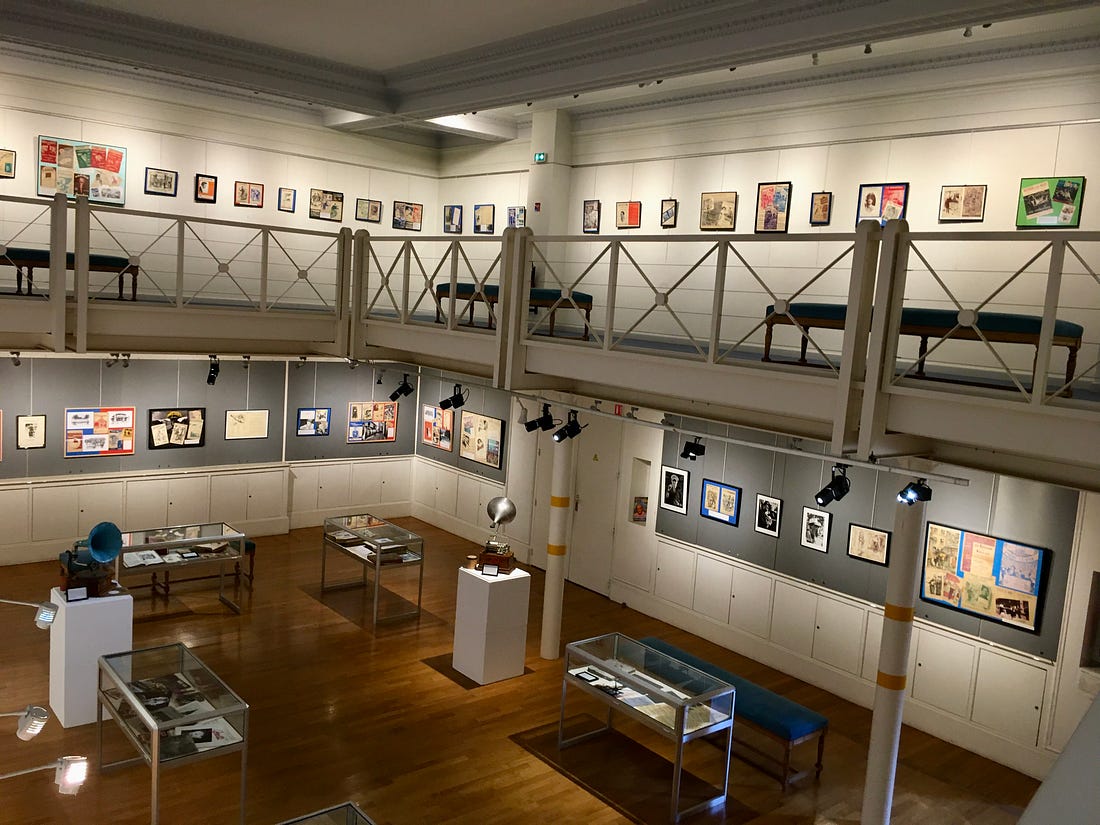
Left Bank in Song: Parisian history through lyrics and musicSong sheets, posters, records, and all that jazz ...
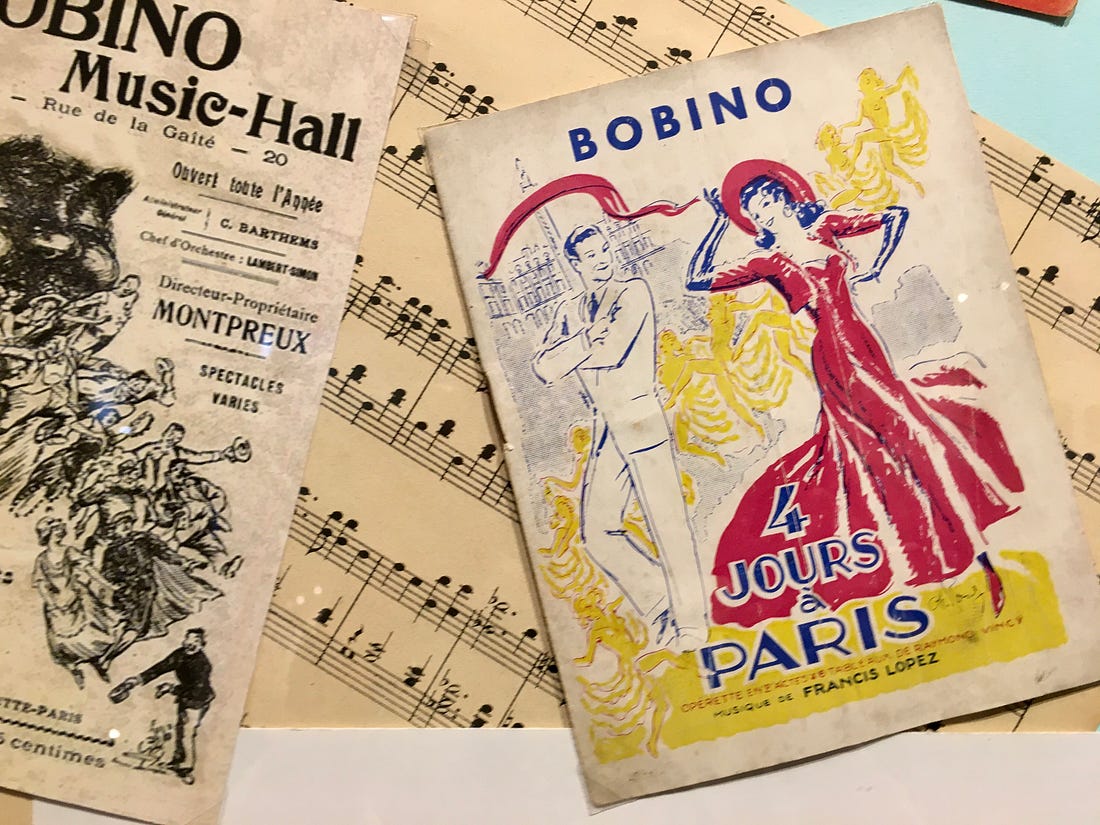
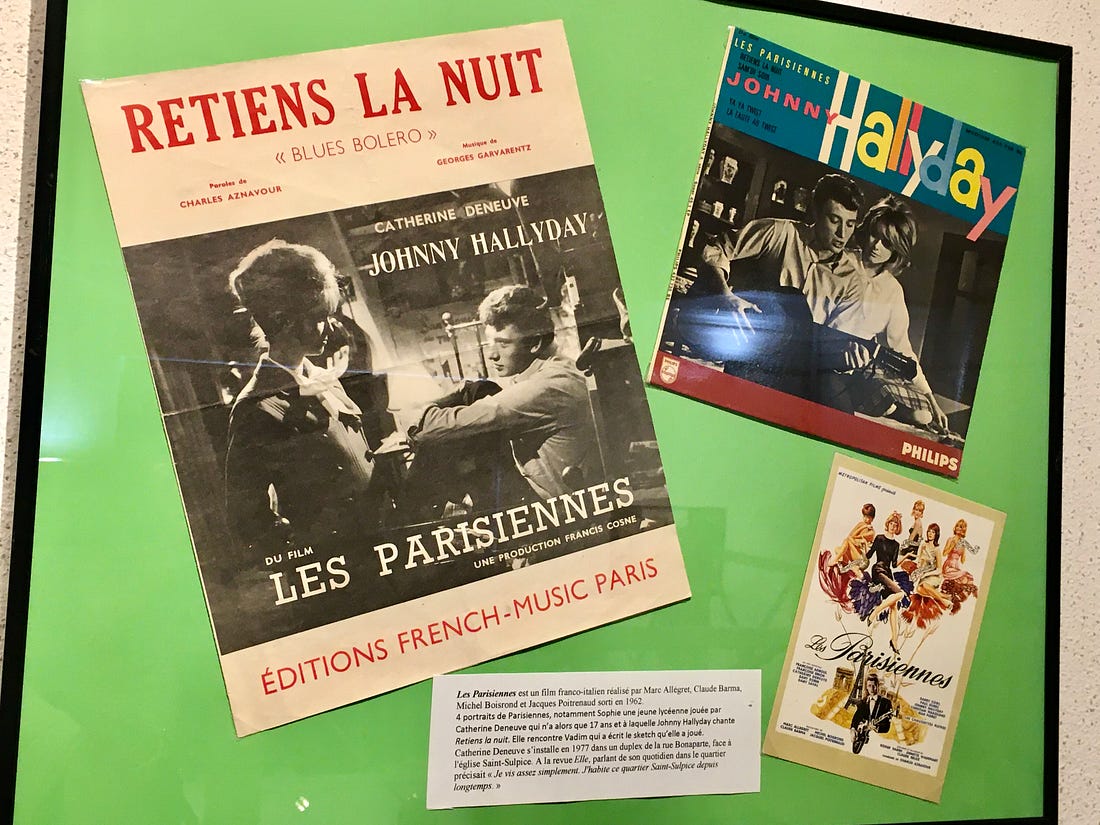
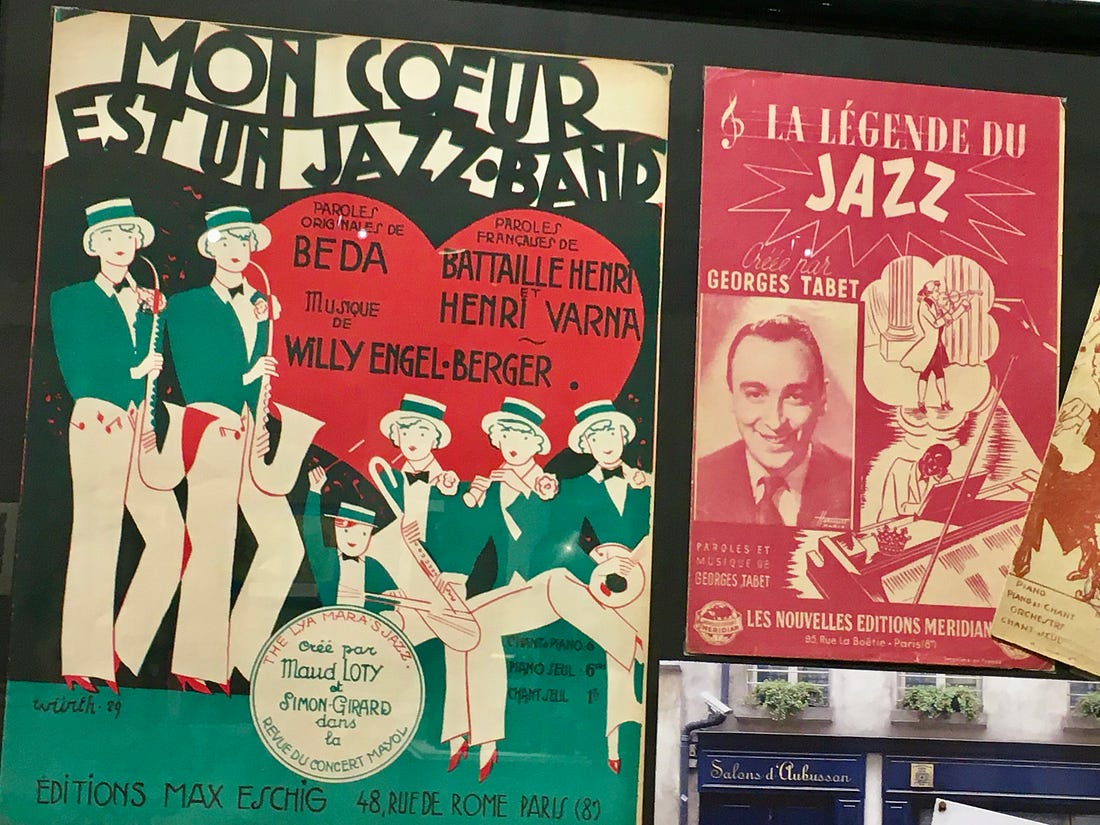
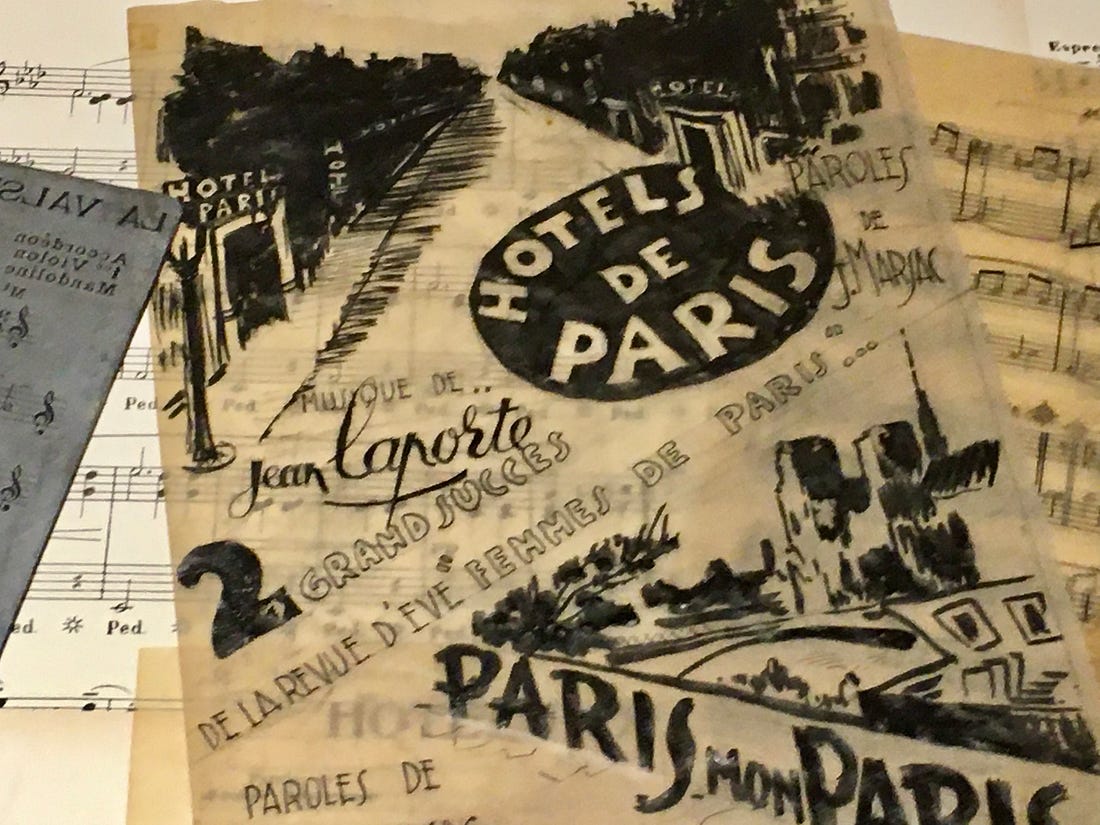
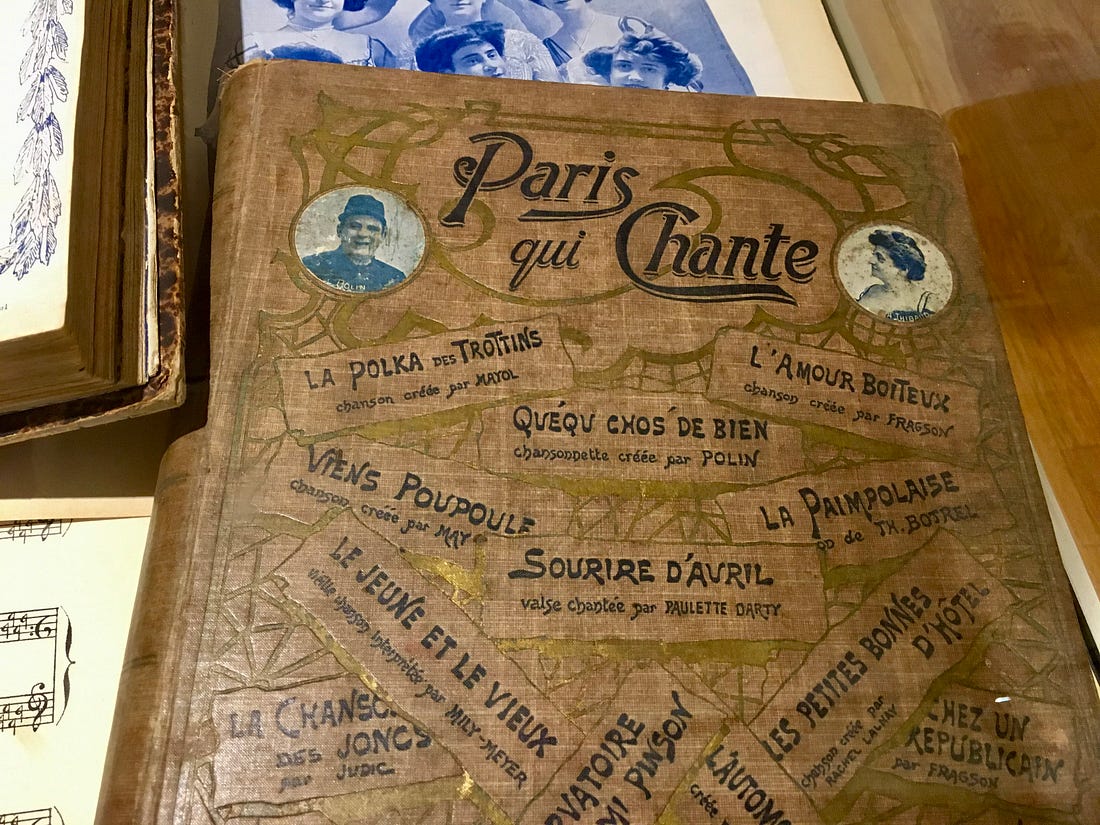
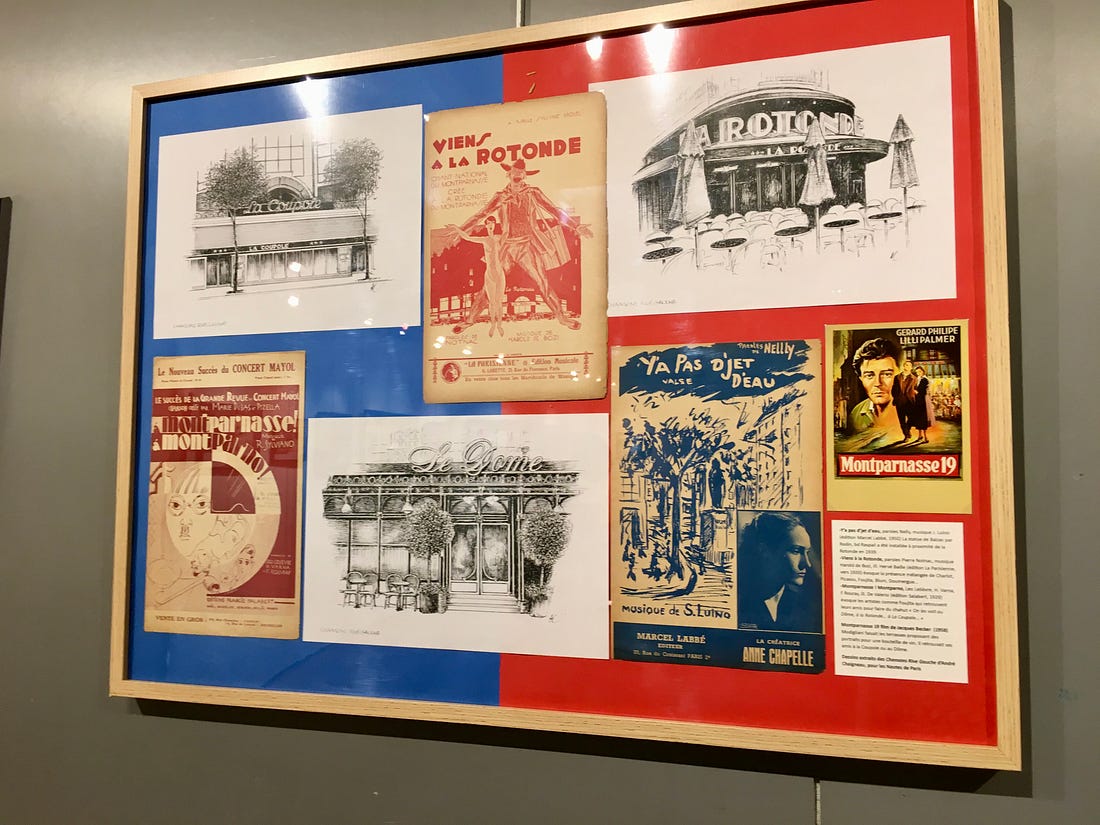
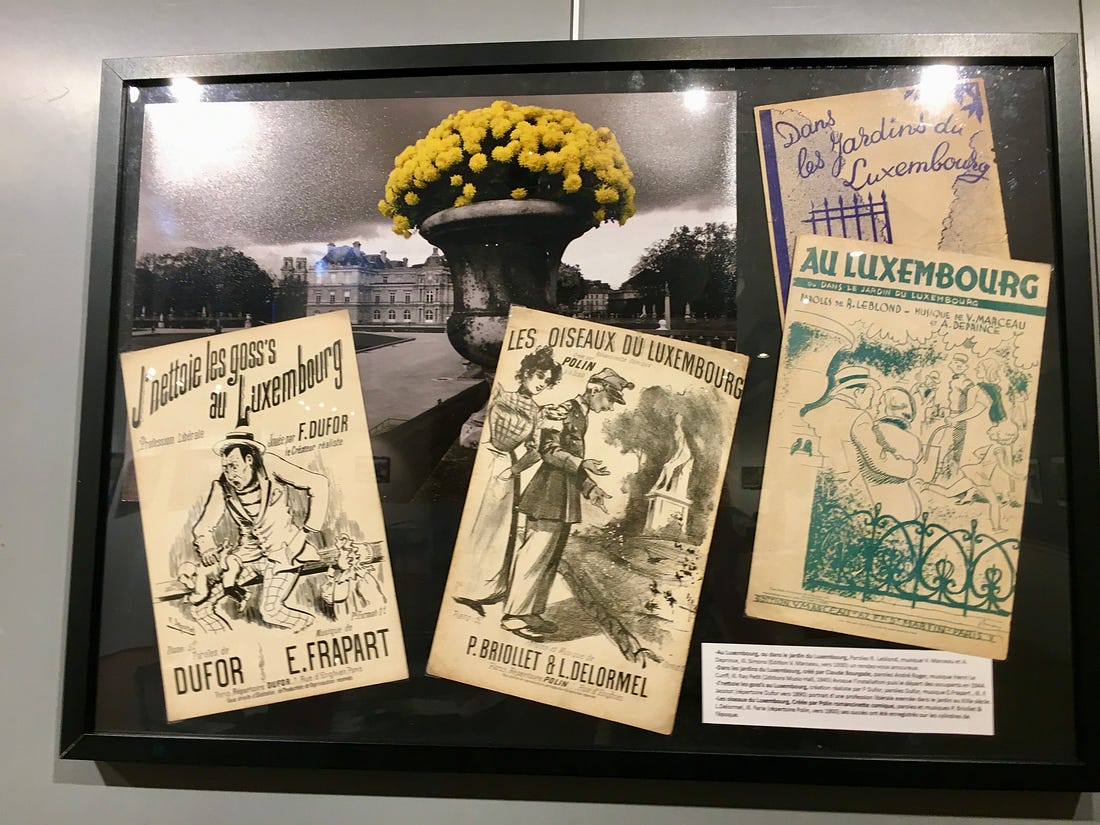
La rive gauche en chansons – The Left Bank in Song – was an evocative exhibition held in Paris from 10-28 April 2025. It offered a visual and artistic journey through the districts of the Left Bank – the Luxembourg Gardens, Montparnasse, Saint-Sulpice, and Saint-Germain-des-Prés. Each neighbourhood was brought to life, not just through historic images, but through the songs that once filled their cafés, theatres, churches, and dance halls. The exhibition presented a musical history from the 19th century to the 1960s, through rare song sheets, records, posters, illustrated advertisements, and personal memorabilia. Organized by Les Nautes de Paris, the exhibition reimagined the city’s quartiers through their popular music – linking each place to the songs, lyrics, and artists that defined it. Romantic ballads and poetic serenades captured the leafy Luxembourg Gardens. They tell stories of students, artists, and lovers strolling through the park in all seasons. The lyrics of the songs about Montparnasse, known for its wild artists, reveal chansonniers(songwriters) and cabaret singers in its cafés and streets. The songs tell tales of freedom, rebellion, love, and existential musings. Songs of Saint-Sulpice, defined by its cathedral, demonstrate spirituality and the arts. Church music told of daily life of the religious while other songs from this district blend a sense of reverence with the simple, poignant emotions of the working class and the clergy. By the mid-20th century, Saint-Germain-des-Prés had become the epicentre of intellectual and artistic life. Its jazz clubs and existential cafés created a new era of French songs combining traditional melodies with jazz influences. In this district, songs reflected melancholy, post-war freedom, and the promise of new beginnings. Highlights from the exhibition included beautifully preserved vintage vinyl records from the early 20th century, historic posters advertising performances in iconic Parisian venues, hand-written song lyrics and sheet music that reveal the creative process of Parisian composers, early record players and phonographs as part of Parisian households, and displays tracing the evolution of songs from cabaret ballads to Parisian jazz in the 1940s and 1950s. The exhibition showed how the printed materials have become visual representations of the music. The interesting facet of The Left Bank in Song exhibition was that the music mirrored the times and all their social changes, political protests, loves lost and won, and the dream of living a free, poetic life. Through song, the history of Paris was preserved. It reminds visitors and locals that to understand Paris, they only need to listen to songs over the centuries.
Can’t see the whole article? Want to view the original article? Want to view more articles? Go to Martina’s Substack: The Stories in You and Me MY PARIS WEBSITE AND ALL THINGS PARISIAN Photographer: Martina Nicolls PIP DECKS, the fun and engaging how-to guides for business. You're currently a free subscriber to The Stories in You and Me . For the full experience, upgrade your subscription.
|
A haiku poem, a memory of long ago …
… do you remember “raindrops on roses”? … ͏ ͏ ͏ ͏ ͏ ͏ ͏ ͏ ͏ ͏ ͏ ͏ ͏ ͏ ...