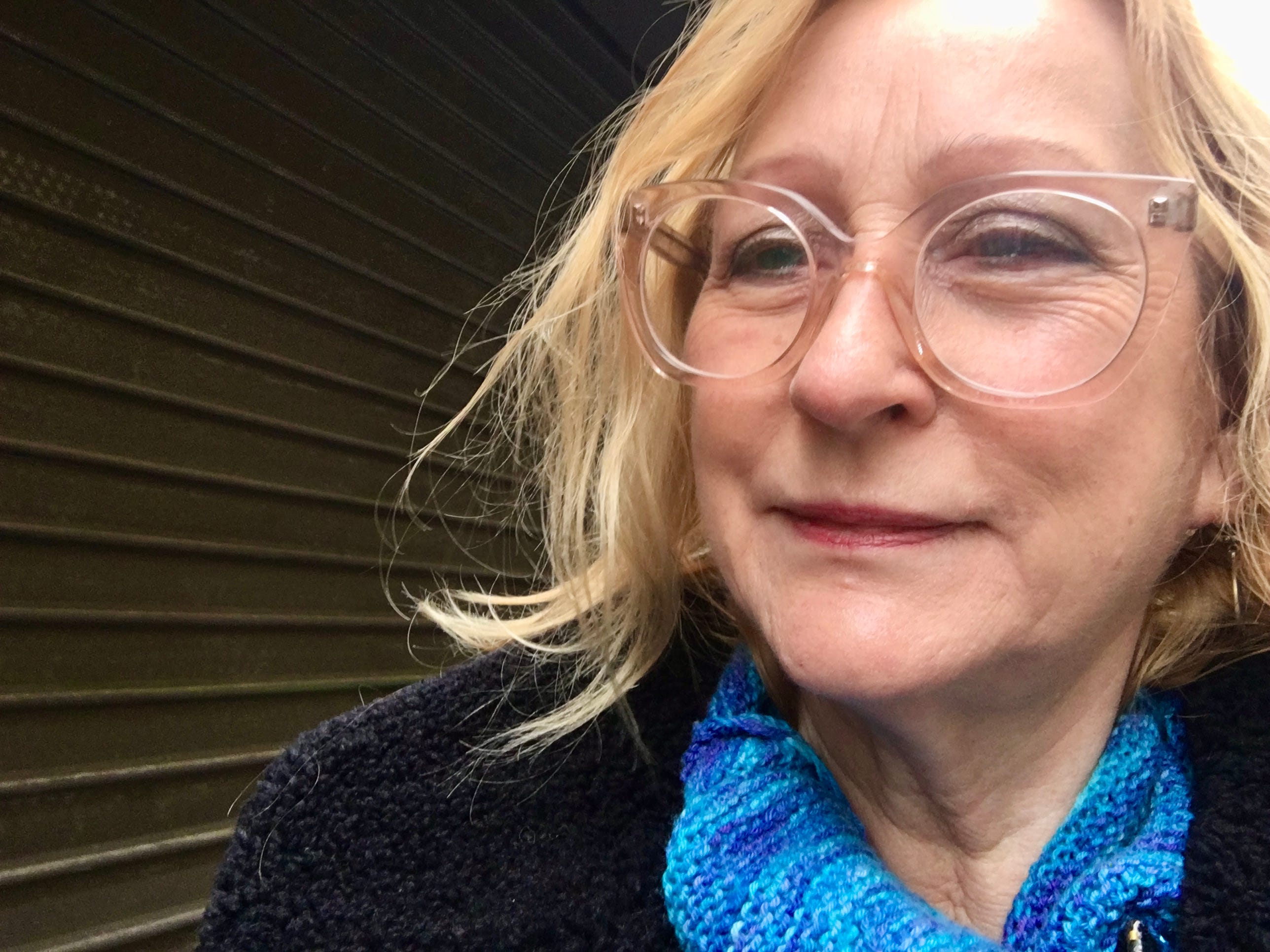
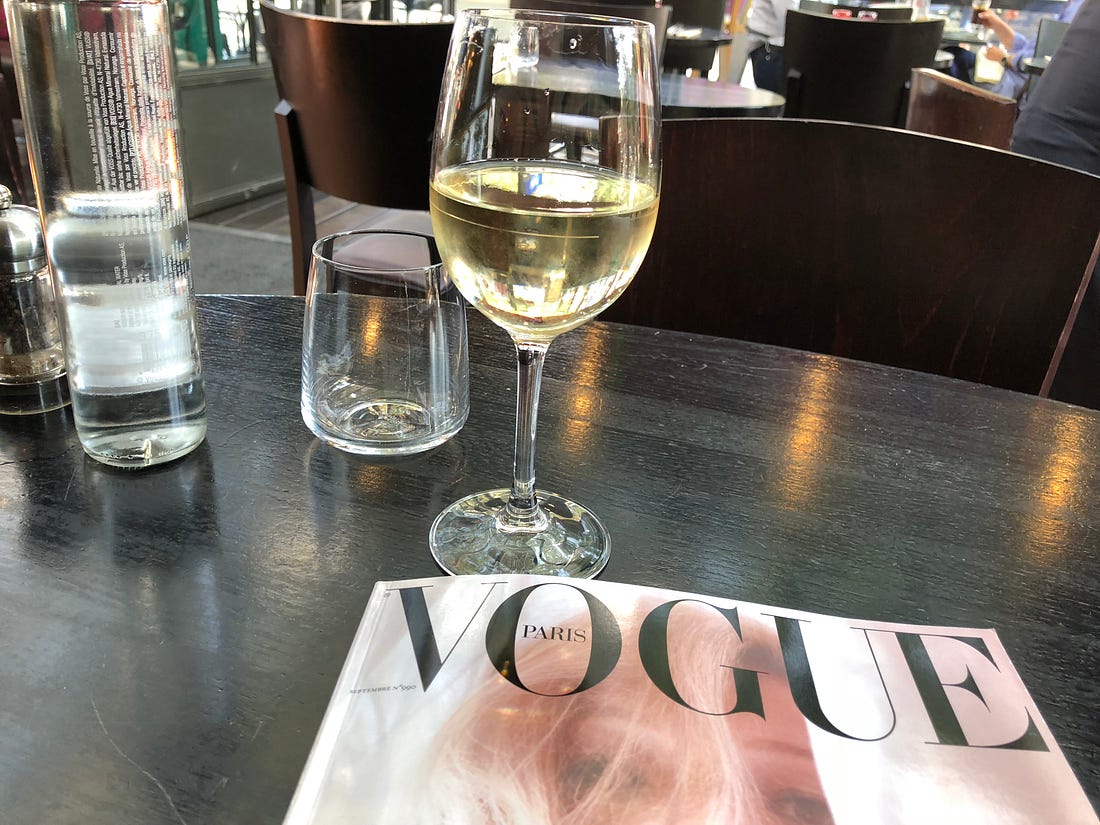
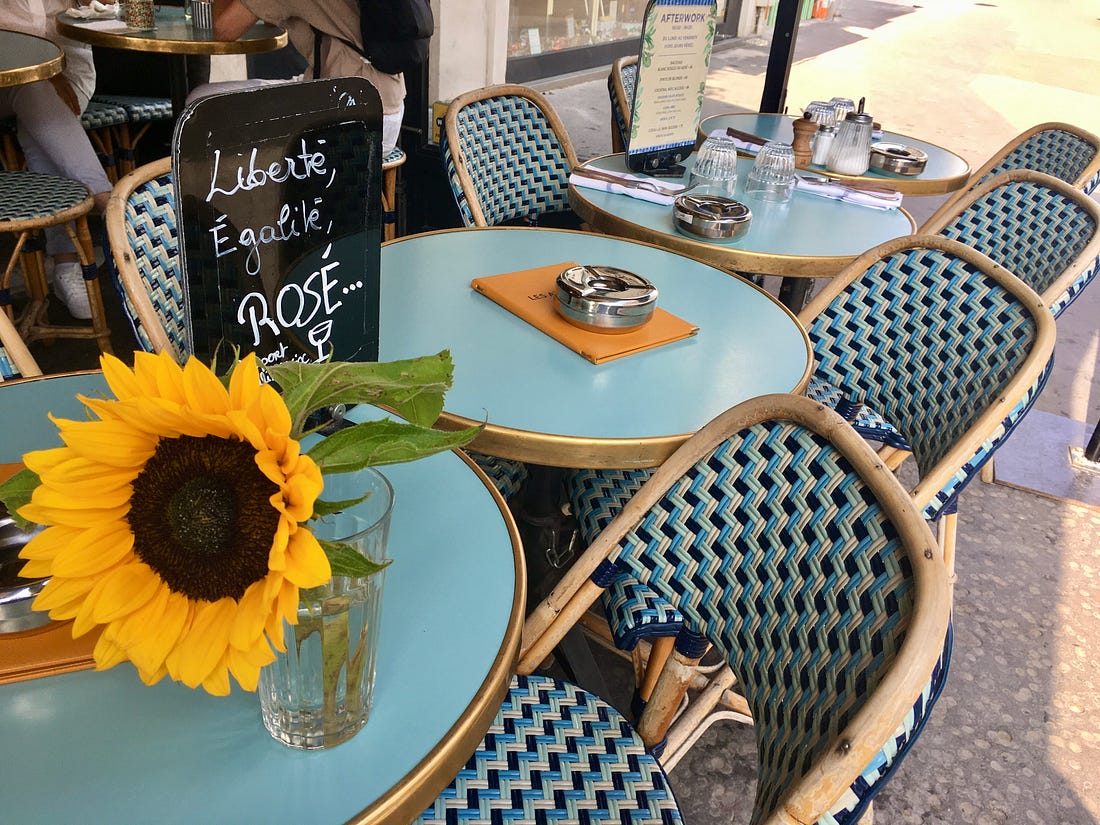
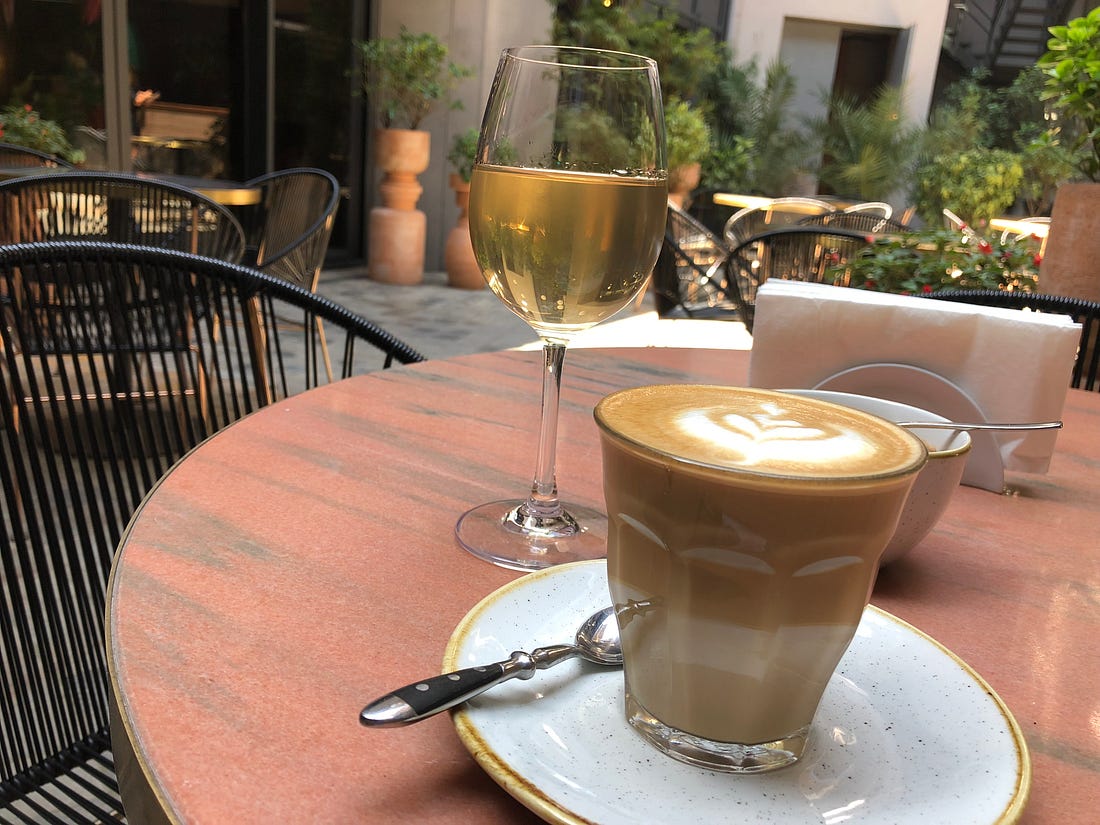
To kick-start my summer-time spark of creativity, I attended a workshop. At Kari van Tine’s workshop The Joy of Creativity, she conducted an activity called “Who’s at the table?" It was deceptively simple: write down the words that represent the parts of yourself that is showing up to the table of your life right now. Not who you wish would show up. Not who should, but the parts of yourself currently seated at your inner roundtable. My words came quickly: Storyteller. Joy. Muse. Brave. Open. Creative. After reflecting on them, I spun the words into a poem, and that’s when the magic of creativity happened: in the spontaneous, unscripted, and deeply personal expansions. At My Table At this table where glasses gleam, Where laughter floats like a shared dream, We gather not for bread alone, But for the spark, the undertone. Open sits with heart unlatched, With no defenses, none attached. She listens not to reply, but to see, The soul behind the artistry. Brave arrives with stories raw, No steel cloaks, no perfect law. She speaks the truths that twist and sting, Then lifts them like a broken wing. Joy is here, a radiant thread, Not loud, and no hint of dread. She dances in the pouring wine, Not rain this day, just mere sunshine. Muse leans in with furrowed brow, A fire behind the why and how. She speaks of purpose, pressure, pull, Of restless nights and visions full. Creative carves words without blame, Shapes silence into her, she has a name. She glances, and takes a leap of light, Turns empty air into sheer delight. Storyteller, the weaver, the seer, Draws all her fragments close and near. She stitches her voices into a song, And helps herself to right the wrong. So here we dine, and sip, and share, With candlelight and evening air. What binds us is not solely the meal, But every truth we dare reveal. We – I – am a map, a flame, a landing place, And I leave this table in confidence, and with grace. ### Here’s what I learned from this process, and why I believe this kind of reflective activity is deeply nourishing for mental health and emotional clarity. This activity asks participants to pause and notice: who is sitting at your internal table? What aspects of yourself are most present in your current season of life? It might be The Doubter. The Quiet One. The Dreamer. The Burnt-Out Worker. The Playful Child. Write them down without judgment, and then reflect on their presence. No pressure, just presence. It becomes a window into your internal world, offering insight, compassion, and often surprise. Healing often begins when we slow down long enough to see parts of ourselves. Exercises like Who’s at the Table? offer a beautiful way to do just that. Whether you're in a creative slump, a life transition, or just in need of a timely self-check-in, this activity can be a doorway to deeper self-connection. If you try it, I’d love to hear from you. Who’s sitting at your table? Making my peace with being fully at the table, I gained the following insights: I am not just one thing, but a living mosaic. Even on the most ordinary days, I realized that I show up at the table as multiple selves. Some loud, some subtle. Some tired, others ignited. By naming the selves, such as Storyteller and Joy, I gave myself permission to be multifaceted without needing to choose just one identity. Creative expression reveals what words alone may not. Turning my list into a poem helped me feel the connection between these different parts of myself. The poem gave shape and emotion to what might have otherwise stayed abstract. Creativity is not about skill. It’s about emotion and feeling a sense of “aliveness” in the very moment. Inner dialogue builds emotional safety. When I name who’s at the table, my inner table, I begin a dialogue with myself. It’s no longer a chaotic mental jumble. It’s a creative gathering at the table: a space of listening. That simple act of naming brings calm and clarity. We all crave belonging, even within ourselves. This activity reminded me that healing isn’t always about fixing what's broken. Sometimes it's about letting all your parts feel welcome – welcome at the table, just as I would welcome guests at my table. Even the uncertain ones. Especially them. Storytelling can be a healing practice. I named Storyteller as one of my guests at the table. Through this, I remembered: telling stories to myself, to others, through poetry or blog posts, is part of how I understand my place in the world. Sharing this poem felt like sitting down with readers — with you — across a wider, collective table. And feeling comfortable in doing so. Photographer: Martina Nicolls
Can’t see the whole article? Want to view the original article? Want to view more articles? Go to Martina’s Substack: The Stories in You and Me More Paris articles are in my Paris website The Paris Residences of James Joyce Rainy Day Healing - gaining ground in life You're currently a free subscriber to The Stories in You and Me . For the full experience, upgrade your subscription.
|
Sunday, 29 June 2025
Who's at the table?





Cross Fit for the Mind
|

|

|
|
Saturday, 28 June 2025
How the coloniser silences the colonised
Trying to figure out WTF is going on https://x.com/thomsonchris/status/1938576342469202240 Accusing Scots of “Anti-Englishness”: How English Colonial Propaganda, Digital Psyops and Information Warfare Attack Scotland’s Right to Self-Determination. A Colonial Strategy to Silence Scotland’s Right to FreedomColonial rule has always relied on inversion. The oppressor presents himself as the injured party. The colonised are painted as irrational, hostile, or hateful for seeking freedom. In Scotland, this tactic has been reactivated. British state institutions, media outlets, and digital operators have reframed the demand for independence as a form of ethnic animosity. The accusation of “anti-Englishness” functions not as a defence of tolerance but as a mechanism of silencing. The goal is not to protect anyone from discrimination. The goal is to discredit the idea that Scotland has a right to self-rule. This pattern is not new. Irish revolutionaries were portrayed as fanatics. Gandhi was treated as a dangerous subversive promoting anti-European sentiment. Algerians were described as irrational haters of France. The Mau Mau were dehumanised in British propaganda. South African resistance leaders were accused of inciting racial hatred. In every instance, the colonised were told that liberation efforts represented hatred rather than justice. Frantz Fanon noted that colonisers never acknowledge resistance as rational. Colonisers require the moral paralysis of their subjects. Shame replaces agency. In Scotland, the same script is applied. The accusation of “anti-Englishness” is deployed not in response to violence or extremism, but to the act of speaking freely. Citizens who criticise the union are pathologised. Writers, teachers, artists, and campaigners are treated as threats. The demand for independence is moralised out of existence. The structure of power remains untouched while the voices challenging it are reframed as dangerous. Expressions of Scottish anger are neither inexplicable nor unjustified. The record of English domination includes mass economic extraction, political subjugation, and cultural ridicule. Scottish history has been misrepresented, its economy mismanaged, and its voice marginalised. Public institutions systematically favour English narratives. The press often treats Scottish self-determination as backward. Scottish accents are mocked. Working-class Scots are stereotyped as ignorant or bitter. These are not isolated prejudices. These are artefacts of structural racism and colonial cultural control. Even when the tone of independence movements is calm and reasoned, accusations still follow. (Anyway, Scots are allowed to be angry since they are colonised by England). The reason lies in the nature of the demand. Sovereignty challenges power. The claim to nationhood undermines imperial/colonial legitimacy. In response, England’s defenders weaponise language. They substitute moral accusation for political argument. They obscure history by invoking civility. Digital technologies have intensified the distortion. Online disinformation campaigns attack Scottish national expression in real time. Public discussions attract troll accounts, bots, and coordinated misinformation. The moment Scottish sovereignty is mentioned, the noise begins. Replies fill with mockery, accusations, false data, and attempts to shift the narrative. This flood of hostility is not organic. Entire operations exist to shape perception and suppress support for decolonisation. The British state has invested in units like the 77th Brigade and the Government Communication Service. These entities manage digital narratives, influence foreign and domestic opinion, and undermine movements that threaten central power. Their activities involve infiltration, narrative saturation, and reputational targeting. Analysts and activists who raise Scottish issues often face unusual digital traffic. Platforms amplify the hostile response. Those speaking for Scottish independence often feel alone, not because they are isolated, but because voices are being buried under manufactured noise. The economic reality compounds the political one. More than 2 trillion USD in oil & gas has been extracted from the North Sea. Most of this wealth came from waters that should have been under Scottish control. Westminster absorbed the revenue, spent it on infrastructure and finance in England, and denied Scots a sovereign wealth fund. Norway, with fewer reserves and later development, now possesses one of the world’s largest funds. Scotland was offered debt and dependence instead. That dependence is then used as a justification for continued rule. GERS figures are presented as evidence of Scottish incapacity, despite reflecting decisions made in London. A circular logic prevails. Economic disempowerment is imposed, then cited as proof of the need for central authority. The colonised are robbed, then told they cannot survive without the thief. The accusation of “anti-Englishness” erases this context. Anger is framed as malice. Frustration is rebranded as bigotry. History is pushed aside so that power can claim moral superiority. Few questions are asked about the racism and contempt directed at Scots from the heart of the British establishment. Fewer still acknowledge how deeply embedded English orientalism remains in the treatment of Scotland. Expressions of Scottish nationalism are expected to remain grateful and well-behaved. Resistance must be polite to be considered legitimate. That expectation serves one purpose: to protect English control from being named for what it is. A colonial relationship demands silence from the subject. Speaking honestly is treated as aggression. The right to self-determination does not depend on approval from the coloniser. International law recognises this right for all peoples. The UN Charter and Resolution 1514 affirm that foreign domination and exploitation constitute violations of fundamental human rights. The Scottish people meet every standard under these principles. They have a distinct culture, a shared history, and a collective will to shape their own future. Criticism of English dominance does not equal hatred of English people. The accusation confuses state power with personal identity. England’s historical role as a coloniser of Scotland is not erased by sentimentalism or unionist myths. That role is documented, persistent, and reinforced daily in institutions, borders, and budgets. Every time Scots assert their right to self-govern, the same cycle repeats. Arguments are ignored. Accusations replace analysis. Resistance is met not with understanding but with moral panic. The coloniser clutches his conscience while holding the reins of power. The subject is expected to apologise for disobedience. Scotland is not driven by hatred. The movement for independence is shaped by memory, justice, and clarity. The moral inversion must end. Silence has been enforced long enough. Scotland is not a region but a nation under English colonial rule. You're currently a free subscriber to Peter A Bell. For the full experience, upgrade your subscription.
|



-
petrini1 posted: " For Week 7, the theme of genealogist Amy Johnson Crow...
-
The power pose of personal peace - with psychological benefits ... ͏ ͏ ͏ ͏ ͏ ͏ ͏ ͏ ͏ ͏ ͏ ...
-
A fall, a faceplant, and getting back up again … ͏ ͏ ͏ ͏ ͏ ͏ ͏ ͏ ͏ ͏ ͏ ͏ ͏ ...


