Nature: no resistancePoetry collection review … harmony in surrender to the cycles of life and death ...
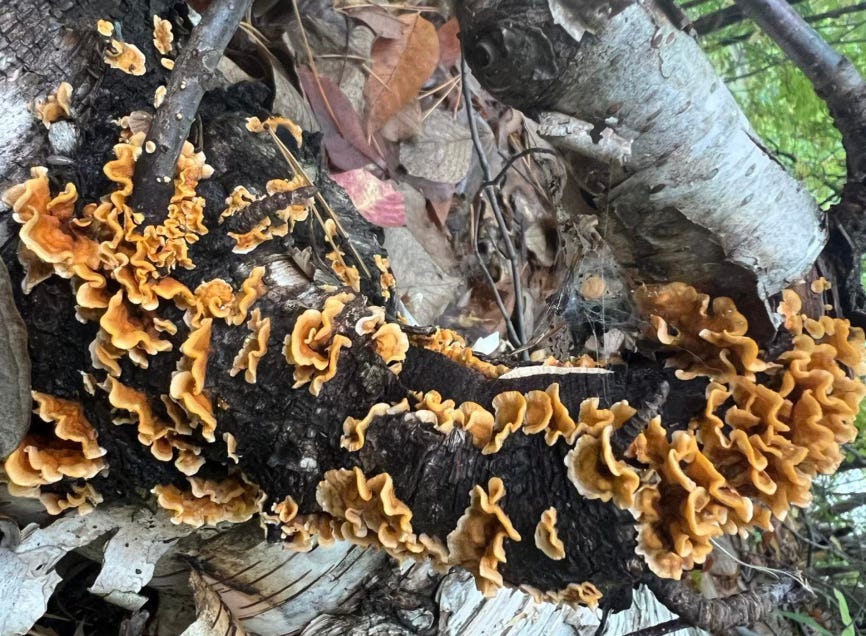
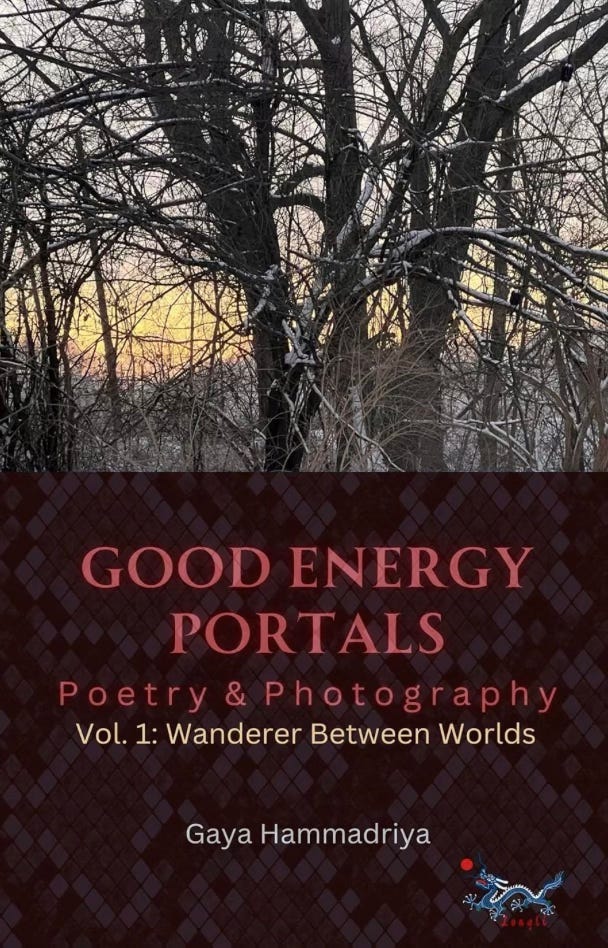
Right from the first poem, “Bathing Beauty” – about a heron – Gaya Hammadriya uses evocative and emotive imagery in her 2025 poetry collection Wanderer Between Worlds. The 36 poems are about nature, inspired by her photo-nature walks taken each day at dawn. Good Energy Portals: Poetry & Photography Volume 1: Wanderer Between Worlds is primarily about trees – watching us as much as we are watching them. Gaya’s poems are contemplative and elegantly simple. She uses striking imagery and avoids overt sentimentality, letting nature’s quiet transformations speak for themselves. In a meditative mood, the author takes a Zen-like approach to the seasonal cycle of nature – beginnings, endings, transformations, and renewals. For example, in the poem “Meditation on the Birch and the Fungi” the tree is personified as a storyteller lining its bark with the “calligraphy of time” – a living manuscript of the elements. The fungi, at the base of an old birch, “bloom in soft, layered steps, like footsteps of renewal” which demonstrates a gentle dynamism as if each layer of fungi marks the tree surrendering itself to time. As the birch dies, the fungi do not mourn – instead they turn memory into vibrancy, the past into presence. The tree does not resist. This perspective of death and renewal is one of celebration not melancholy. The message throughout the collection is – no fear, no resistance – not clinging to the past but surrendering it harmoniously. There is something deeply Zen-like in the author’s idea that nature does not grieve change but embraces it as a vital part of its rhythm of life. A meditation on acceptance. There are no forced rhymes or strict metric structures, just the mimic of a slow, mindful meditation. The poems repeat the motifs of transformation - turning, becoming, giving – these words weaving through the poetry lines. As the collection ends, the closing lines provide a satisfying resolution as the poems, like nature, become one, not in losing themselves but in reframing the act of unity as they dissolve into the soil. While the poems embrace neutrality and acceptance, they stop short of expanding the emotional palette – no struggle, only surrender. The poems are also heavily visual and stop short of total sensory immersion – no scent, no touch, no sound. This poetry collection is philosophical, soothing, graceful, and deeply rooted in nature, offering a fresh perspective on the impermanence of life. It is a beautifully presented and crafted collection of insightful poems and photographs, that could push the sensory depth further into the forest.
Photographs: from Good Energy Portals: Poetry & Photography Volume 1: Wanderer Between Worlds (2025): Gaya Hammadriya. As an Amazon Associate, I earn from qualifying purchases. Can’t see the whole article? Want to view the original article? Want to view more articles? Go to Martina’s Substack: The Stories in You and Me You're currently a free subscriber to The Stories in You and Me . For the full experience, upgrade your subscription.
|
Saturday, 8 March 2025
Nature: no resistance





Friday, 7 March 2025
Peter A Bell recommended Dear Scotland
Peter A Bell recommended Dear Scotland
|


Thursday, 6 March 2025
MAKING MY PEACE … with bibliotherapy – reading for healing
MAKING MY PEACE … with bibliotherapy – reading for healingTherapeutic reading … here are some key messages …
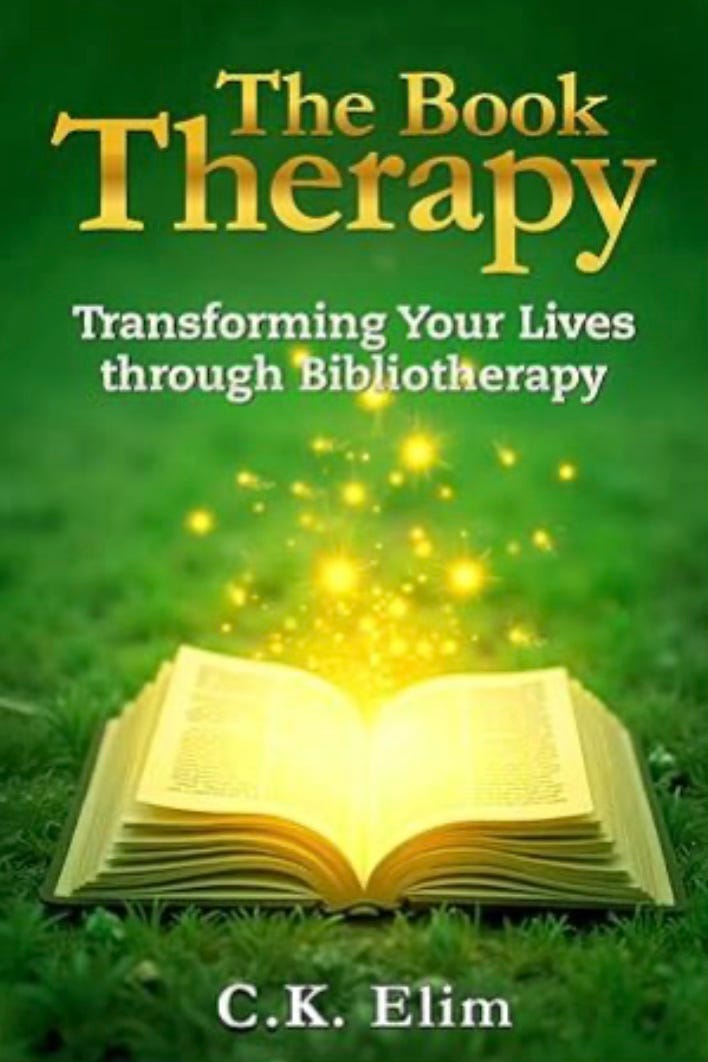
Bibliotherapy – reading for healing – is a therapeutic method I find intensely interesting, as someone deeply invested in psychosocial wellbeing and an avid reader. Bibliotherapy for emotional and psychological healing is at the heart of C.K. Elim’s 2024 The Book Therapy: Transforming Lives Through Bibliotherapy. This review delves into the book’s key messages and what I, personally, take from “literature for mental health” to integrate into my own practice. Bibliotherapy harnesses literature as a healing tool. According to this book’s research, mindful reading can help to alleviate anxiety through relatable stories, enhance self-awareness through reflection and journaling, promote emotional catharsis by processing emotions, increase empathy by stimulating areas of the brain related to social connection, and serve as a bridge to traditional therapy – i.e., bibliotherapy complements traditional therapy. The key messages from The Book Therapy are that: · Bibliotherapy has ancient roots but modern science validates it. · Bibliotherapy can be personalized through specific texts regardless of whether fiction (emotional release and empathy building), self-help (practical coping techniques), memoirs (validation and inspiration), or poetry (deep emotional processing) for specific individual struggles, such as anxiety, grief, trauma, or self-growth. · Active reading enhances the healing process through “intentional” reading, such as by highlighting key passages, annotating texts, using reflective prompts to connect stories to personal experiences, combining reading with meditative practices, and keeping a written reading journal to track insights and emotions. · Bibliotherapy is time-efficient and accessible in people’s busy lives and can be enhanced through 15-minute reading rituals, using audiobooks for “on-the-go” healing, creating a peaceful reading space to maximize relaxation, and engaging in shared reading experiences in book clubs or other reading groups and activities. The Book Therapy isn’t just about the act of reading. It integrates mindfulness, journaling, and psychological insight for a “full-body” practice – much like, I muse, a full-body massage. Let’s call it “full-body message.” It also includes real-life case studies with stories of people who overcame mental health struggles using book therapy. There is also a curated book list for specific mental health challenges, and the book is peppered with references to titles and authors. It addresses solitary reading, audio book listening, group, and community (shared) reading activities, but it doesn’t fully address accessibility barriers and language barriers, such as illiteracy. It could also provide trigger warnings in some sections, especially for readers dealing with post-traumatic stress disorder (PTSD). Making my peace with bibliotherapy, I will do the following: Read more Introduce 15-minute reading rituals into my life – i.e., incorporate books into my self-care Curate “healing reads” into my websites and articles Practice mindful, reflective reading Find revelations in the books I read Include thoughts about my reflective reading in my journaling Advocate for bibliotherapy as an accessible tool – through my website I’ll emphasize how books can be a free or low-cost mental health resources. Are you already incorporating books into your self-care? What book has personally helped you heal? Share your thoughts in the comments.
Can’t see the whole article? Want to view the original article? Want to view more articles? Go to Martina’s Substack: The Stories in You and Me More Making My Peace … articles Rainy Day Healing website You're currently a free subscriber to The Stories in You and Me . For the full experience, upgrade your subscription.
|

-
petrini1 posted: " For Week 7, the theme of genealogist Amy Johnson Crow...
-
… personal protection vs environmental protection – is that the issue? … ͏ ͏ ͏ ͏ ͏ ͏ ͏ ͏ ͏ ...


