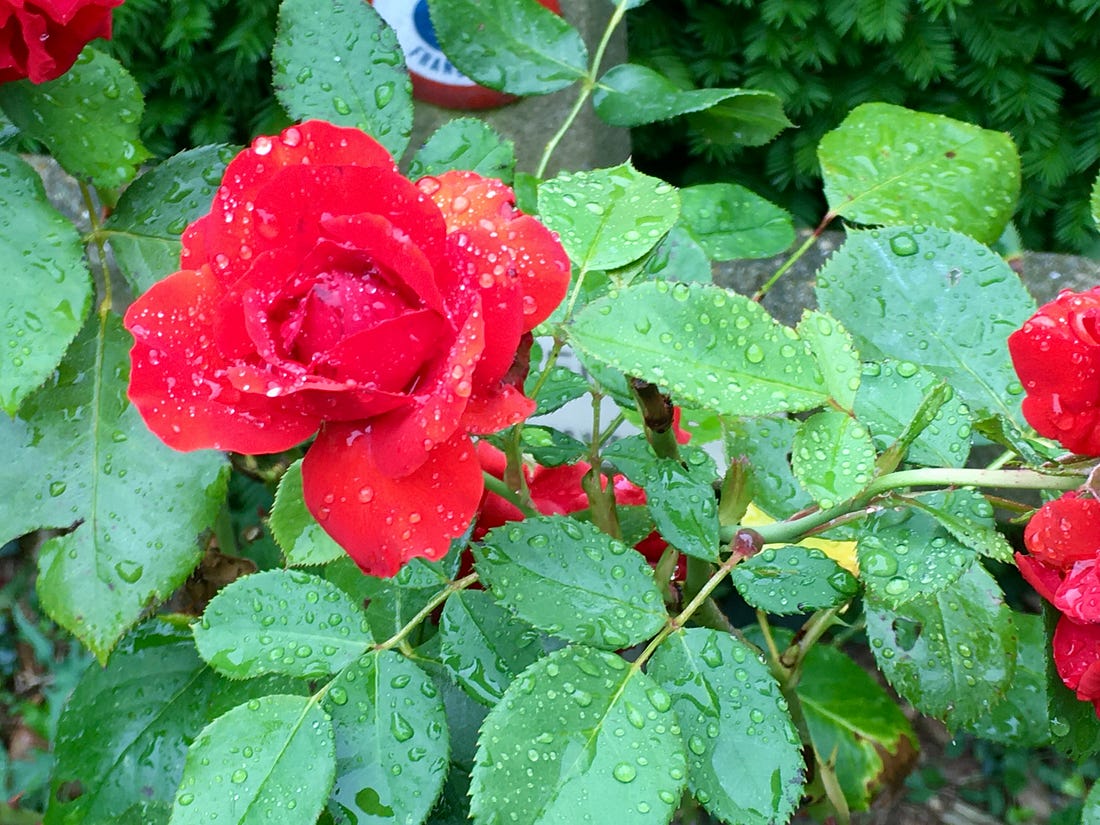
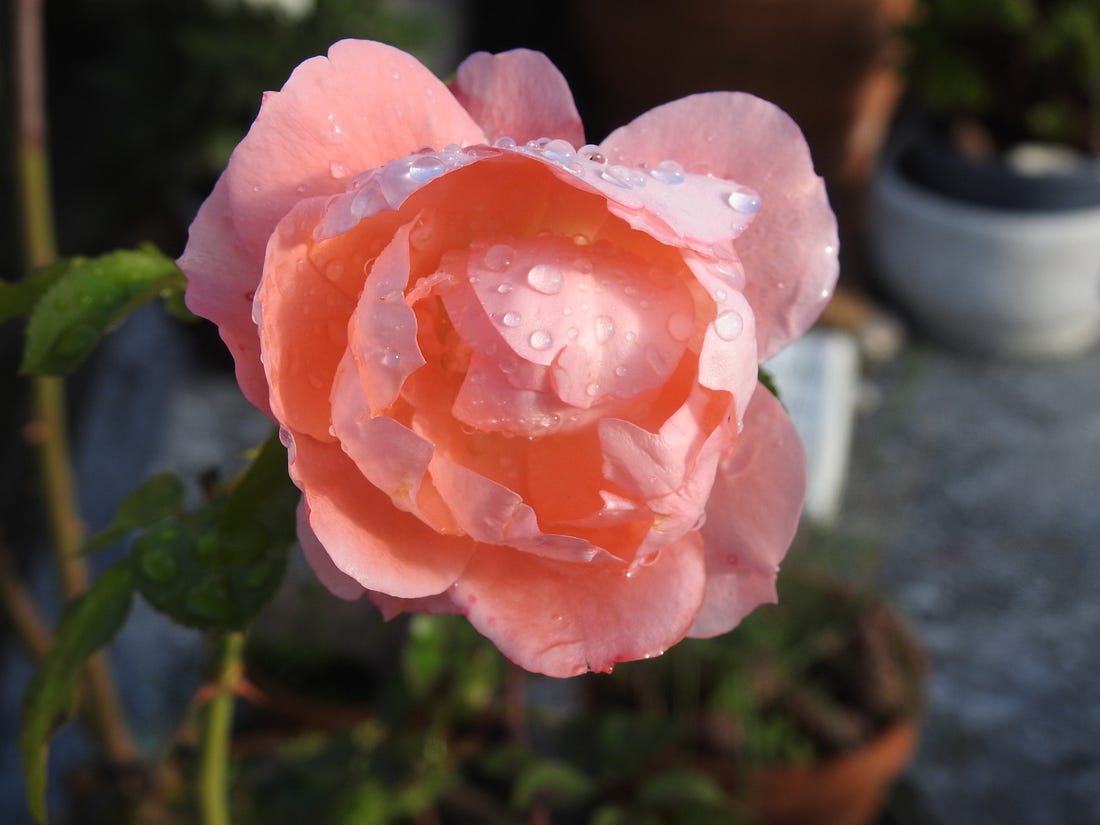
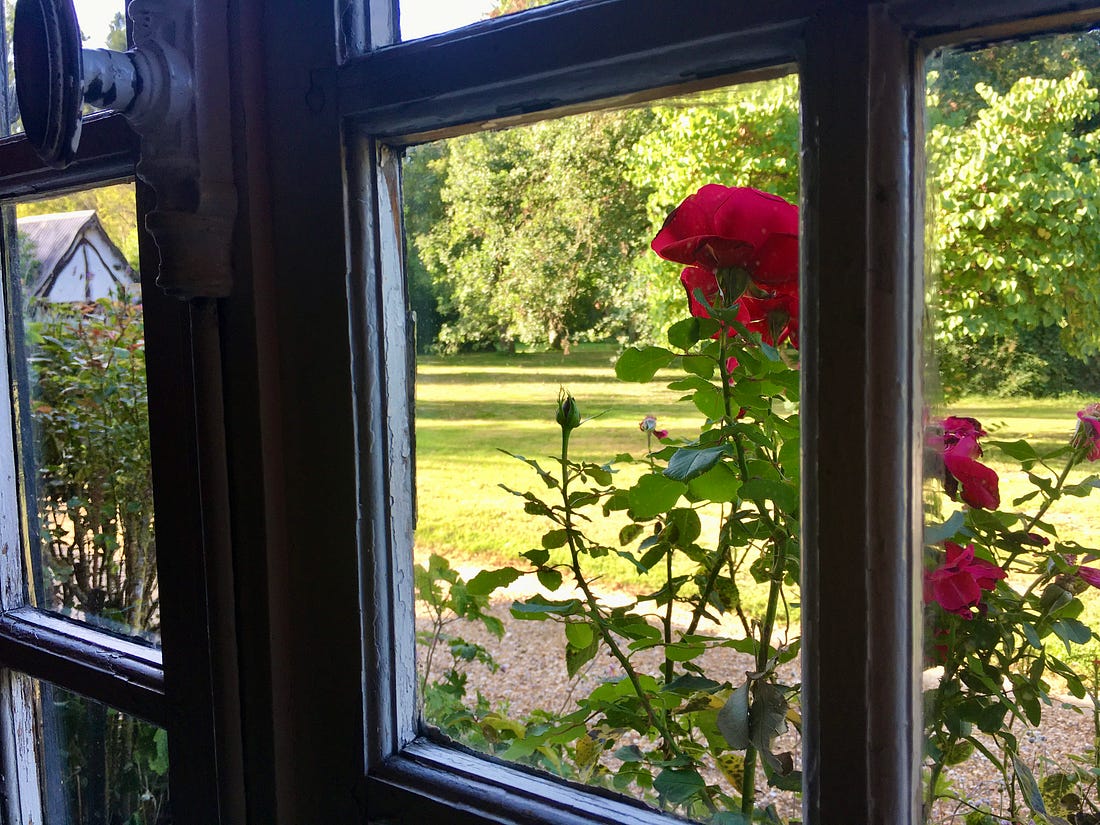
There are some poems that feel as though they have been waiting for me for a long time. I found one in the 2007 Haiku poetry collection A Voyage of My Mind … by Istanbul-born Fureya Ersoy, now living in London. It is a nameless haiku poem, so delicate it almost dissolved as I read it: “raindrops on roses flamboyant pearls of nature— till the sun comes out” There is something simply miraculous about haiku, like the way it distills a moment so precisely that time seems to hesitate. Three unrhymed lines, 17 syllables, and yet it is an entire world: the cool weight of raindrops, the soft yielding of petals, the shimmer of something that will not last. I was no longer reading. I was remembering. The phrase “raindrops on roses” carries its own memory, doesn’t it? It’s a gentle thread back to the 1965 movie The Sound of Music, and to Julie Andrews singing with that crystalline clarity that defined so much of my childhood. The song, My Favorite Things, was a catalogue of comfort, a list of a few of the singer’s pet likes, such as raindrops on roses and schnitzel with noodles. But here, in Ersoy’s haiku, the raindrops are no longer simply comforting. They are “flamboyant pearls of nature” and extravagant, almost excessive in their beauty. There is something sensual in that phrase, something tactile. You can feel the roundness of the droplets, see the way they cling to the petal, trembling to the rose before surrendering to gravity or light. And then, the line “till the sun comes out.” Everything is temporary. That is the truth at the heart of the poem. The pearls will vanish. The roses will dry. The moment dissolves even as we witness it. Perhaps that is why it lingers with me. Because I have always been drawn to the fleeting, the half-seen, the spaces between presence and absence, this haiku feels like standing at a window just after rain, when the world is both sharpened and softened, when light begins to return but hasn’t yet claimed everything. Again, it is a memory of being in Aunt Jeanne’s cottage garden in Normandy, France, after a brief shower of rain on her roses. It is a poem that asks nothing of you except to notice. But noticing the ordinary, it becomes luminous. The familiar becomes strange again. Even a childhood melody returns, altered, and less about comfort now, and more about impermanence. A poem about how beauty intensifies precisely because it cannot stay. I think that is why this poem feels like it belongs to me, in some unspoken way. It holds the exact tension I recognize in my own life; the desire to preserve moments, and the understanding that they are most alive because they slip through our fingers. “raindrops on roses” … Not forever then Though just long enough but surely forever now
Can’t see the whole article? Want to view the original article? Want to view more articles? Go to Martina’s Substack: The Stories in You and Me More Paris articles are in my Paris website The Paris Residences of James Joyce Invite your friends and earn rewardsIf you enjoy The Stories in You and Me , share it with your friends and earn rewards when they subscribe.
|
Saturday, 28 March 2026
A haiku poem, a memory of long ago …






Subscribe to:
Post Comments (Atom)

-
petrini1 posted: " For Week 7, the theme of genealogist Amy Johnson Crow...
-
The power pose of personal peace - with psychological benefits ... ͏ ͏ ͏ ͏ ͏ ͏ ͏ ͏ ͏ ͏ ͏ ...


No comments:
Post a Comment