lapetitepritt posted: " Hello, bookworms! I wish you all a lovely start of the week. Since it's Monday I wanted to briefly talk about something I am planning on doing in the future. This has nothing to do with the review, but I have been thinking about a super old series"
I wish you all a lovely start of the week. Since it's Monday I wanted to briefly talk about something I am planning on doing in the future. This has nothing to do with the review, but I have been thinking about a super old series I used to make here on my blog called Mystery Monday with Pritt. I am going to revamp it a bit, and continue it every now and then. As other series on my blog, it won't be monthly because of stress and deadlines, I will simply post an article whenever I feel like it. Mystery is one of my greatest passions, and I wanted to celebrate it with something other than my monthly buddy reads with Vitt.
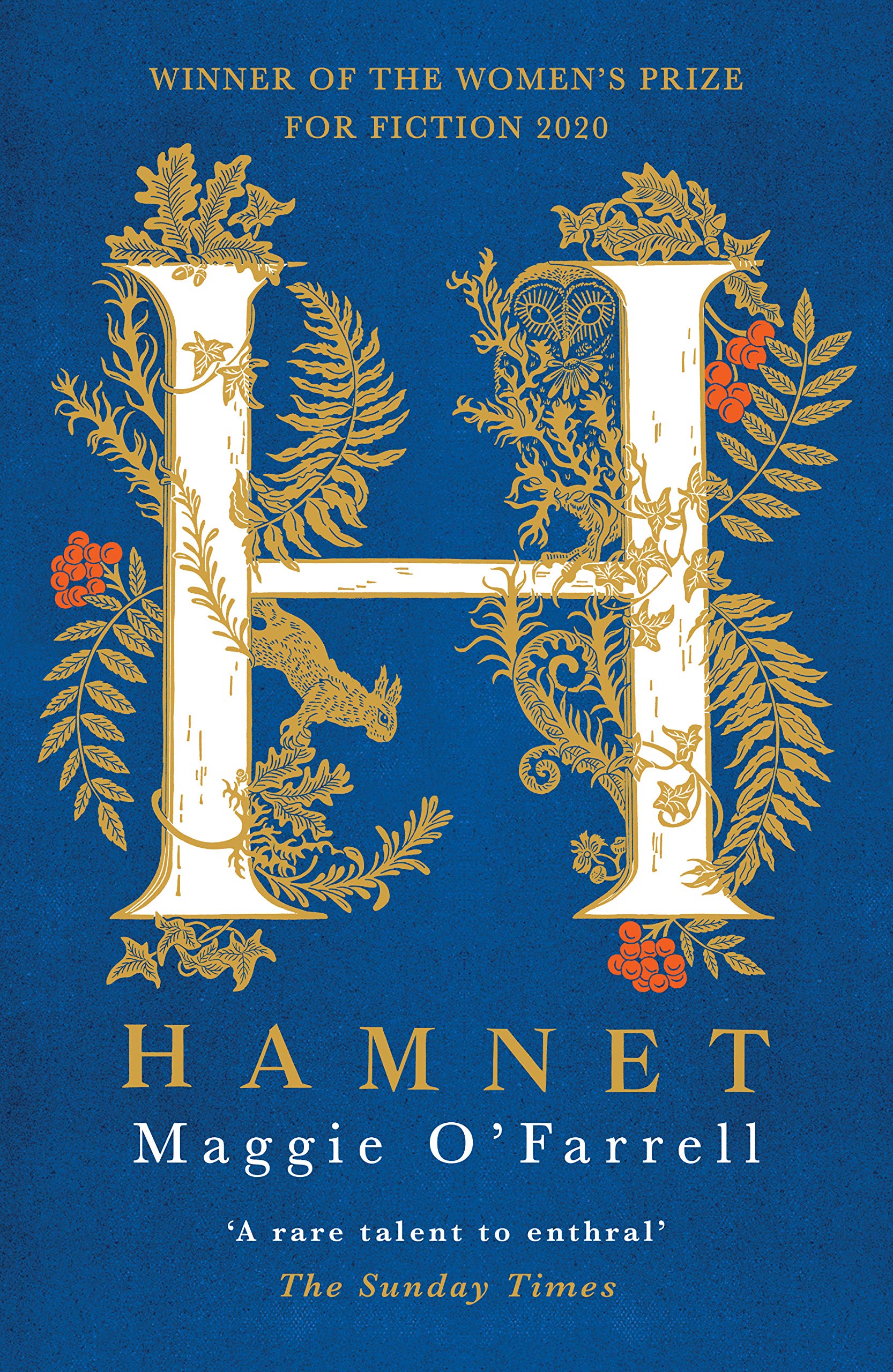
All that aside, today I am here to talk about Hamnet by Maggie O'Farrell, the winner of the 2020 Women's Prize for Fiction and one of the worst books I've read so far this year.
About the book Title: Hamnet Author: Maggie O'Farrell Publisher: Tinder Books Publication date: 31 March 2020 Pages: 372
Plot, as stated on Goodreads Drawing on Maggie O'Farrell's long-term fascination with the little-known story behind Shakespeare's most enigmatic play, Hamnet is a luminous portrait of a marriage, at its heart the loss of a beloved child. Warwickshire in the 1580s. Agnes is a woman as feared as she is sought after for her unusual gifts. She settles with her husband in Henley street, Stratford, and has three children: a daughter, Susanna, and then twins, Hamnet and Judith. The boy, Hamnet, dies in 1596, aged eleven. Four years or so later, the husband writes a play called Hamlet. Award-winning author Maggie O'Farrell's new novel breathes full-blooded life into the story of a loss usually consigned to literary footnotes, and provides an unforgettable vindication of Agnes, a woman intriguingly absent from history. A New York Times Notable Book (2020), Best Book of 2020: Guardian, Financial Times, Literary Hub, and NPR.
My rating: 1 out of 5 stars
Review Before starting with the proper review, I wanted to make a consideration about my personal experience with Women's Prize for Fiction winners. I have read three of them by now: The Song of Achilles, Piranesi and Hament. What do they have in common? They all have a man's name in the title and two out of three of them are about men, almost exclusively. Hament is not only about Hamnet, but still, the male component is really strong. I don't know about the other winners, but this coincidence made me think. I want to read more books about women written by women for women. Also, my taste is clearly completely different from the judges of this festival, because I did not like any of the three books. I mean, I am not the biggest literary fiction fan, but still… I am waiting to see who will win this year, because Hamnet was the last one I had on my TBR from the winners, but I am interested in some of the titles longlisted for this year (The Final Revival of Opal & Nev, in particular, which should be less literary). We shall see, we shall see.
Now, speaking of the book itself: I am sorry, but I hated it. I hated every single thing about it, I have literally nothing good to say. I even hated the cover. I should have guessed it from the plot on Goodreads, which is not an actual plot, but more like a sequence of blurbs. I tend to hate books that have synopsis of this sort, because they usually are about… nothing at all. Now that I have read it, I recognize I am not the intended audience, but I really thought this was going to be something else. I don't know what, but at least something.
This book was boring from page one: if a book starts like this one did, my interest is instatly loss. Around 10%, I knew this was not for me, but I don't do DNFs, so I had to endure another 90% of this utter torture. Also, it really threw me off, for some reason, that it was narrated in the present tense. I don't know why, to be honest, but it did. I also couldn't stand the fact that the chapters did not have numbers nor title. It only contributed to the torture.
I also hated the writing style. I have to say that I read the Italian translation of this one, so I don't know if this is a lost in translation kind of situation or if the writing was indeed too dense and pretentious even in English. Juls tried reading it in English as well as in Italian and they said it's awful in both languages. I trust them. Something that was probably mostly due to the translation, however, is how awful the dialogues were when children were speaking. It's one of my greatest linguistic and bookish pet peeve when authors and/or translators try and emulate the way children speak. It's just cringe-worthy, in my opinion.
The description of how the plague came to Stratford was also basic, if you ask me. I don't know if you know, but when Ratatouille came out, they released a special DVD version which had a short feature in which Remy and Émile explained the history of rats and also tackled plague. I don't remember exactly, but it gave me the same impression. I mean, Ratatouille is one of the greatest movies ever, but you know what I mean.
Since I am no historian nor Shakespeare expert, I am going to leave that to comment to someone more knowledgeable than me, but one or two things left me quite confused.
I am not even going to talk about the plot (there was none) nor the characters (they were one dimensional, boring and useless) and I am just going to wrap this review up, because I am stressing myself out just by rethinking about this book. I just want to forget ever having read it. I am really sad I hated it, one because I was hoping to like it, and two because it was part of the Book Club Juls runs on Instagram/Telegram.
This is all for today, I'll talk to you the day after tomorrow with a new article!




 WordPress.com


No comments:
Post a Comment