French Cottage Tiles: floral and fabulous… French, floral faïence, and flooring … cobalt blue and blush pink …
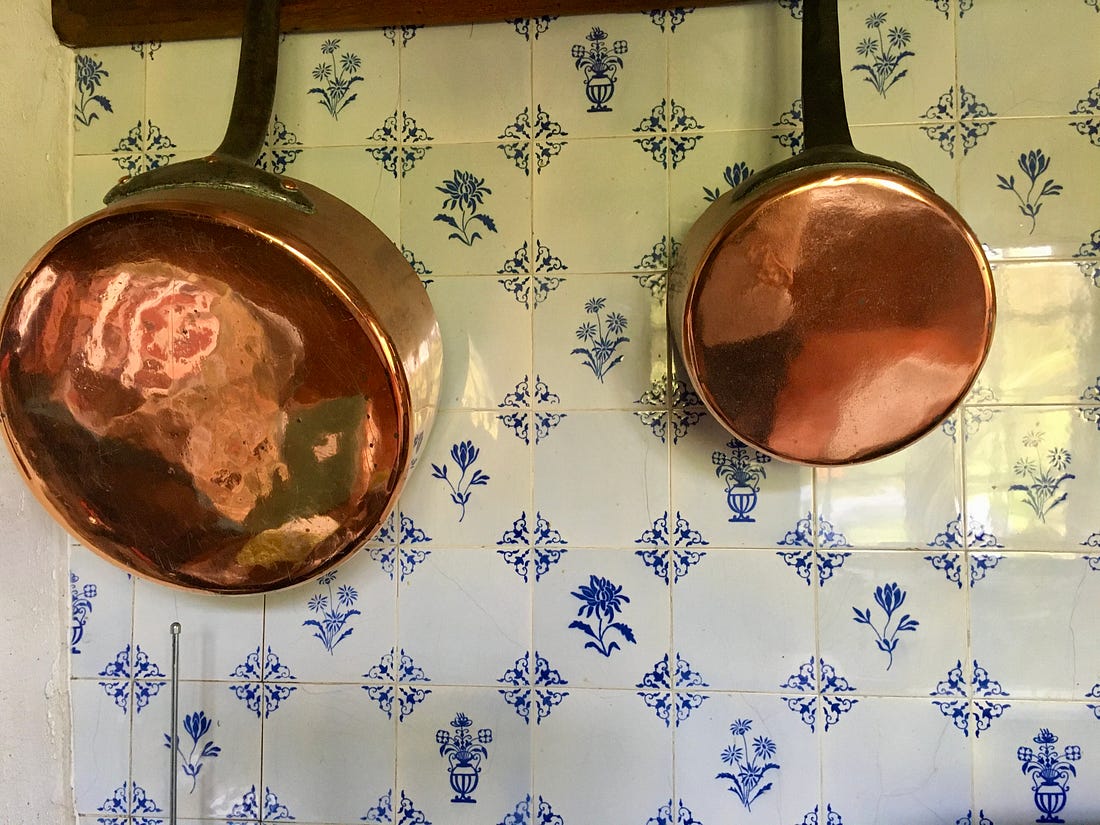
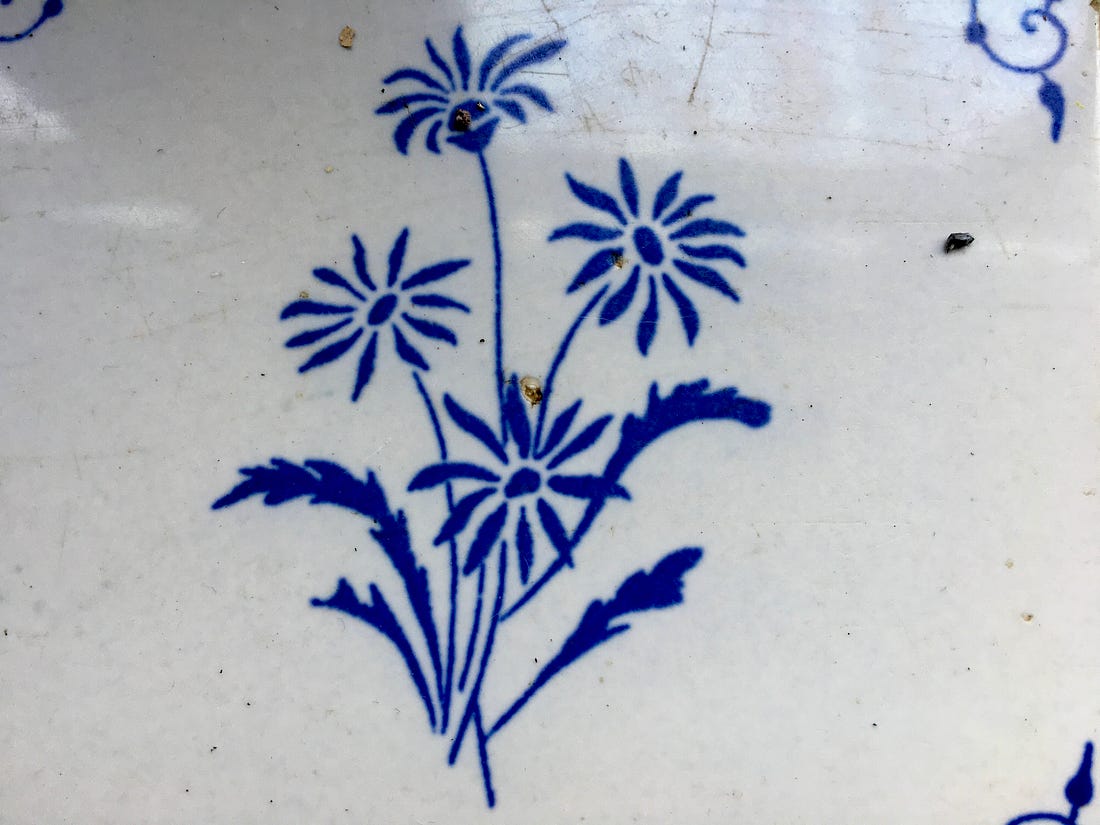
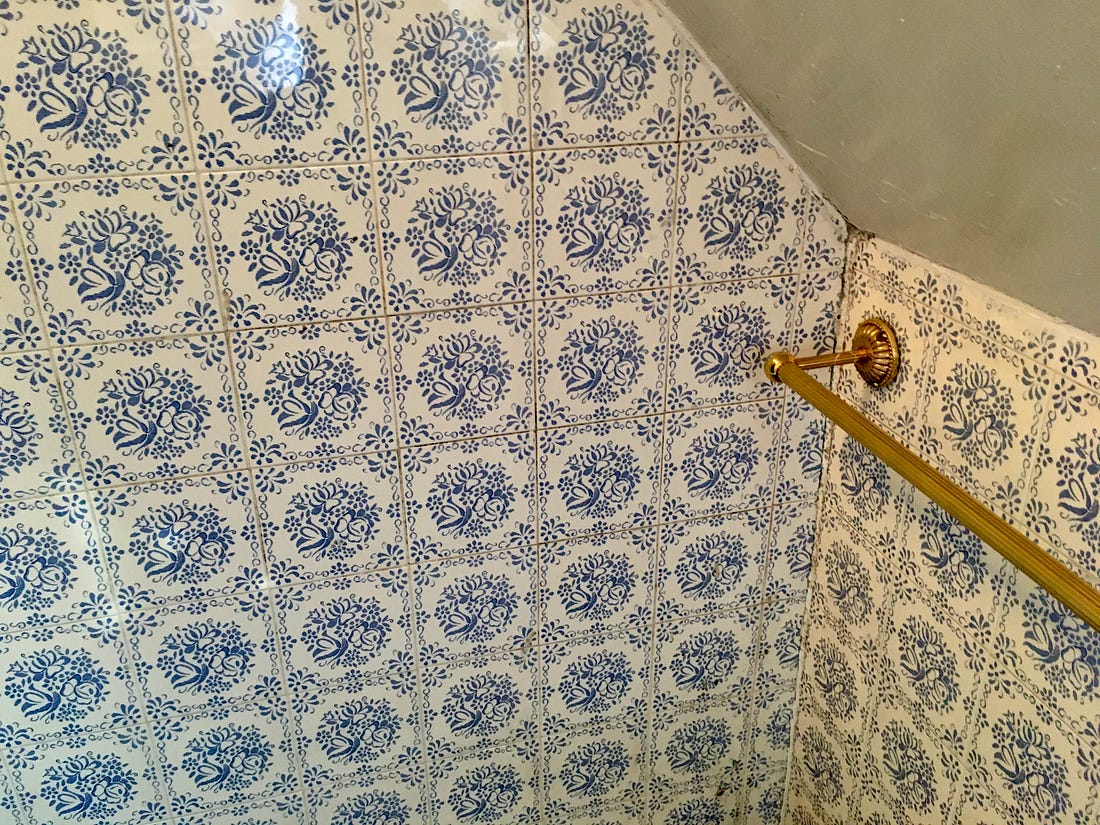
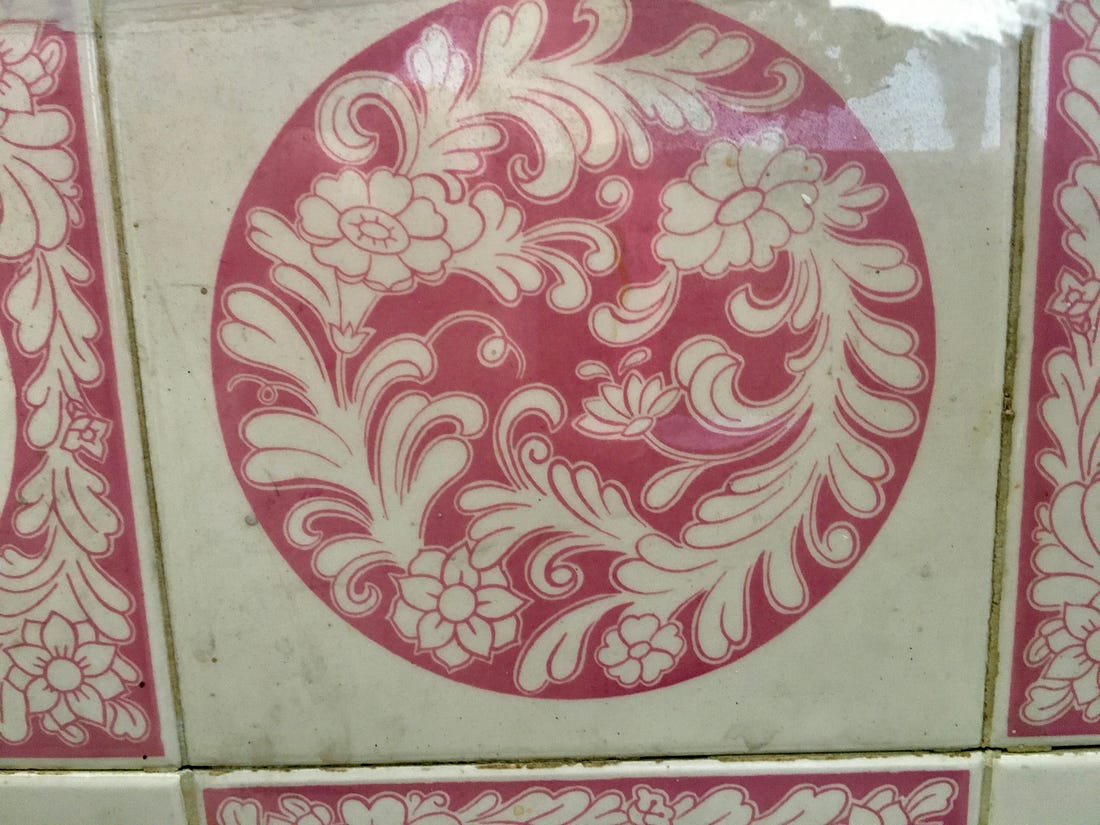
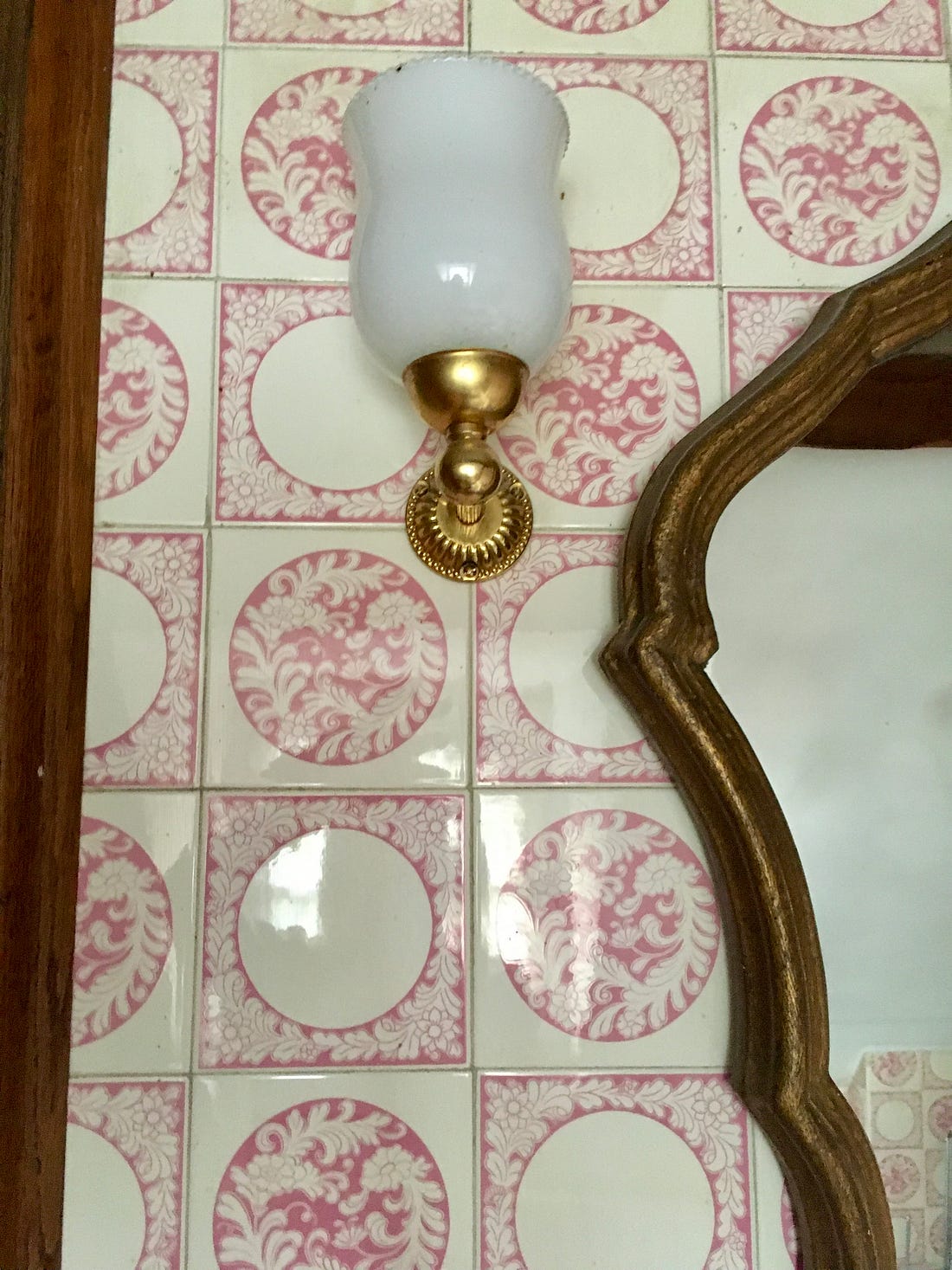
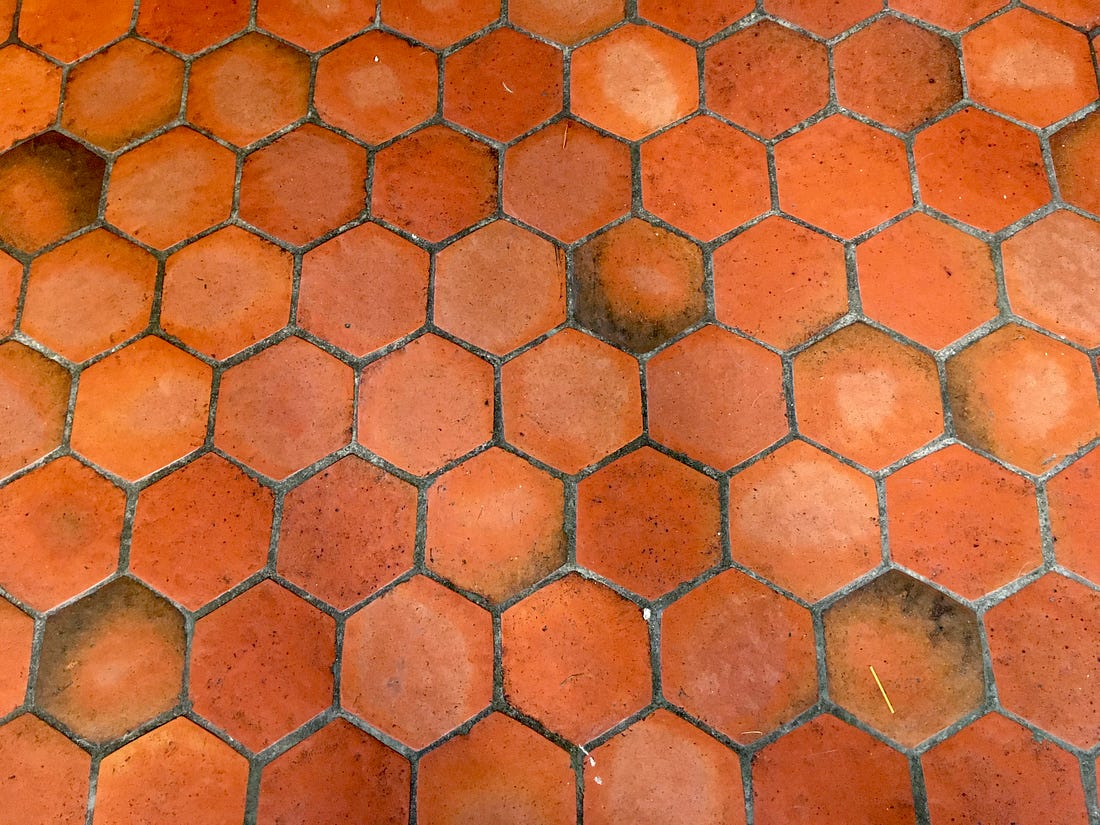
In Aunt Jeanne’s rural French cottage in Normandy, the kitchen walls shimmer with glazed faïence (earthenware) tiles of blue-and-white. In the two bathrooms, one is blue-and-white and the other is a blush pink-and-white, both decorated with bouquets of flowers in a repeating pattern. Faïence arrived in France in the 16th–17th century by French potters who adapted tin-glazed earthenware, inspired by Italian majolica and the Delft tradition, to create luminous whites that could absorb the colour cobalt blue like ink on paper. Why blue? Cobalt oxide withstands high firing in kilns and stays vivid without fading. Rouen, Nevers, and Moustiers-Sainte-Marie became famous for tiles depicting floral sprays, lambrequins, and pastoral scenes. Pink-and-white faïence with garlands also featured in powder rooms and cottage kitchens. In the 18th–19th century, workshops in Brittany (Quimper) and Desvres hand-painted motifs of naïve figures, bouquets, wreaths, baskets, urns, sprigs, and ribbons that can still be found today in old cottages. The “Métro” moment of the 1900s in Paris introduced bevelled, rectangular, white subway tiles in the Métro rail system. The bevels were practical because they reflected the dim gaslight around the Metro stations. People thought they were instantly chic and adopted the tiles for their apartment bathrooms. Restaurants and brasseries across France adopted them too, then the world. For flooring, carreaux de ciment (cement tiles) of the late 19th–20th century became popular. Pigmented cement pressed into geometric moulds became common throughout French North Africa and Indochina. In the South, terra-cotta tomettes were laid onto kitchen floors while faïence and cement tiles were placed on kitchen splash-backs and sink surrounds. These tiles were matte, patterned squares in indigo, powder blue, pink, or cream with geometric designs. The glazed French cottage tiles were popular for several reasons. The shine of the tiles made even small rooms feel brighter, cleaner, and bigger. The repeating hand-painted motifs added a pattern to the whole room, appearing different close up and from a distance. People also liked their craftsmanship and versatility. Simple blue-and-white was timeless, while pink-and-white added warmth and romance to a room. In addition, hygiene and longevity were appealing as glazed tiles were easy to clean and lasted decades. The overriding motif in the glazed French cottage tiles is the rural wildflower. French novelist Colette said, “Il y a des fleurs partout pour qui veut bien les voir” — “There are flowers everywhere for those who want to see them.” The florals are not just decoration; they are heritage and the tradition of a French home.
Can’t see the whole article? Want to view the original article? Want to view more articles? Go to Martina’s Substack: The Stories in You and Me More Paris articles are in my Paris website The Paris Residences of James Joyce Rainy Day Healing - gaining ground in life You're currently a free subscriber to The Stories in You and Me . For the full experience, upgrade your subscription.
|
Wednesday, 13 August 2025
French Cottage Tiles: floral and fabulous








Subscribe to:
Post Comments (Atom)

-
petrini1 posted: " For Week 7, the theme of genealogist Amy Johnson Crow...
-
A fall, a faceplant, and getting back up again … ͏ ͏ ͏ ͏ ͏ ͏ ͏ ͏ ͏ ͏ ͏ ͏ ͏ ...
-
The power pose of personal peace - with psychological benefits ... ͏ ͏ ͏ ͏ ͏ ͏ ͏ ͏ ͏ ͏ ͏ ...


No comments:
Post a Comment