Formulaic Creativity: can imagination follow a pattern?… what came first: creative chaos or literary order or literary chaos and creative order? …
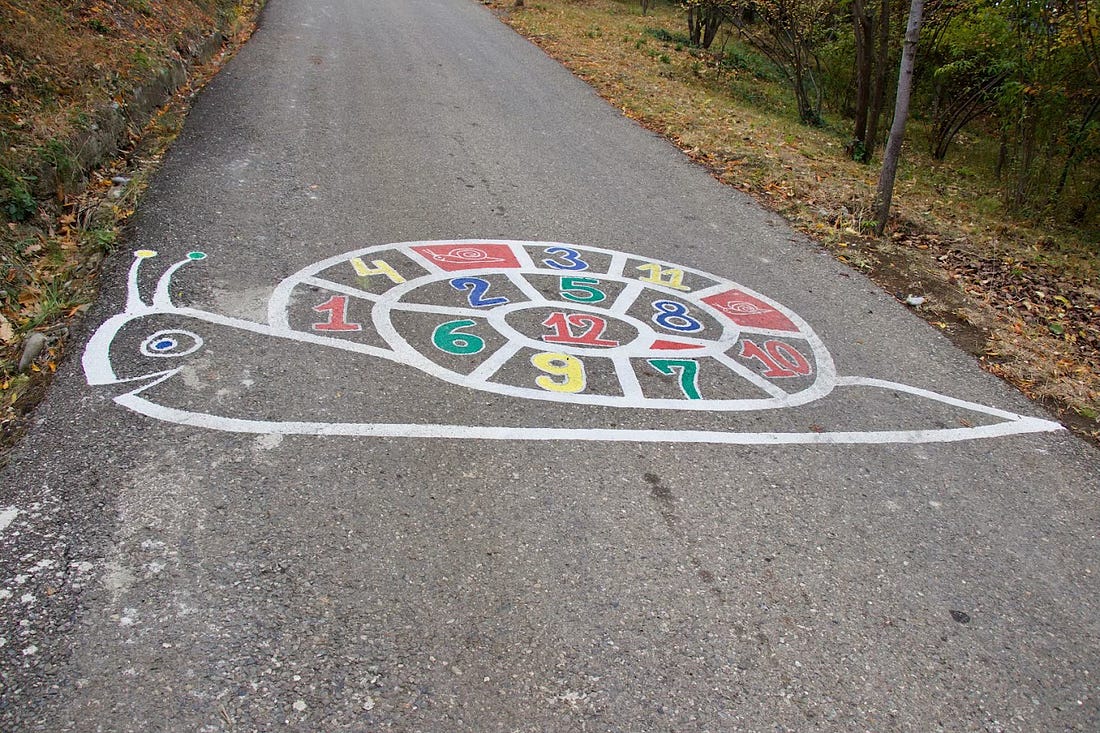
Sometimes, when I’m writing, I wonder if what’s emerging is truly creative, or just a rearrangement of familiar words. I think many of us feel this tug-of-war between freedom and form, between inspiration and design. We long for the wildness of originality yet find comfort in literary methods that have been successful in the past. Maybe creativity is the hybrid of spontaneity and structure. We often talk about creativity as if it’s spontaneous, a spark of an idea that itches to come to life. But what if creativity isn’t as free-form as we think? What if it, too, follows a kind of formula, not to confine, but to guide us toward the most resonant expressions of our imagination? There’s a romantic idea that creativity should be unstructured; that effective artists, writers, and inventors leap into the unknown with nothing but instinct and courage. It’s an appealing image, but it’s rarely true. Patterns are the skeleton of creativity. Music obeys ratios; design plays with geometry; cooking leans on recipes, and writing thrives on rhythm, symmetry, and proportion. Screenwriters often follow the “three-act” or “Save the Cat” formula to ensure emotional coherence. Mathematicians speak of elegance in an equation the way poets speak of beauty in a line. Every poet who breaks a rule knows it only matters because there’s a rule to break. Every jazz improvisation dances on a hidden grid of rhythm and chord progression. Even spontaneous storytelling leans on the structure of a beginning, middle, and end, the rise and fall of tension, the logic of emotional payoff, and so on. In other words: behind the illusion of freedom in creative chaos or literary chaos, there’s a structure holding everything together; the literary order, the creative order. For example, take poetry, haiku’s brevity feels profound not despite its structure, but because of it. Both are searching for harmony where parts align and something ineffable happens. Creativity, at its best, seems to emerge where chaos and order meet. Perhaps the real question isn’t whether creativity is free or formulaic, but how the two can coexist. Think of it as a dance: structure gives the steps; imagination adds the movement. A blank page may feel infinite, but a prompt, constraint, or pattern often opens the door wider. The writer who uses a character arc formula still needs intuition to make the character come alive. The painter who starts with a rule of thirds can still break the rule once balance has been achieved. The hybrid model of part instinct, part architecture mirrors how the brain itself works. Our right hemisphere sparks ideas; our left shapes them into coherence. Creativity, then, is a meeting between the two. Perhaps creativity isn’t freedom “from” structure, but freedom “through” it. Ideas need boundaries to find direction, but too much form may result in stagnation; too little and it may become unmanageable or not understandable. Somewhere in between lies that location where art, music, and writing come alive, and precise enough to have meaning, but creative and wild enough to feel human and not robotic. * ******* * ******* * ******* * In this Substack, we explore the stories within us and how they shape, heal, and reveal who we are. Do you lean toward structure, intuition, or a hybrid between the two? If you want to experiment with this balance in your own creative life, try one of these: 1. Impose a playful constraint. Write a poem with only one vowel. Sketch with your non-dominant hand. Create a story that fits in a tweet. 2. Reverse-engineer a creative piece of work. Take a story, song, or painting you love and look for its hidden structure. What beats, repetitions, or mathematical patterns give it flow? 3. Create your own formula. What patterns appear in your best work? Identify them and use them intentionally next time. Your formula then becomes your creative fingerprint.
Can’t see the whole article? Want to view the original article? Want to view more articles? Go to Martina’s Substack: The Stories in You and Me More Paris articles are in my Paris website The Paris Residences of James Joyce Rainy Day Healing - gaining ground in life You're currently a free subscriber to The Stories in You and Me . For the full experience, upgrade your subscription.
|
Monday, 6 October 2025
Formulaic Creativity: can imagination follow a pattern?







Subscribe to:
Post Comments (Atom)

-
petrini1 posted: " For Week 7, the theme of genealogist Amy Johnson Crow...
-
The power pose of personal peace - with psychological benefits ... ͏ ͏ ͏ ͏ ͏ ͏ ͏ ͏ ͏ ͏ ͏ ...


No comments:
Post a Comment