Collider physics – smashing matter at the speed of light (almost)… Large Hadron Collider – What is it good for?…
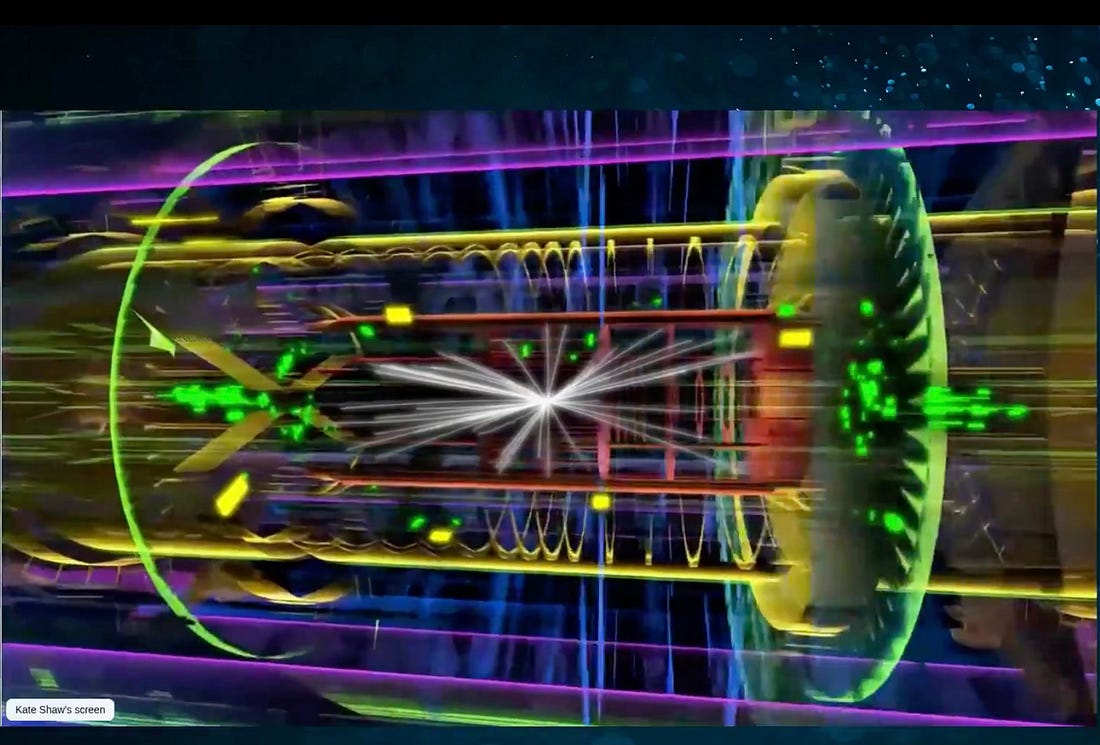
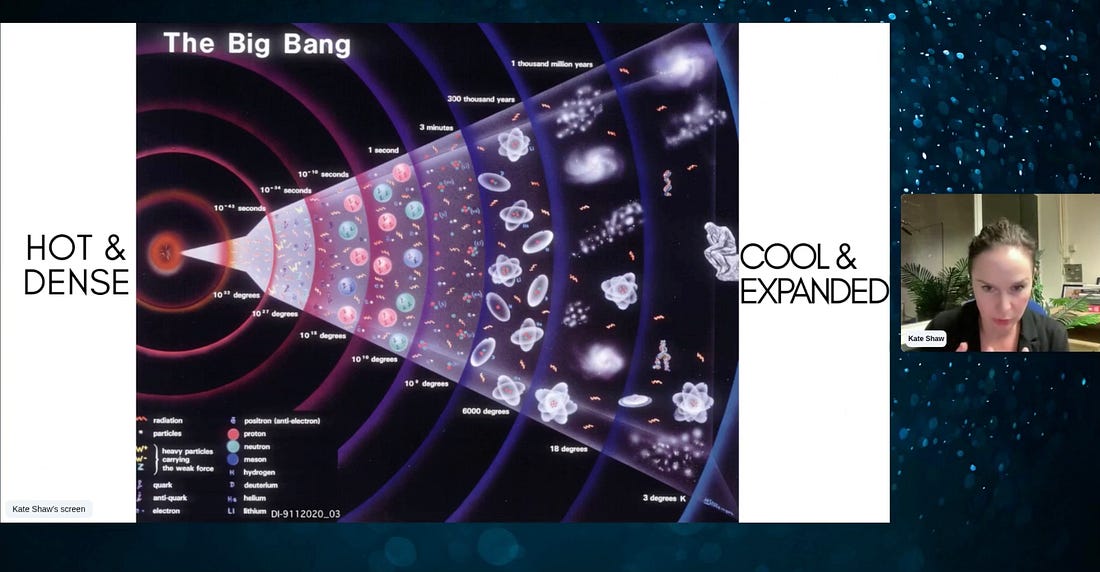
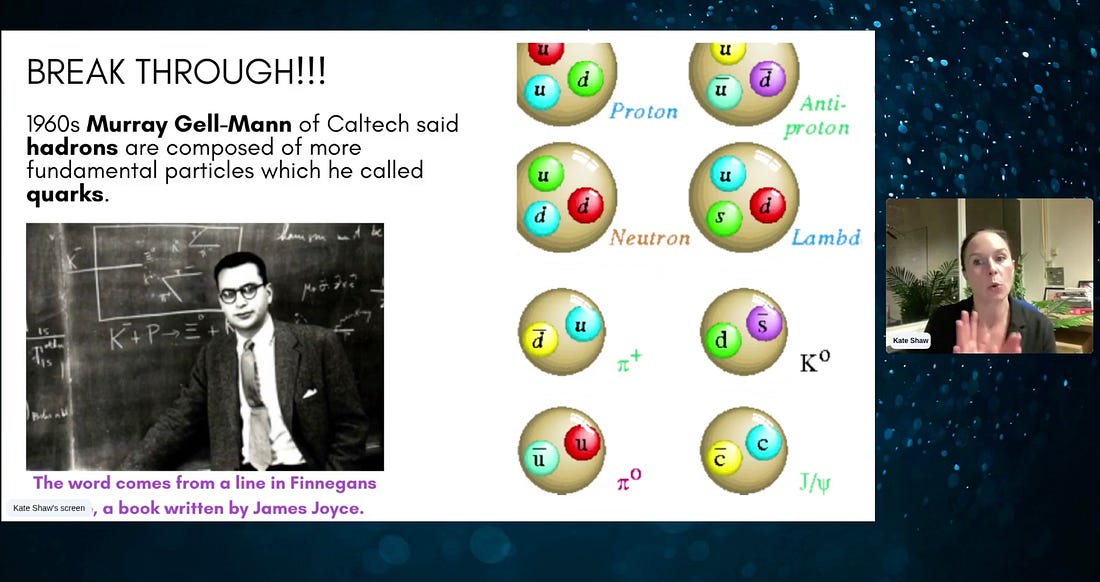
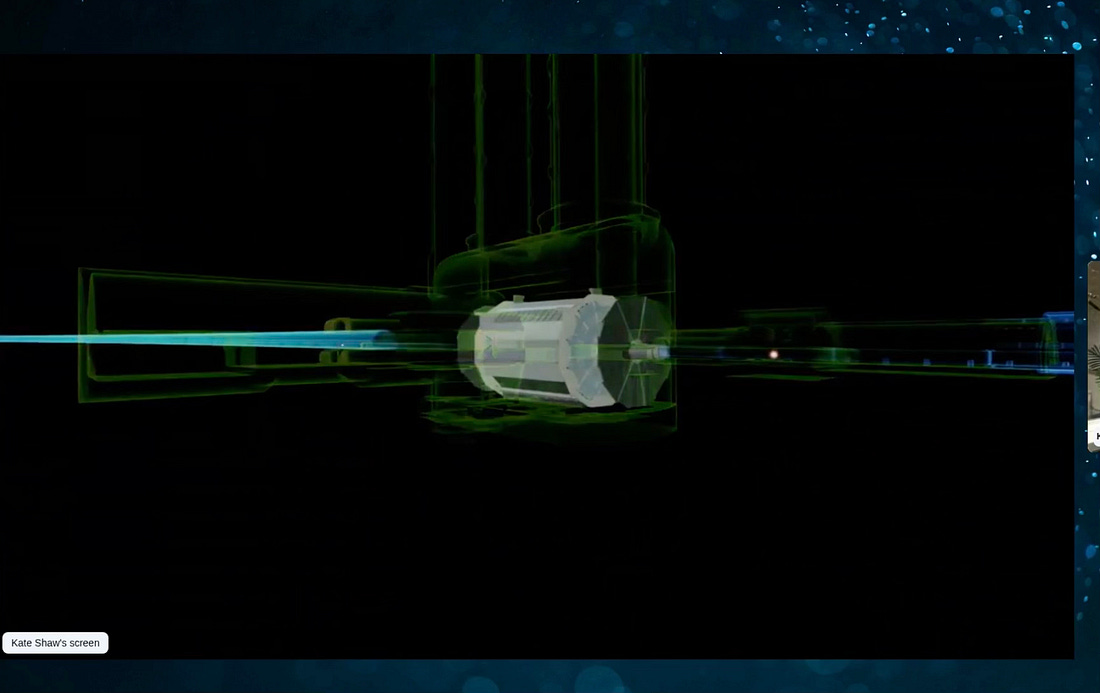
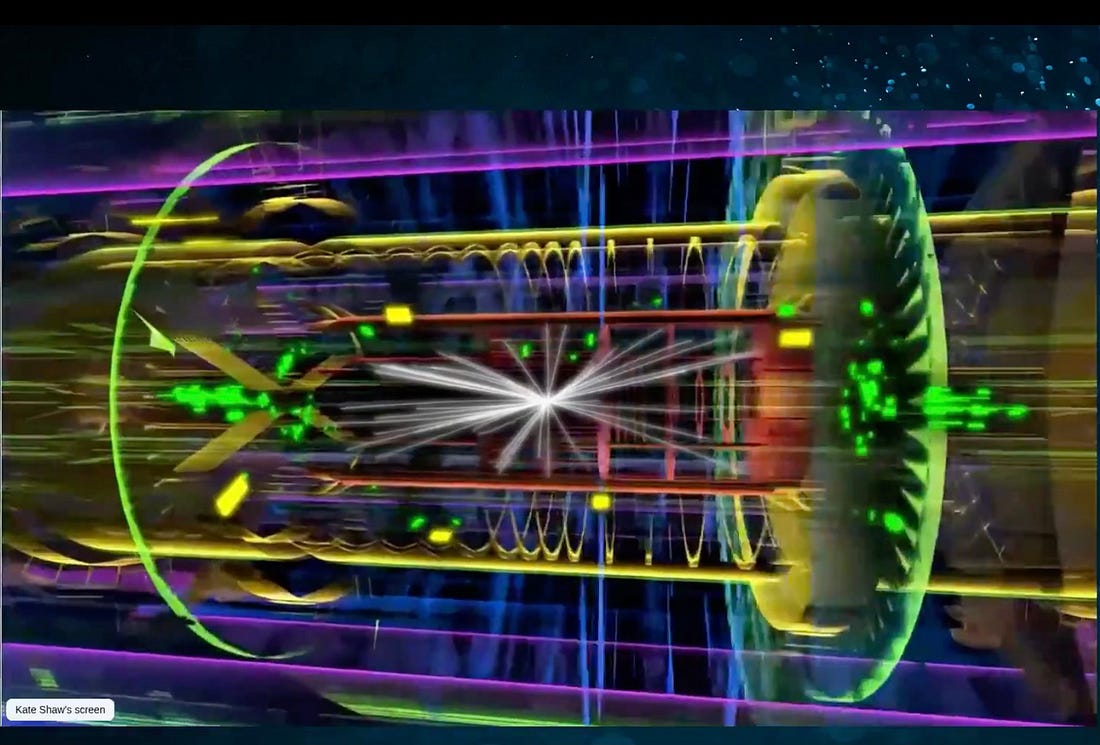
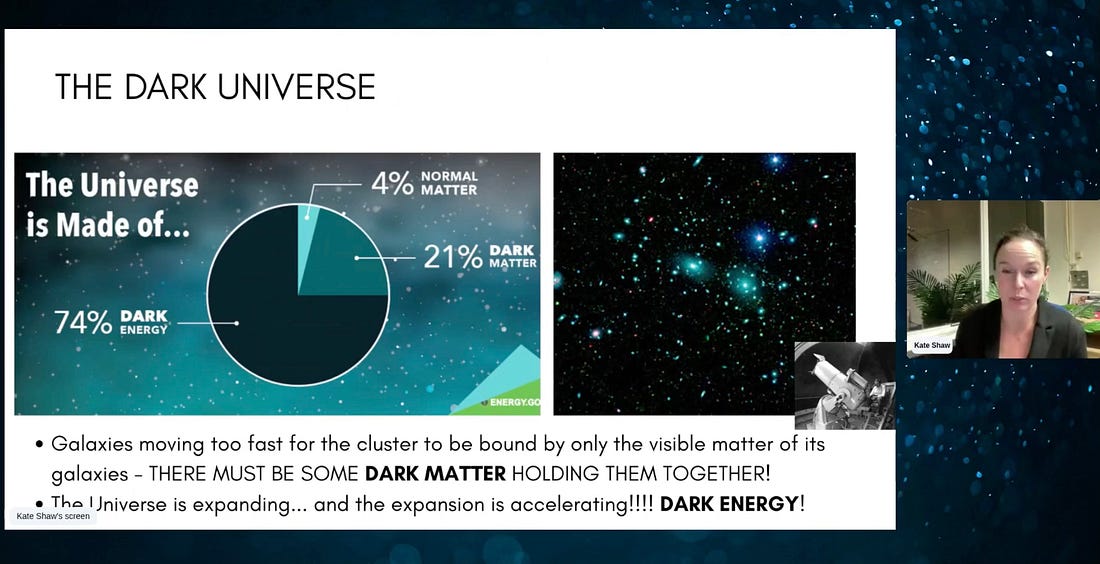
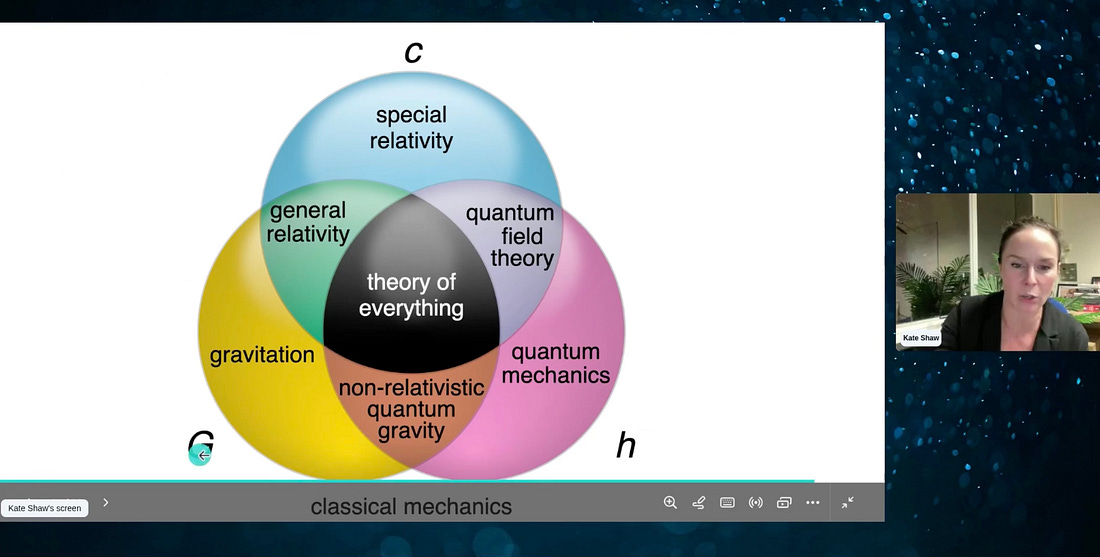
What does a particle physicist do? A particle physicist asks questions, such as: How did the universe begin? Where did everything come from? What is everything made of? How does everything interact? What holds the universe together? What undiscovered particles and forces lie hidden from view? The world of particle physics is the quantum field. For decades, theorists asked these questions and now particle physicists are finding the answers. In the “Beyond Reality: what are we truly made of?” New Scientist event on 25 November 2025, experimental particle physicist, Associate Professor Kate Shaw from the University of Sussex in England, working on the CERN ATLAS experiment and the Deep Underground Neutrino Experiment, Dune, at Fermilab, and consultant for the UNESCO institute International Centre for Theoretical Physics (ICTP) in Italy, provided some of the answers. Kate Shaw took participants on an exclusive virtual tour inside the greatest scientific instrument ever built: the Large Hadron Collider (LHC) at CERN. CERN is the European Organization for Nuclear Research, established in 1954 in Geneva on the France-Switzerland border. The Large Hadron Collider, she says is “a discovery machine.” It’s about “collider physics.” The LHC is 27 kilometres (17 miles) long, and a ring-shaped tube, that speeds up particles to almost 100% of the speed of light – the fastest thing in the universe. Light travels at about 300,000 kilometres per second in a vacuum. When scientists say almost 100%, they mean up to 99.9999991%. When the particles speed up, the beams collide and create “sprays” of new particles. There are about 40 million particle collisions every second that the LHC is operating. By smashing matter together at nearly the speed of light, the Large Hadron Collider acts as a time machine, enabling scientists to glimpse the dawn of creation. Shaw revealed the awe-inspiring story of the quest to understand the fabric of reality, from the monumental discovery of the Higgs boson to physics beyond the Standard Model of Particle Physics. The Standard Model, formulated in the 1970s, is the theory of fundamental particles and how they interact, called the forces of nature, such as electromagnetic charges (gravity is not included in the four major forces of nature). There are 17 particles in the Standard Model including quarks, neutrinos, and the neutron, proton, photon, and Higgs boson. They are the current best explanation of the major building blocks of the universe and three out of the four major forces of nature. With the discovery of the Higgs boson particle in 2012, scientists wanted to go beyond the Standard Model. Beyond the Standard Model of Particle Physics (BSM) refers to theoretical developments, such as the many unsolved mysteries including dark matter, dark energy, antimatter, neutrinos, and gravity. Are there more particles and more forces of nature out there? Why is there matter-antimatter asymmetry? What will the study of the theory of supersymmetry lead to? Why do neutrinos oscillate and have mass? How does gravity fit into the Standard Model of Particle Physics. So what? Well, understanding the fundamentals of the universe can help to improve medical technologies like forensic imaging during autopsies, CT scans, and MRIs. A Computed Tomography (CT) scan and a Magnetic Resonance Imaging (MRI) scan, used in radiology, are medical imaging techniques to take detailed images of the inner body to help diagnose diseases. CT scans take X-rays and are best for whole-body imaging of the skeleton, whereas the MRI scan does not involve X-rays, using magnetic fields instead, and is best for soft tissue pathology. Particle physics also improves veterinary radiology to diagnose animal diseases, palaeontology to examine the structure of fossils, industrial imaging to analyze chemicals, and imaging to study the anatomy of plants, to name a few more. That’s why smashing matter matters.
Can’t see the whole article? Want to view the original article? Want to view more articles? Go to Martina’s Substack: The Stories in You and Me More Paris articles are in my Paris website The Paris Residences of James Joyce Rainy Day Healing - gaining ground in life. You're currently a free subscriber to The Stories in You and Me . For the full experience, upgrade your subscription.
|
Tuesday, 25 November 2025
Collider physics – smashing matter at the speed of light (almost)






Subscribe to:
Post Comments (Atom)

-
petrini1 posted: " For Week 7, the theme of genealogist Amy Johnson Crow...
-
The power pose of personal peace - with psychological benefits ... ͏ ͏ ͏ ͏ ͏ ͏ ͏ ͏ ͏ ͏ ͏ ...
-
… personal protection vs environmental protection – is that the issue? … ͏ ͏ ͏ ͏ ͏ ͏ ͏ ͏ ͏ ...


No comments:
Post a Comment