I’m free floating – freeing my mind from the usual, the expected, the certain in story writing. I’m learning from Anaximander – he’s the Greek scientist that wrote about Earth free floating in space. I can learn a lot from him. I was reading Carlo Rovelli’s 2023 book, Anaximander and the Nature of Science, which is full of scientific insights that can be usefully applied to the arts. The insights of Anaximander, who saw the Earth as a stone floating in space without falling, led the world in cosmology, physics, geography, meteorology, and biology. Before him, people thought the world was flat. Twenty-six centuries ago, in Miletus, a Greek city – now in Turkey – Anaximander (610-546 BC) was possibly the first philosopher to have documented his scientific studies. He wrote a treatise called On Nature that is long lost. Even though writing had been around for 3,000 years, scientific studies were not well documented. And mathematics was in its infancy too. Certainly, in Anaximander’s time, people were adding, subtracting, and multiplying, but not a lot of dividing. Yes, division, the most difficult of the basic operations of arithmetic, was only in the form of dividing “by two, three, four, and five, but not by seven” in Anaximander’s days. A fifth grader nowadays knows more than a celebrated mathematician of yore. I’m being ambitiously optimistic though – I know grown men of today that cringe at having to use division! One that I know says he was absent on the day division was taught in school and has never been able to catch up. He can know now that division wasn’t only difficult for him, but for many – and the last of all operations to be used fully, and expertly. But Anaximander, the great experimenter, the unknown, under-estimated, under-rated, misunderstood scientist, is making a big comeback in the science scene. Specifically for embracing uncertainty and seeking knowledge to progress to a more certain world view. He was pre-Darwin (1809-1882), pre-Newton (1642-1726), pre-Socrates even, who died in 399 BC. Carlo Rovelli says of Anaximander’s studies in uncertainty: “Lack of certainty is anything but weakness. Instead, it constitutes – and has always constituted – the very strength of rational thinking, understood as curiosity, rebellion, and change. It is precisely by not taking its answers as definitive that science can continue to improve them … recognizing errors and looking further and further ahead.” Anaximander opened doors – scientific doors – in the 6th century, and the doors to nature, as embraced in Rovelli’s book. More specifically, Anaximander said that animals evolved. In doing so, he also opened the doors to conflicting views, and indeed, to conflict and controversy in the scientific world. Two profoundly different views of nature clashed headlong into a cerebral and verbal stoush: religion vs the new world view. Despite the criticism, Anaximander continued to write. With his new mode of rational and critical thinking, open to infinite possibilities in the rebellious quest for scientific knowledge, he re-imagined the world, not once, nor twice … Anaximander’s writing alone, is an invitation, an inspiration, to be open to infinite possibilities in the rebellious quest for self-knowledge – in a Parisian world of boulevards and cafés frequented by authors and creatives. Remember the heady world of Paris in the 1920s? And the lyrics of Aaron Brown’s 2020 song Back to Black & White? It begins:
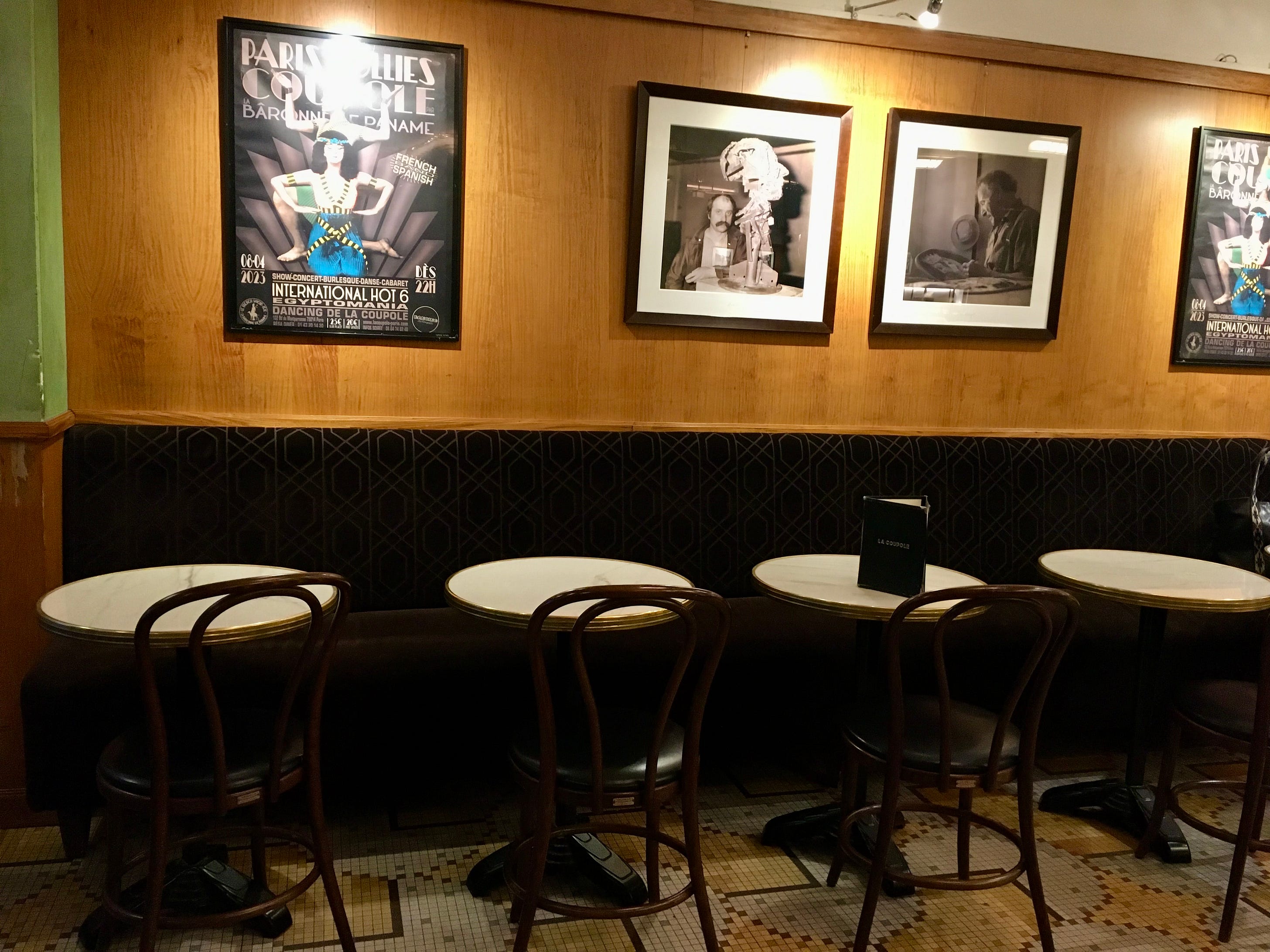
The song is about nostalgia, it’s about ballroom dancing like 1922, and the dancing rooms of American bars in Paris in the 20s and 30s. Jazz … Louis Armstrong … La Coupole the Bar Americain … flapper dresses free floating. The song continues:
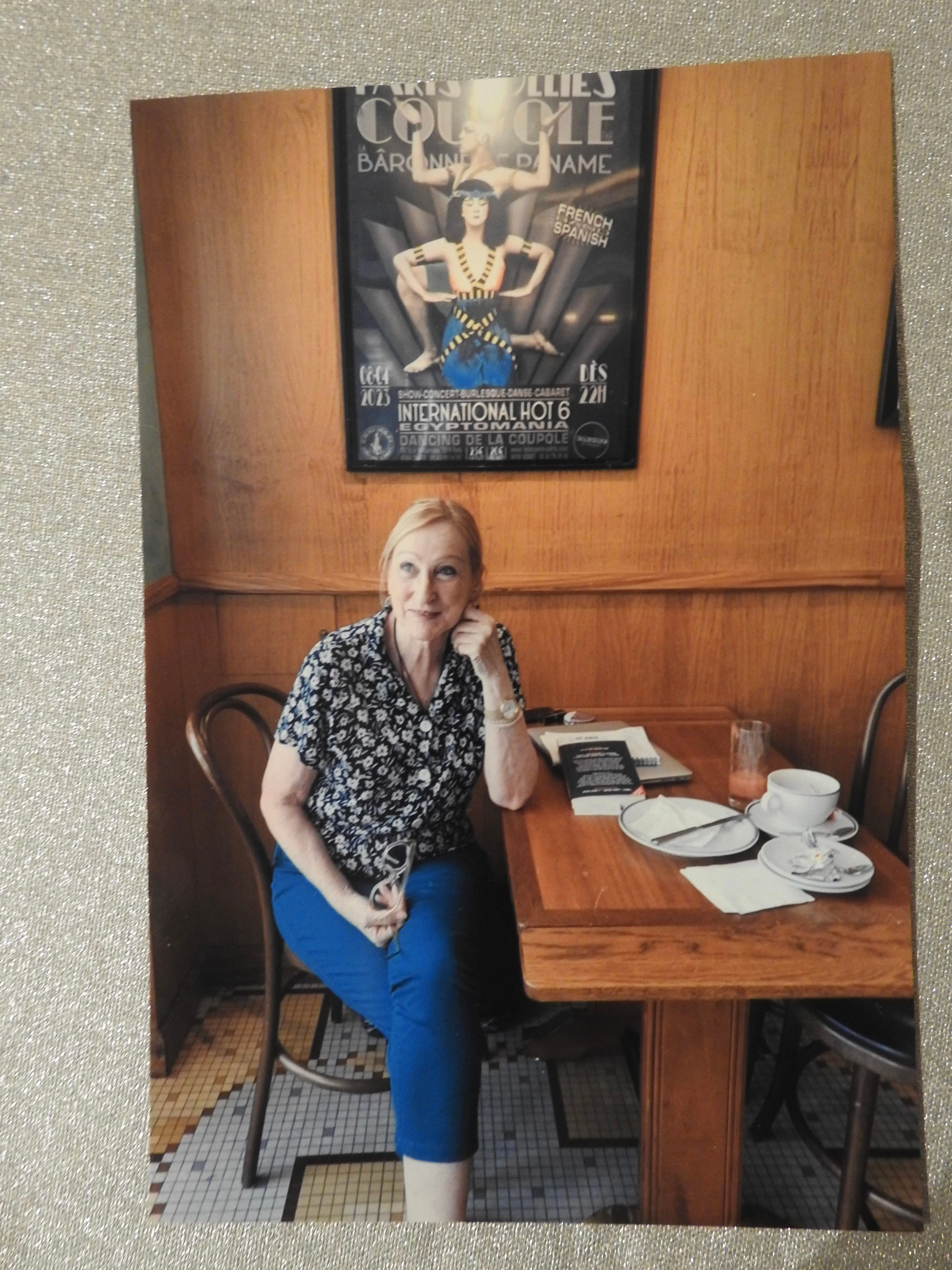
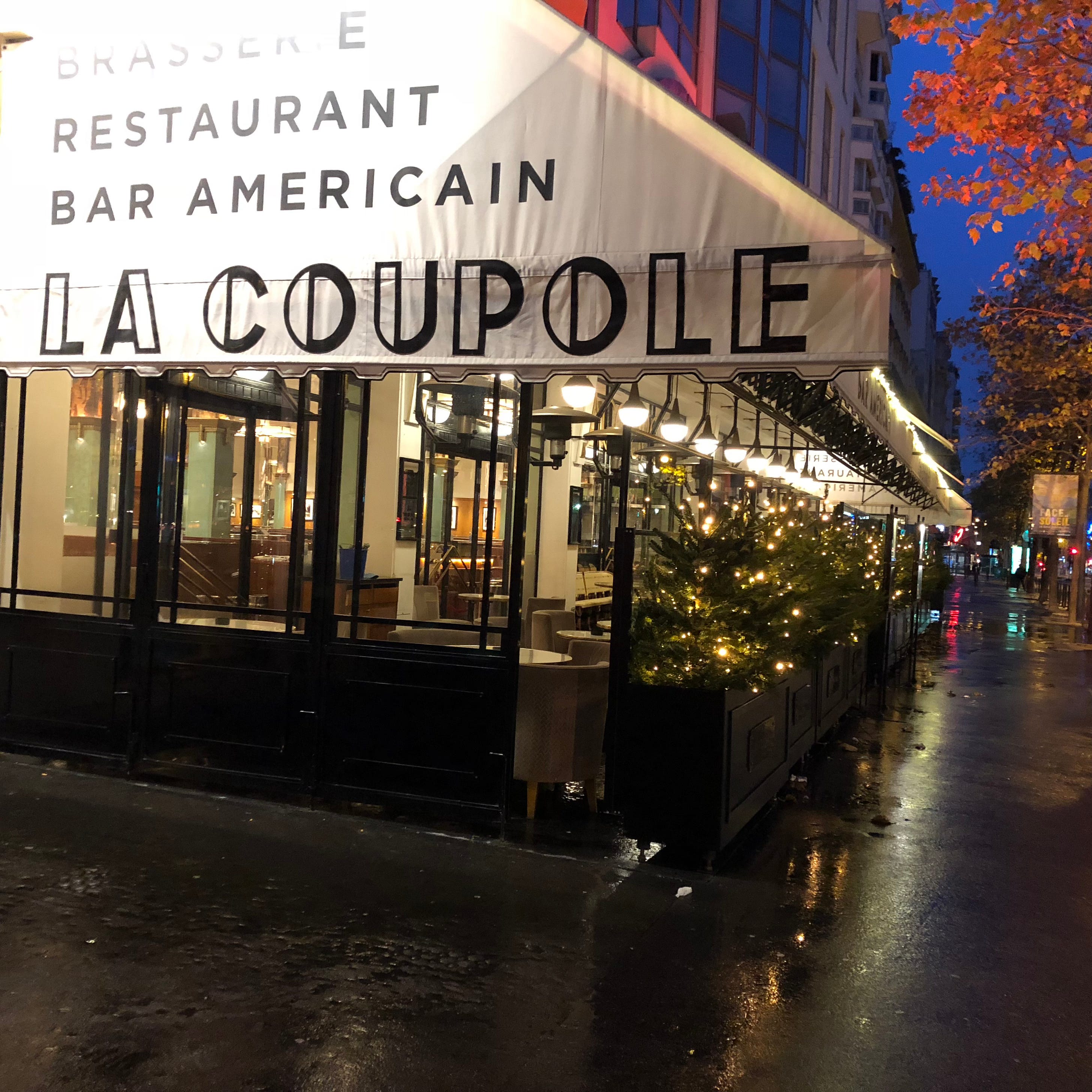
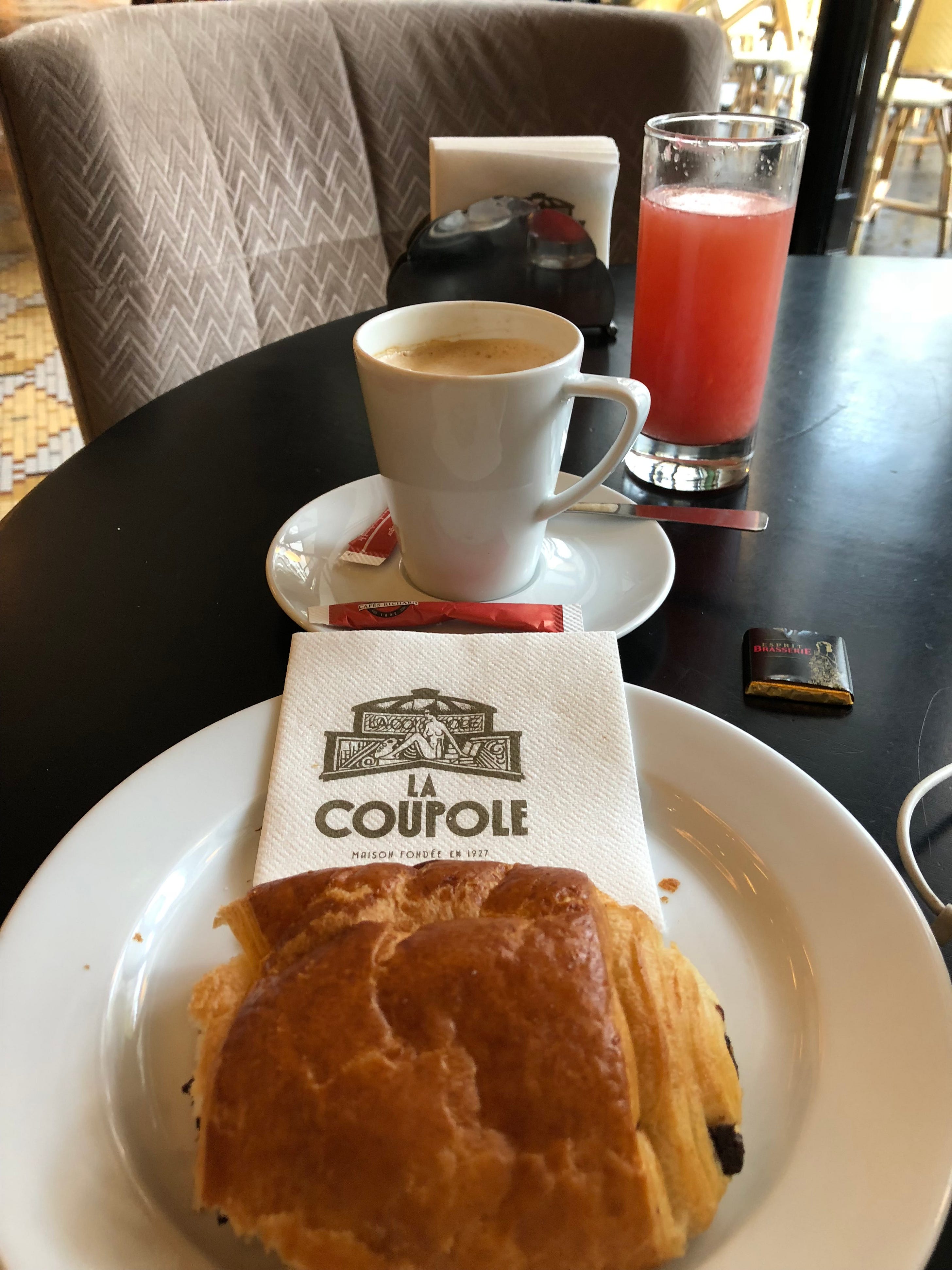
I’m having breakfast now at La Coupole, with the dancing rooms underground, and the ambiance is right for Anaximander’s melting pot of science, nature, and culture … to be open to infinite possibilities in the rebellious quest, any rebellious quest for a timely word, a poignant phrase, even an entire book! I’ll sign off as Martini with a twist! Have you missed the other 19 episodes? Find them in the “PARIS as I write” tab of this “The Stories in You and Me” Substack. MY PARIS WEBSITE AND ALL THINGS PARISIAN Photographer: Martina Nicolls PIP DECKS, the fun and engaging how-to guides for business.
You're currently a free subscriber to The Stories in You and Me . For the full experience, upgrade your subscription.
|
Friday, 7 June 2024
NEW PARIS BOOK IN PROGRESS IN 2024: I'M FREE FLOATING – Blog 20






Subscribe to:
Post Comments (Atom)

-
petrini1 posted: " For Week 7, the theme of genealogist Amy Johnson Crow...
-
A fall, a faceplant, and getting back up again … ͏ ͏ ͏ ͏ ͏ ͏ ͏ ͏ ͏ ͏ ͏ ͏ ͏ ...
-
The power pose of personal peace - with psychological benefits ... ͏ ͏ ͏ ͏ ͏ ͏ ͏ ͏ ͏ ͏ ͏ ...


No comments:
Post a Comment