What will you value most in 2026? I already know my answer.… the human touch is becoming increasingly rare …
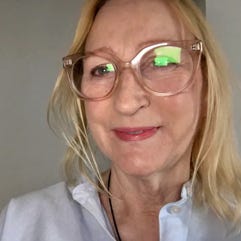
I already know that I will value the human touch more than anything else in 2026. The human touch is something increasingly rare, increasingly precious, and increasingly noticed when it appears. The world keeps getting faster and more efficient. We are encouraged, or almost trained, to interact with systems rather than with people. Online shopping replaces browsing. Apps replace conversations. Even when I make the effort to go in person to the supermarket or shop, I am often guided straight to a screen – to find something, to pay for it, and to leave feedback. Self-checkout. Scan. Pay. Feedback. Leave. Sometimes I stand there and think, quite genuinely: Is there a human here? It is becoming more difficult to know who actually works in a store. It’s harder to know whom to ask for assistance. Harder to catch someone’s eye without feeling like I’m interrupting. The architecture of modern life seems designed to remove the need for contact, and quietly, almost politely, it does so, without people’s consent. And yet. When a human does appear, when someone assists me at a counter, brings a coffee, helps with a question, or acknowledges my confusion, I notice it immediately. I feel more reassured that help is coming. I notice too that I now express my gratitude differently: more frequently, more strongly, more genuinely. “Thank you” has become a fuller sentence. Eye contact lingers. Smiles are less rushed. A conversation usually follows. At this point, I sometimes ask myself: Why does this matter so much to me now? I am not an extrovert. I am, if anything, an aging introvert. I don’t want crowds. I don’t want noise. I don’t want constant interaction. But I think that as I age, I become more attuned to what is real rather than convenient. Small, genuine, human moments reassure me that I still belong to the living fabric of the world. A brief exchange, a shared smile, a few kind words are not draining; they are anchoring. They don’t overwhelm my nervous system; they calm it. I am grateful that someone is present, and that I am still seen. It’s not because the assistance itself is extraordinary. It’s because their presence is. It is a human choosing to engage, a human choosing to help, and a human choosing to be there. In a digital world, this is no small thing. I don’t want more convenience in 2026. I don’t want more automation, more frictionless transactions, more invisible processes that leave no trace. I want moments that tell me I am not moving through life alone or unseen. I want the personal touch. I want the human touch. I want a human, flaws and all. I want conversations that aren’t optimized, interactions that aren’t scripted, and help that comes with a face and a voice. Perhaps valuing the human touch also means offering it more deliberately: being present, being patient, being kind in ways that aren’t efficient but are meaningful. Perhaps it means resisting the urge to disappear behind screens when a human moment is possible. So, if you were to ask me what I will value most in 2026, I wouldn’t say productivity or growth or innovation. I would say this: The quiet relief of realizing there is a human here. Can’t see the whole article? Want to view the original article? Want to view more articles? Go to Martina’s Substack: The Stories in You and Me More Paris articles are in my Paris website The Paris Residences of James Joyce Invite your friends and earn rewardsIf you enjoy The Stories in You and Me , share it with your friends and earn rewards when they subscribe.
|
Sunday, 4 January 2026
What will you value most in 2026? I already know my answer.





Subscribe to:
Post Comments (Atom)

-
petrini1 posted: " For Week 7, the theme of genealogist Amy Johnson Crow...
-
… personal protection vs environmental protection – is that the issue? … ͏ ͏ ͏ ͏ ͏ ͏ ͏ ͏ ͏ ...


No comments:
Post a Comment