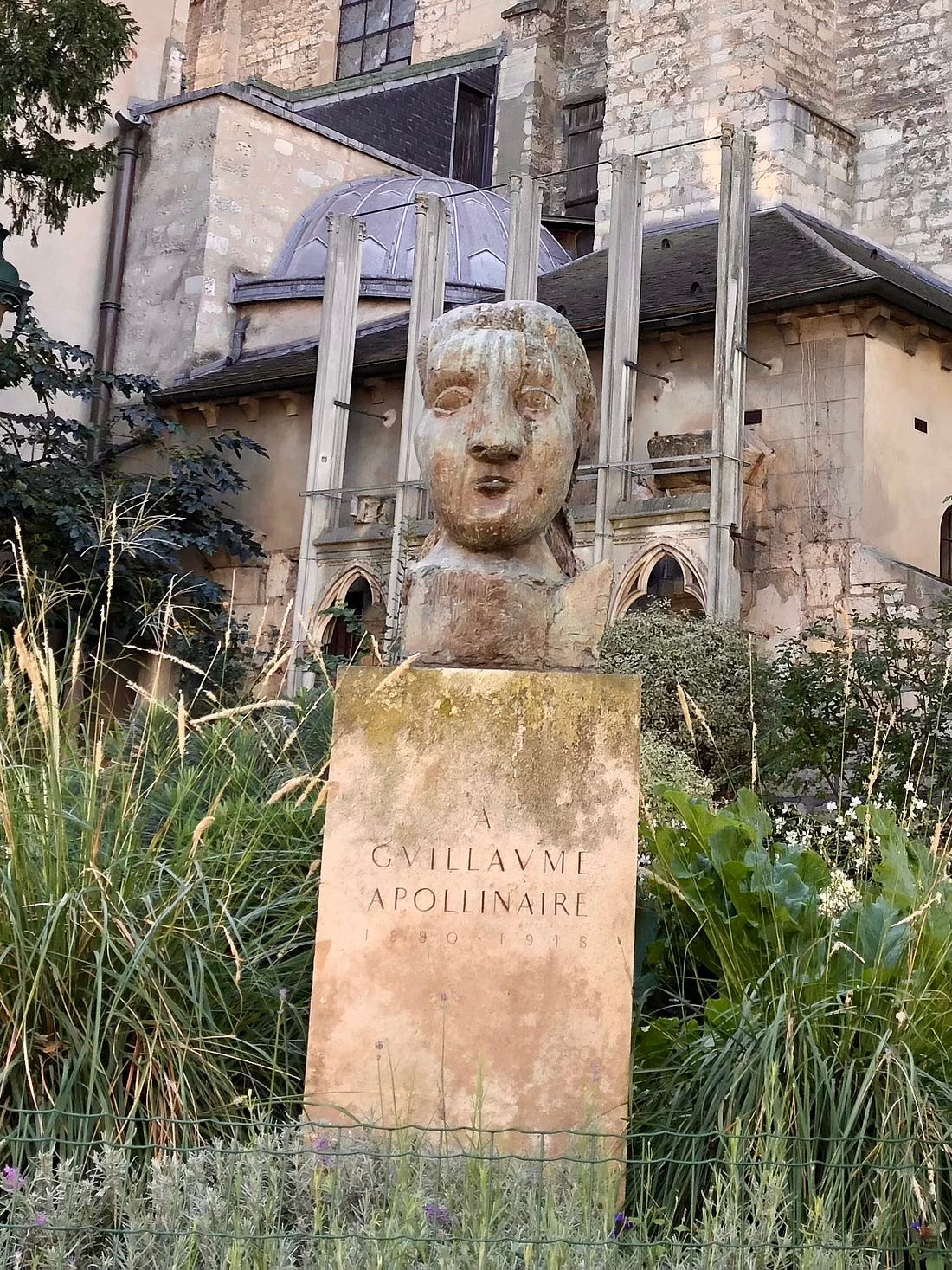
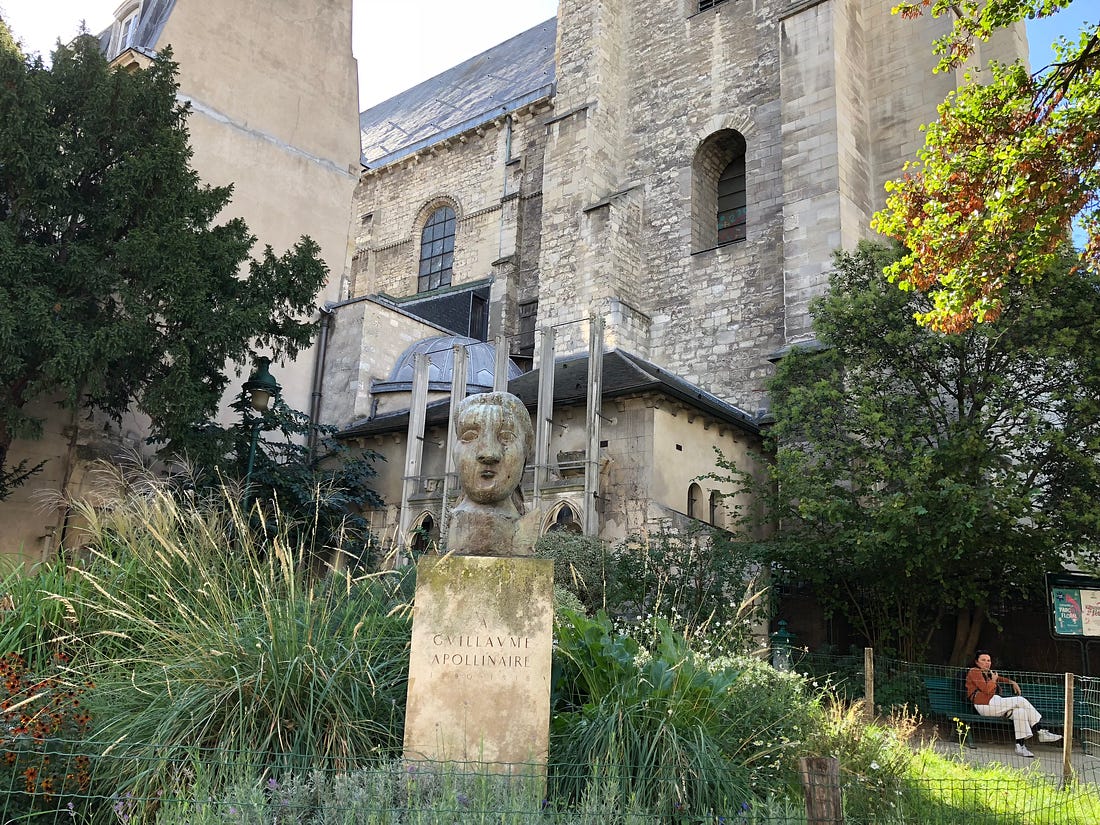
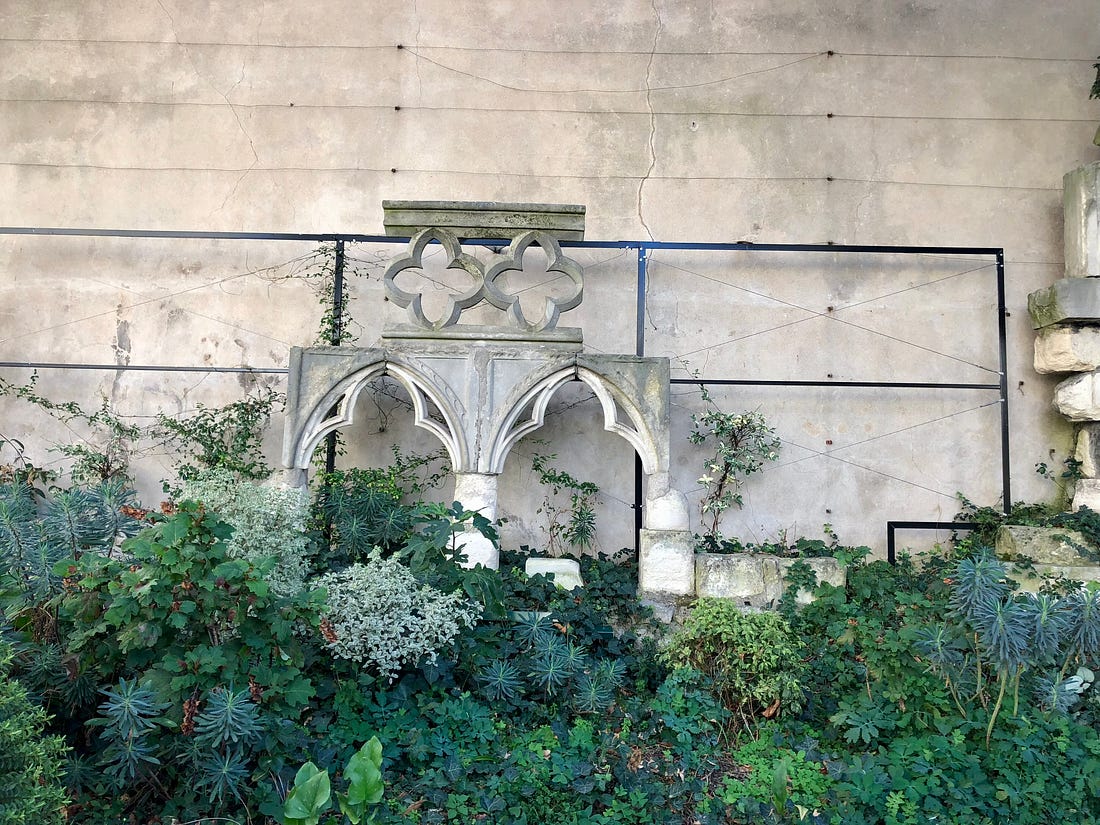
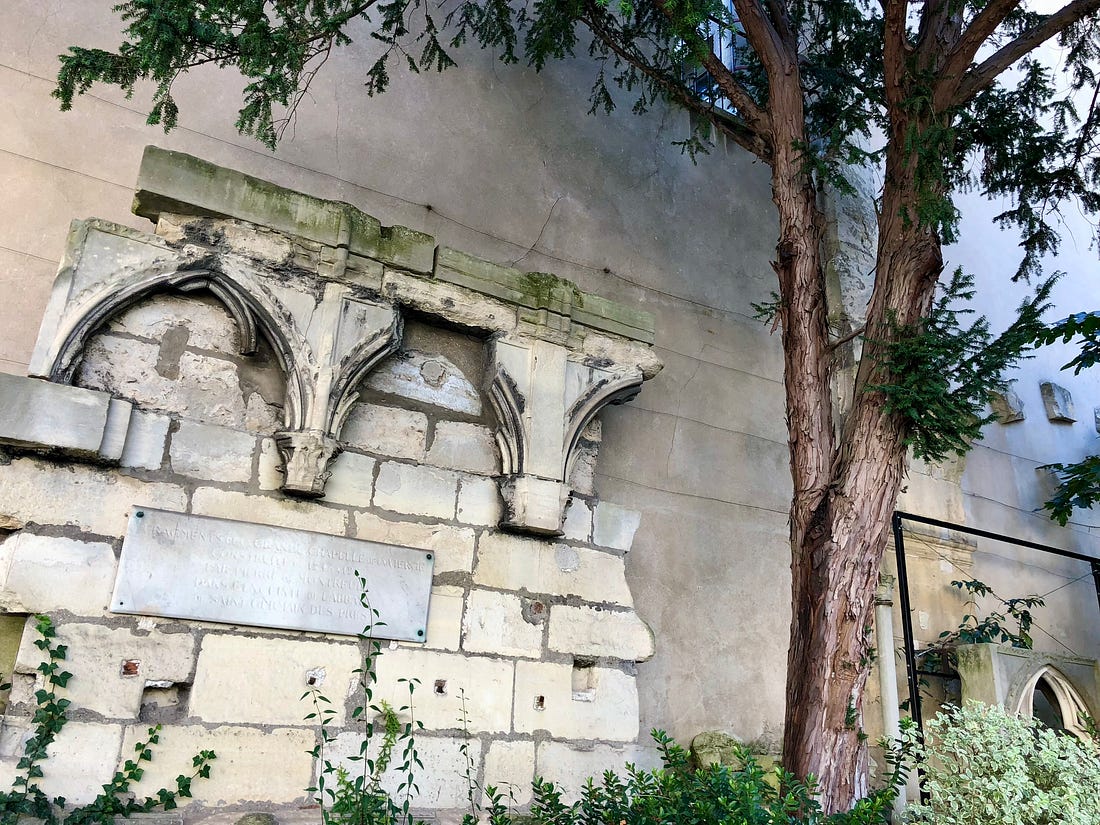
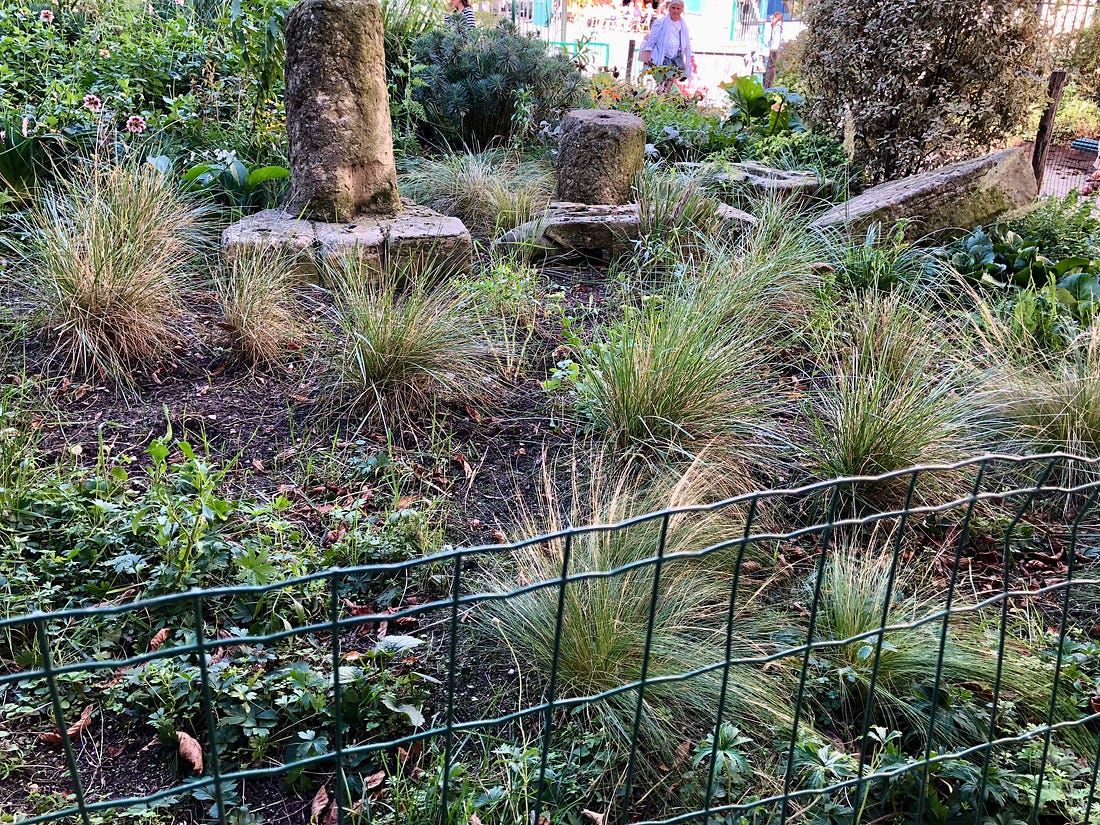
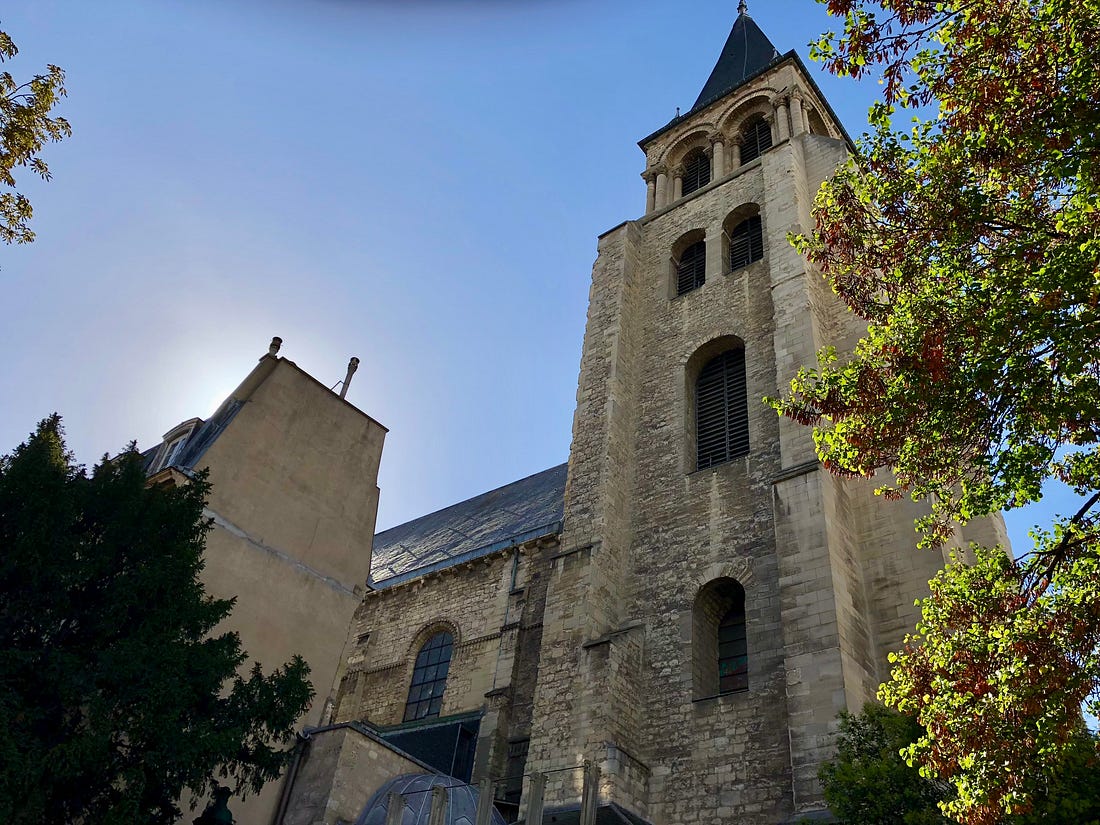
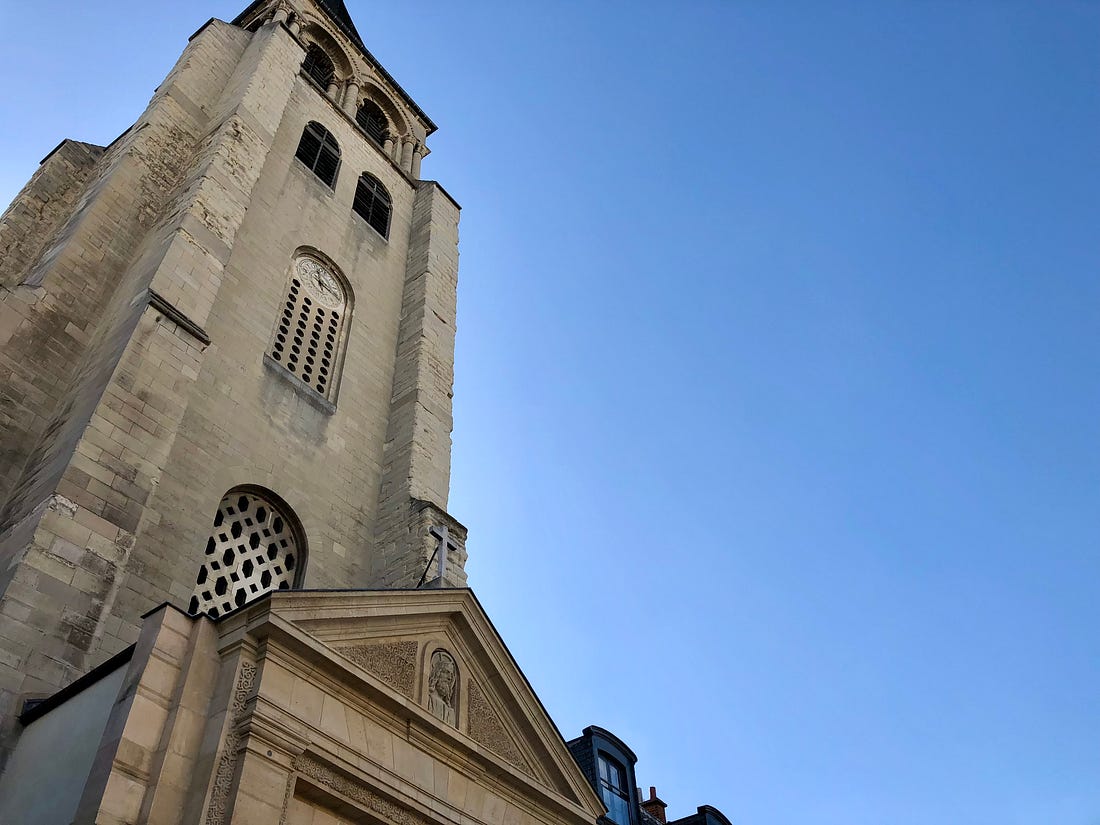
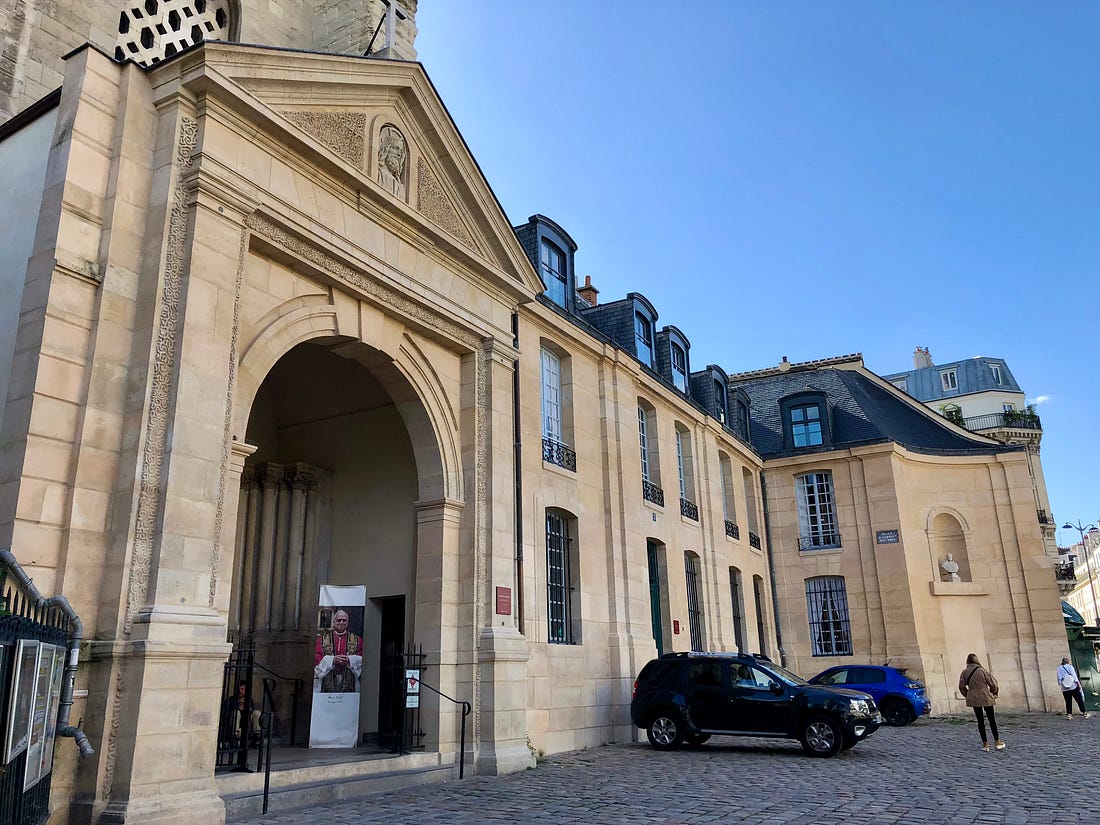
Beside one of the oldest churches in Paris, the Saint-Germain-des-Prés Church on the Boulevard Saint-Germain, is a small garden in the Square Laurent-Prache featuring a bust sculpted by Pablo Picasso, a tribute from one artist to another artist. The inscription is “To Guillaume Apollinaire 1880-1918.” The bust is not the French poet Guillaume Apollinaire. Born in Italy, Apollinaire (1880-1918) moved to Paris in 1900 at the age of twenty where he befriended Spanish artist Pablo Picasso (1881-1973). He joined the French army as an infantry officer in the first World War (1914-1918) and was hit by shrapnel to the temple in 1916 and died at the age of 38 in 1918 of influenza during the Spanish flu pandemic. Here is the story of the real face of the bust. Picasso’s “To Guillaume Apollinaire” bust was dedicated to him posthumously. The secret is in the word “to” – for it was not “of” Apollinaire but gifted “to” the city of Paris, and to the artist, to pay respects to his friend. In 1947, Picasso sculpted a bust of Croatian artist Dora Maar who was his companion and muse. Henrietta Theodora Markovitch (1907-1997) was Picasso’s partner from 1935-1943. Born in France, she was a photographer, painter, and architect. It was this bust of Dora Maar that Picasso dedicated “To Guillaume Apollinaire.” It was inaugurated on 5 June 1959 in the garden of the Square Laurent-Prache, at the foot of the Saint-Germain-des-Prés church. The location was not chosen by chance, as Picasso, Dora Maar, and Apollinaire had frequented the nearby cafés. In the stealth of the night of 30 March 1999, the bust (weighing 80 kilograms – 176 pounds) was detached from its base and removed. Locals woke on 31 March to find an empty pedestal with chisel marks. An investigation was opened, but after months of searching there was still no trace of it. Walkers, or municipal workers, discovered a damage sculpture in moss in the moat surrounding the Château de Grouchy in the small rural commune of Osny (Val d'Oise), 32 kilometres (20 miles) northwest of Paris. After they informed the relevant authorities, the bust was cleaned, restored, and displayed in the Val d’Oise town hall lobby at the top of the staircase. Ange Tomaselli, a retired art lover, recognized the work as a Picasso during a visit to the town hall in April 2000 and sought more information about it. The mayor told him that it was not a Picasso, just some piece of work found in a ditch in the woods. The mayor thought the bust was not very beautiful but of interest because it may have been an original by a local artist. After research, Tomaselli found a photo in an art book that mentioned the 1999 theft of the sculpture. He notified the mayor of Paris and also issued legal proceedings against the mayor of Val d’Oise for handling stolen goods. Who stole it and why? Why did they damage and ditch it? Did the mayor of Val d’Oise know it was stolen? Did he know it was a Picasso piece? No matter, the bust was returned to its place in the Square Laurent-Prache on 18 December 2001, without ceremony, which caused some intrigue. The bust and pedestal do not bear Picasso’s name. People thought it was a copy to replace the missing original. Picasso’s family denied the claims, explaining that the restoration work on it could have caused the change in its appearance, especially the dimensions and the hair. Despite everything, some people continue to this day to claim that it is a fake. Is it fake or is it a Picasso? To some, there is doubt. What is known is that this is not Guillaume Apollinaire but Dora Maar. The Square Laurent-Prache is still there. It was named after a 19th century French politician who served as mayor of the 6th arrondissement (district). Opened in 1901, this small public garden sits on a historic crossroad between the Romanesque stone of the church and the 20thcentury civic planning of the garden, representing Parisian ideas of urban green spaces. The old church is located on the Boulevard Saint-Germain, opposite the iconic 1885 café Les Deux Magots and near the legendary Café de Flore. From the benches in the garden, you can look up to see the abbey tower rising above the trees, watch the bustle of diners at the cafés, or enjoy the small open-air museum-like garden with its classical sculptures among the flowerbeds.
Can’t see the whole article? Want to view the original article? Want to view more articles? Go to Martina’s Substack: The Stories in You and Me More Paris articles are in my Paris website The Paris Residences of James Joyce Rainy Day Healing - gaining ground in life You're currently a free subscriber to The Stories in You and Me . For the full experience, upgrade your subscription.
|
Wednesday, 10 September 2025
Picasso’s mystery sculpture: the name does not match the face






Subscribe to:
Post Comments (Atom)

-
petrini1 posted: " For Week 7, the theme of genealogist Amy Johnson Crow...
-
The power pose of personal peace - with psychological benefits ... ͏ ͏ ͏ ͏ ͏ ͏ ͏ ͏ ͏ ͏ ͏ ...
-
A fall, a faceplant, and getting back up again … ͏ ͏ ͏ ͏ ͏ ͏ ͏ ͏ ͏ ͏ ͏ ͏ ͏ ...


No comments:
Post a Comment