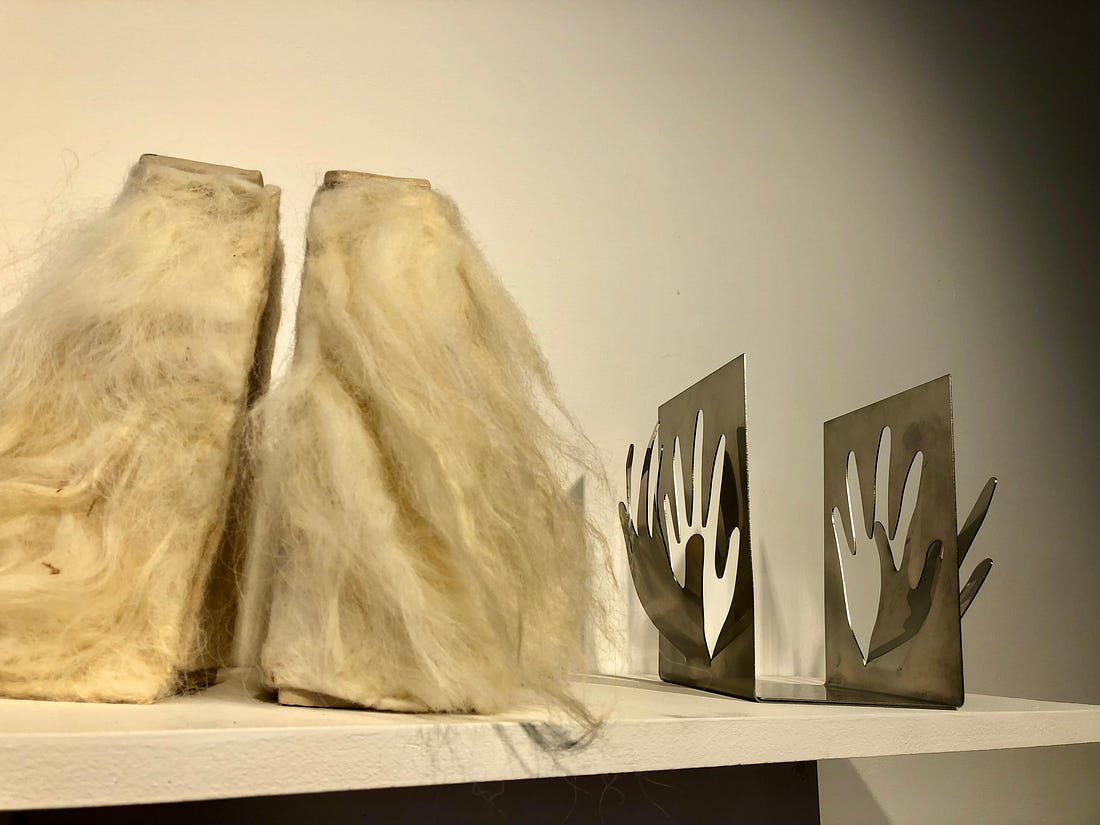
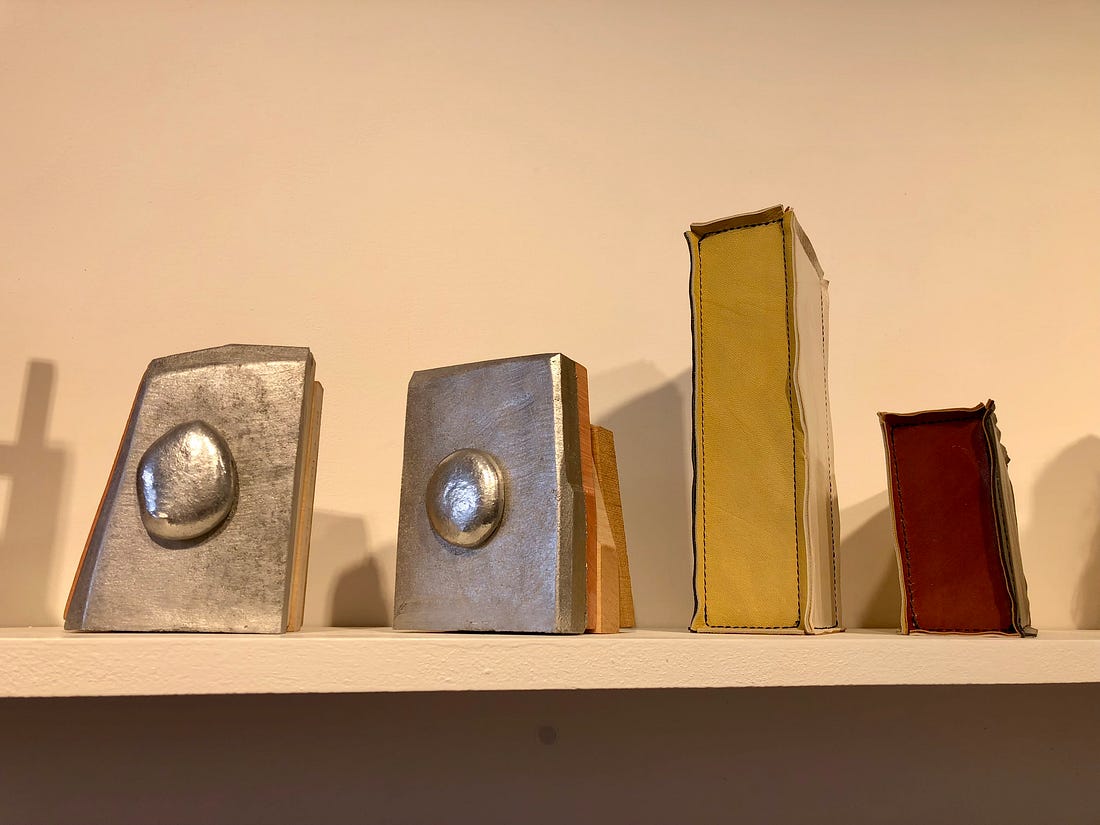
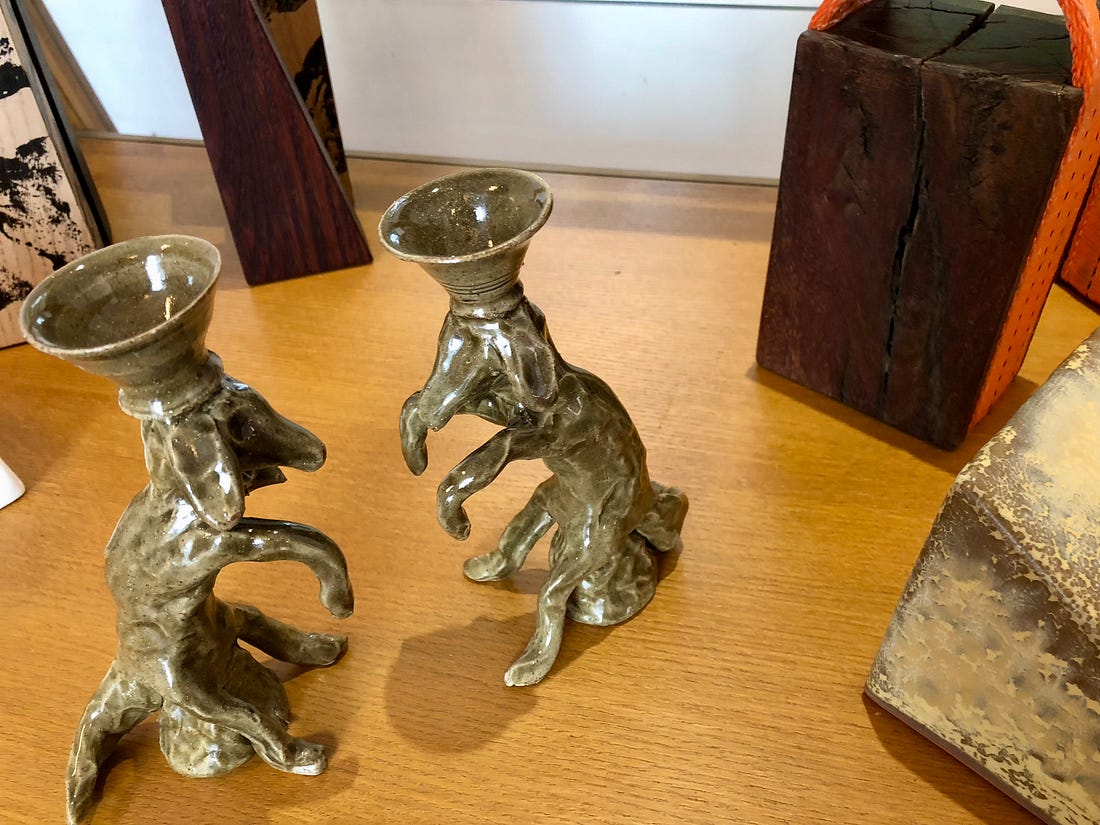
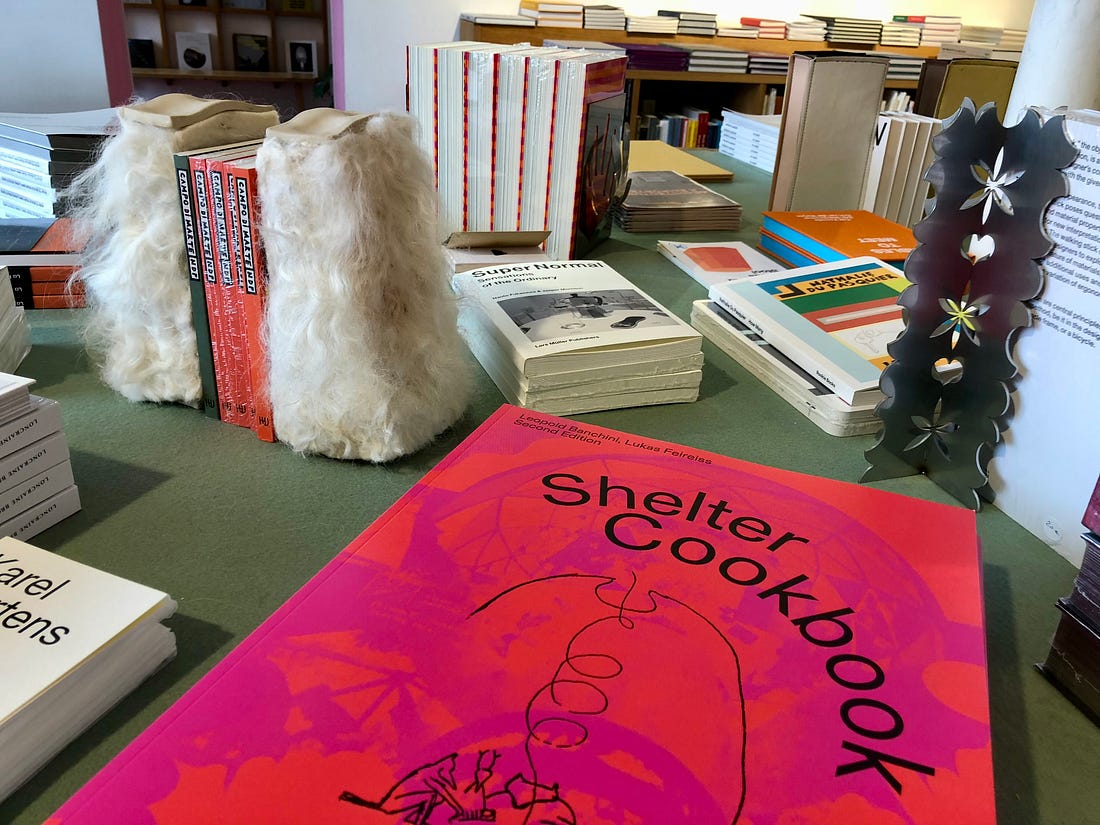
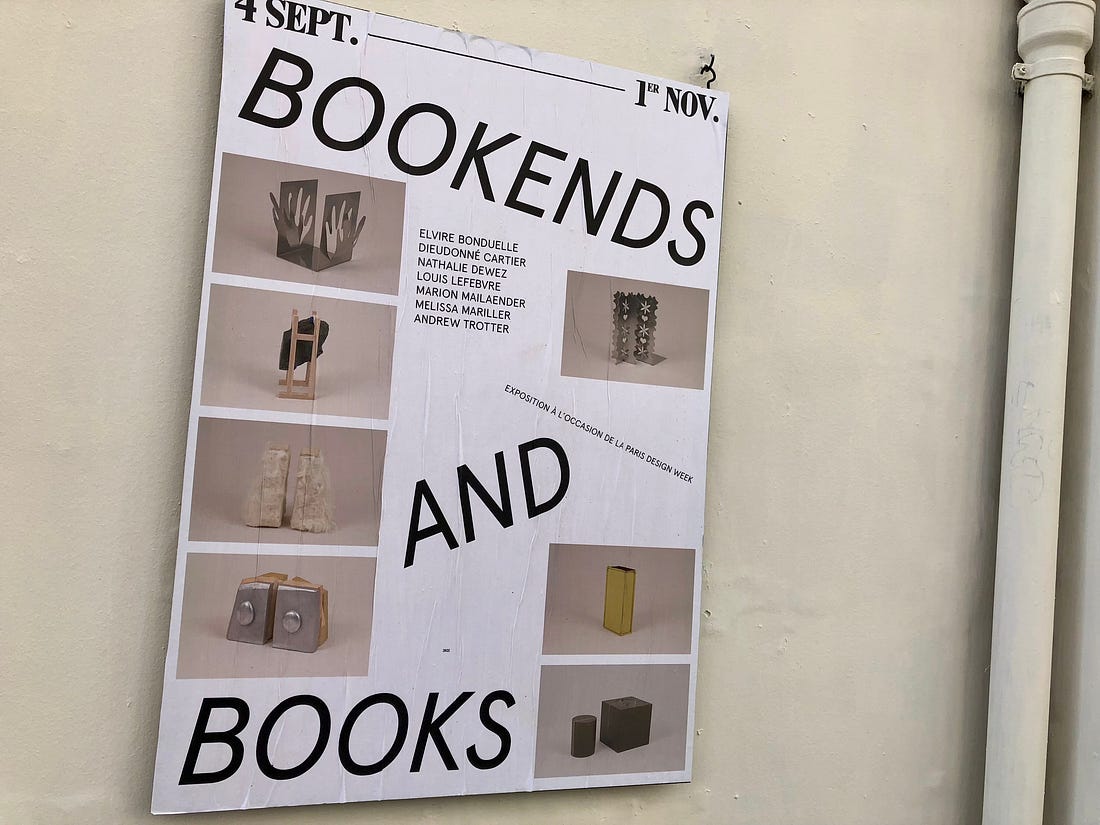
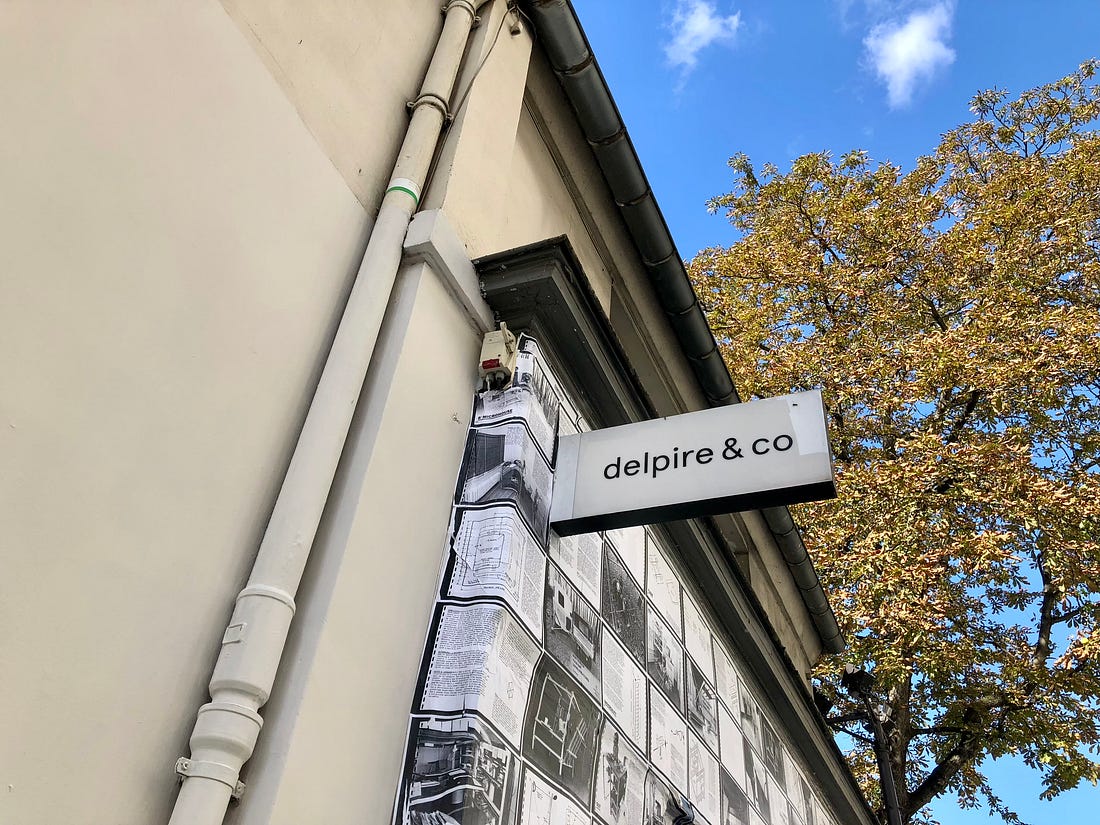
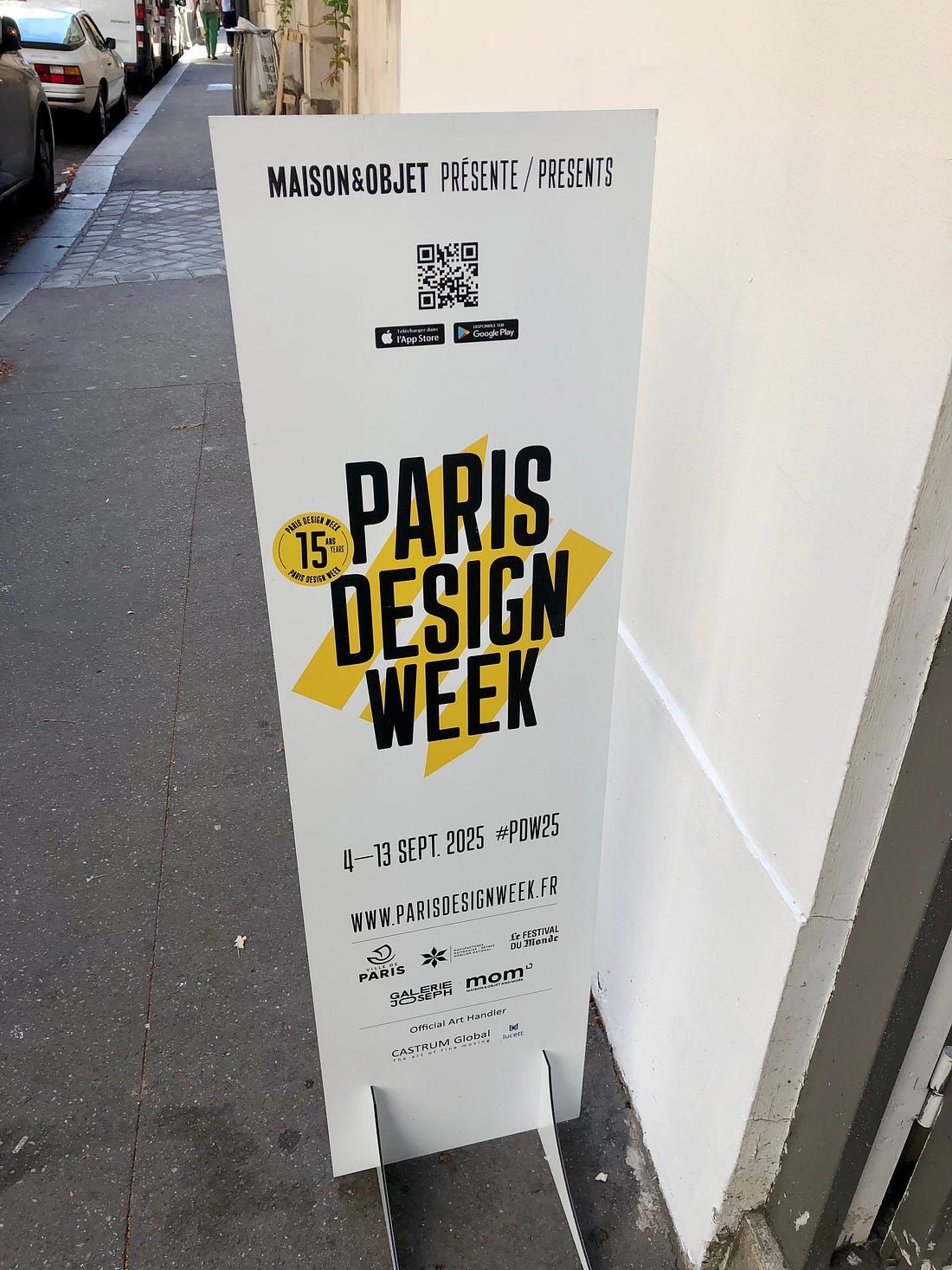
Walking into Delpire & Co’s exhibition “Bookends and Books” during Paris Design Week brought to life the dialogue between objects and imagination. Their exhibition, from 4 September to 1 November 2025, is deceptively simple: a celebration of the humble bookend. On display are striking bookend designs, like the sculptural pair of metallic cutouts of hands, raised as though catching the weight of the books, and the ceramic elephant candlesticks. Some are softer and tactile, like the shaggy, wool-textured shapes that blur the line between function and art, while others are rock hard, like the granite stones trapped in wooden frames. Bookends first appeared in the 1870s, at a time when private libraries were expanding. As more people collected books, the need arose to keep them upright and organized. Unlike shelves with built-in supports, bookends were flexible: move them and adjust them as they grow with the collection. Their main role, which hasn’t changed in 150 years, is to prevent books from falling over and slumping into disorder. There’s something poetic about their function. Bookends hold books and they also keep order. As a novelist, I’ve always loved the concept of bookends in storytelling – such as a prologue and an epilogue. They are more than structural devices to hold the story together as they are like the objects in this exhibition: they keep the story upright, in balance, and contained. The prologue opens the door to invite the reader in, offering a glimpse, setting, or teaser before the novel begins. The epilogue closes the door, making sure nothing collapses, leaving the reader with order, meaning, loose ends tied, and a sense of completion. When I walked through this exhibition, I felt that just as bookends hold volumes together, literary bookends hold a narrative’s weight together, ensuring that it doesn’t scatter into a jumble of unfinished sub-plots. Design bookends remind me of caring for books to prevent collapse. They do this, not by force, but by their very presence. Literary bookends remind me of boundaries, allowing expansion, but they also say: “Here is where this story begins. Here is where it ends.” Delpire & Co’s design exhibition was about the relationships between books, readers, and the simple, humble, decorative, or sculptural supports that give structure to both shelves and stories. Like the prologues and epilogues of a novel, design bookends are what make sure that everything in the middle stays strong.
Can’t see the whole article? Want to view the original article? Want to view more articles? Go to Martina’s Substack: The Stories in You and Me More Paris articles are in my Paris website The Paris Residences of James Joyce Rainy Day Healing - gaining ground in life You're currently a free subscriber to The Stories in You and Me . For the full experience, upgrade your subscription.
|
Thursday, 11 September 2025
The humble bookend: holding books together







Subscribe to:
Post Comments (Atom)

-
petrini1 posted: " For Week 7, the theme of genealogist Amy Johnson Crow...
-
The power pose of personal peace - with psychological benefits ... ͏ ͏ ͏ ͏ ͏ ͏ ͏ ͏ ͏ ͏ ͏ ...
-
A fall, a faceplant, and getting back up again … ͏ ͏ ͏ ͏ ͏ ͏ ͏ ͏ ͏ ͏ ͏ ͏ ͏ ...


No comments:
Post a Comment