Literary lessons from 10 French Nobel laureates… quotes from Nobel prize winners in literature … and good literary advice …
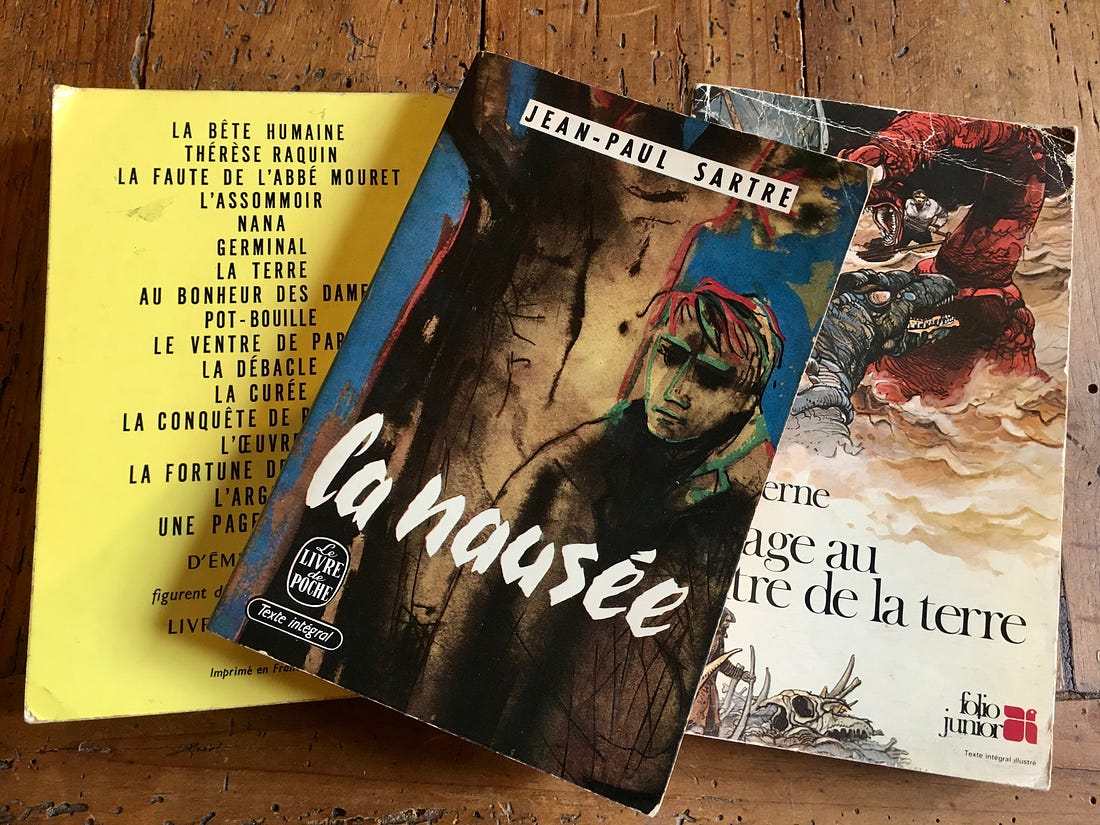
Sixteen French authors have won the Nobel Prize for Literature since the inception of the awards in 1901, the most from any country. Here are ten of the Nobel laureates who had something to say about their craft that made them Nobel-worthy and what literary creatives can learn from them. The first Nobel Prize in Literature recipient was Frenchman Sully Prudhomme in 1901 for his poetry. Prudhomme said, “Poetry is the harmony of the soul, singing to the universe.” From Prudhomme we learn that great literature resonates when writing a dialogue is to the world, not just an inward reflection. Anatole France was awarded the Nobel Prize for Literature in 1921. He said, “All changes, even the most longed for, have their melancholy; for what we leave behind us is a part of ourselves.” From Anatole France we learn that readers are drawn to the bittersweet truth that joy and loss often go hand in hand, so try to capture emotional paradoxes in your literary work. André Gide won the Nobel in 1947, stating, “It is better to be hated for what you are than to be loved for what you are not.” His lesson is that authenticity matters more than popularity. Write the book only the unique you can write, even if it defies trends or risks criticism. François Mauriac was awarded the literature prize in 1952. He said, “Tell me what you read and I’ll tell you who you are, is true enough, but I’d know you better if you told me what you re-read.” The lesson is that books we read more than once reveal our deeper truths. Think about how to craft stories that readers will want to re-read again and again. The 1957 winner was Albert Camus who said, “In the depth of winter, I finally learned that within me there lay an invincible summer.” From Camus, we learn that characters who endure hardship, yet reveal hope, reflect the timeless appeal of the human spirit. Although Jean-Paul Sartre declined the prize in 1964, he said, “Freedom is what you do with what’s been done to you.” His lesson is that conflict isn’t only external; conflict is about choice. Show how your characters respond to circumstances because it is their decisions that define them more than their fate. Claude Simon, Nobel winner in 1985, said, “The novel is not the relating of adventures; it is the adventure itself.” We learn from him that form is as important as content. Allow structure, language, and perspective to create a sense of discovery in your writing. J. M. G. Le Clézio, winner in 2008, said “Writing is a search for the meaning of life. It is the attempt to draw something from nothing.” His lesson for authors is to approach your work as if it were an exploration. The act of writing doesn’t mean that you have all the answers before you begin. The 2014 French Nobel Prize in Literature winner was Patrick Modiano. He said, “Writing is a way of trying to preserve fragments of memory.” His lesson is that small details matter. By capturing fleeting impressions, such as fragments of a place, a moment, or a gesture, you can create enduring resonance with your audience. Annie Ernaux, the 2022 French winner said, “I shall write to avenge my people. To avenge my race. To avenge my gender.” Her lesson is to be fearless in telling the stories that others avoid. Together, these French winners of the Nobel Prize in Literature demonstrate that great writing combines memory, universality, truth, authenticity, hope, details, form, and courage. *** *** *** *** *** *** *** *** *** *** *** *** *** *** *** The 16 French Nobel Prize in Literature winners are: 1901: Sully Prudhomme - for his poetic composition “which gives evidence of lofty idealism, artistic perfection and a rare combination of the qualities of both heart and intellect.” 1904: Frédéric Mistral – for “poetic production reflecting the native spirit of his people (Occitan language) and for philological work.”| 1915: Romain Rolland – for “lofty idealism … and the sympathy and love of truth with which he has described different types of human beings.” 1921: Anatole France – for “brilliant literary achievements, characterized … by a nobility of style, a profound human sympathy, grace, and a true Gallic temperament.” 1927: Henri Bergson – for his “rich and vitalizing ideas and the brilliant skill with which they have been presented.” 1937: Roger Martin du Gard – for the “artistic integrity and the depth of his novel cycle The Thibaults, among other works. 1947: André Gide – for his “comprehensive and artistically significant writing, which, with clear‐insight, expresses human problems in contemporary moral terms.” 1952: François Mauriac – for the “deep spiritual insight and the artistic intensity with which he has in his novels penetrated the drama of human life.” 1957: Albert Camus – for his “important literary production, which with clear-sighted earnestness illuminates the problems of the human conscience in our times.” 1960: Saint‐John Perse – for the “exalted lyrical writing which in a visionary figure gives poetic expression to the whole being of man.” 1964: Jean‐Paul Sartre – for “his work which, rich in ideas and filled with the spirit of freedom and the quest for truth, has exerted a far-reaching influence on our age.” (He declined the prize.) 1969: Samuel Beckett – Irish author living in France, for “his plays, novels and essays which introduced a profoundly different narrative impulse.” 1985: Claude Simon – for his “novel‐writing which combines the intensive and poetic qualities of language with the perceptiveness of the realist tradition.” 2008: J. M. G. Le Clézio – for “new departures, poetic adventure and sensual ecstasy, explorer of a humanity beyond and below the reigning civilization.” 2014: Patrick Modiano – for “the art of memory with which he has evoked the most ungraspable human destinies and uncovered the life-world of the occupation.” 2022: Annie Ernaux – for “the courage and clinical acuity with which she uncovers the roots, estrangements and collective restraints of personal memory.”
Can’t see the whole article? Want to view the original article? Want to view more articles? Go to Martina’s Substack: The Stories in You and Me More Paris articles are in my Paris website The Paris Residences of James Joyce Rainy Day Healing - gaining ground in life You're currently a free subscriber to The Stories in You and Me . For the full experience, upgrade your subscription.
|
Friday, 3 October 2025
Literary lessons from 10 French Nobel laureates





Subscribe to:
Post Comments (Atom)

-
petrini1 posted: " For Week 7, the theme of genealogist Amy Johnson Crow...
-
The power pose of personal peace - with psychological benefits ... ͏ ͏ ͏ ͏ ͏ ͏ ͏ ͏ ͏ ͏ ͏ ...


No comments:
Post a Comment