Finnigans Wake – a challenge for the president to read – aloud… a book few finish and almost no one masters …
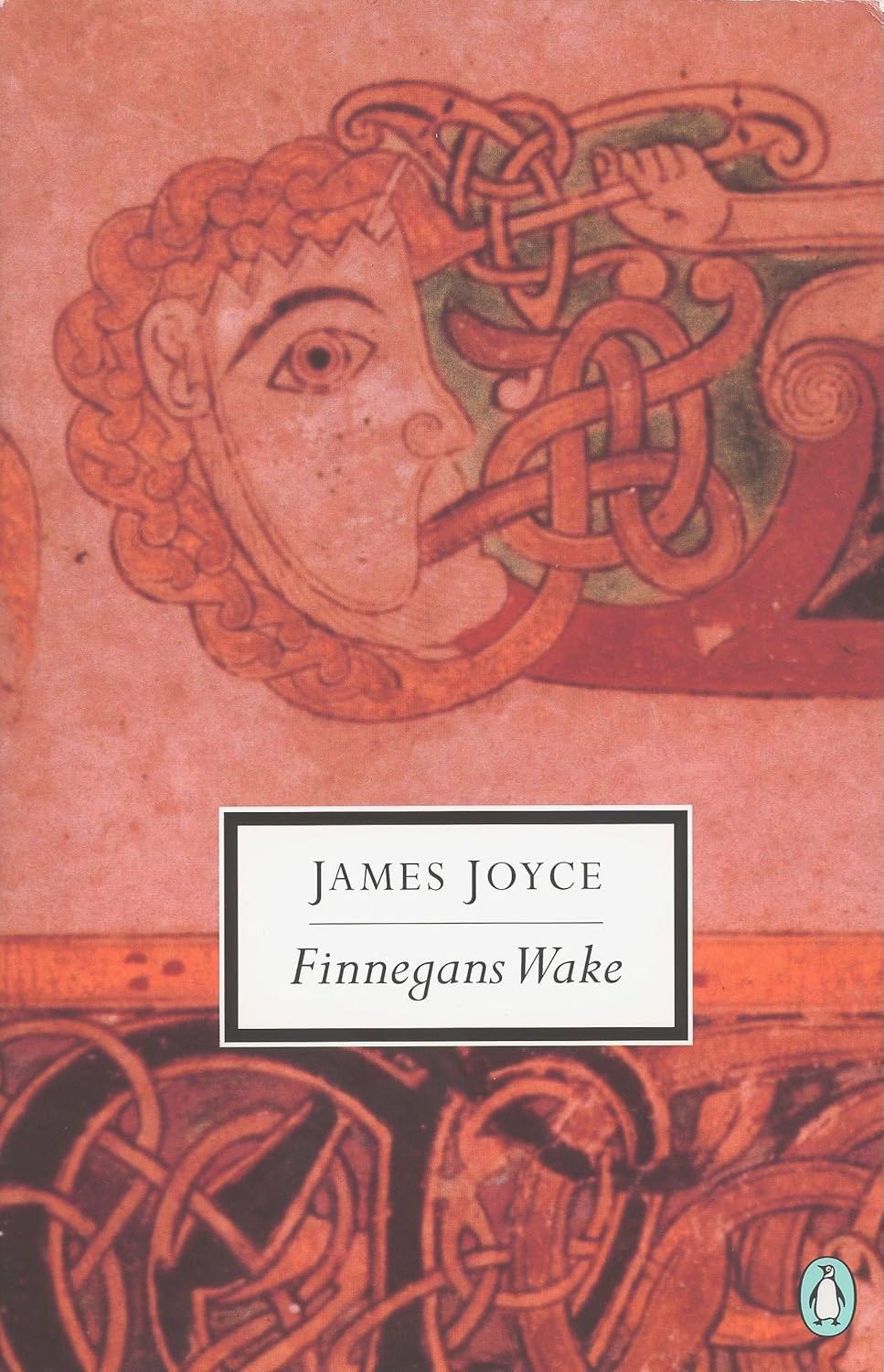
I have a long relationship with James Joyce novels, despite the difficulty in reading them, let alone understanding them. Irish author James Joyce (1882-1941) is best known for his 1922 novel Ulysses, set in Dublin in 1904, and his 1939 novel Finnigans Wake – both devilishly difficult to read. In the “By the Book” section of the New York Times International Edition, 24 January 2026, John Sayles, American author of the screenplay for the 1981 film Howling, was asked which book he would require the president to read. His answer was unexpected and oddly precise. He said Finnegans Wake by James Joyce, and added, “but he has to read it out loud in front of an audience in one go. No bathroom breaks.” At first glance, his remark about Finnigans Wake seems mischievous, but there is something else at play. Sayles didn’t choose Ulysses, Joyce’s more famous difficult novel, or a political classic, or a book of history. He chose the most radical literary experiment of the twentieth century: a book many people open, few finish, and almost no one masters. Finnegans Wake is regarded as a book that refuses to be conquered, cannot be dominated, nor efficiently summarized. It is not a novel in the ordinary sense. It has no stable language, no single plot, no clear beginning, and no clear end. It is a dense book of invented words, multilingual echoes, myths, jokes, and dream logic. Student, scholar, or president will stumble over it, mispronounce words, lose the thread, and be completely mystified by it. Why did John Sayles insist that it be read out loud? James Joyce himself insisted that Finnegans Wake is meant to be read aloud, not just seen but heard. The book is full of puns that only reveal themselves in sound. Words are a confusion of languages, and sentences act like music. Making sense of it comes from its rhythm, not its logic. To read it silently is to encounter difficulty. To read it aloud is to encounter vulnerability. You must slow down. You must breathe. You must commit to sounds you don’t fully understand. You must allow your tongue and lips just say what you see. Reading Finnegans Wake aloud becomes a performance piece, not an interpretative one. Readers must be willing to be heard struggling. Yes, struggling. Tripping over words. Sounding like gobbledygook. Why did John Sayles insist that it be read in one go? No breaks. No editing. No surrender. No retreat. He suggested one read through because it would demonstrate endurance. More painful than running a marathon. Finnegans Wake loops, echoes, collapses, resurrects itself. It famously ends mid-sentence and flows seamlessly back into its own beginning. To read it straight through is to experience time differently – to be fatigued and end up finding some sense of beauty in the words. It is not about “getting the reading right.” It is about staying with what you don’t fully understand. The reading demands patience, humility, stamina, and a tolerance for ambiguity. To read the whole book aloud would be an achievement of persistence with uncertainty and lack of clarity. It has nothing to do with a show of intelligence, education, or even literary taste. Finnegans Wake is a book for active listeners, where they must strain to hear three words for every twenty words spoken, to make up meanings rapidly, and to make their own sense of the sounds that have no relationship with actual words because most are made up, fictitious, pretend, and just utterances of poetic noises. Perhaps that is why this particular book, of all books, was suggested for the presidentto read. Sayles may be suggesting that reading this book aloud is not a display of power, but an act of uncertainty and folly. Here’s an example of a few sentences: Drop in your tracks, babe! Be not unrested! The headboddylwatcher of the chempel of Isid, Totumcalmum, saith: I know thee, metherjar, I know thee, salvation boat. For we have performed upon thee, thou abramanation, who comest ever without being invoked, whose coming is unknown, all the things which the company of the precentors and of the grammarians of Christpatrick’s ordered concerning thee in the matter of the work of thy tombing. Howe of the shipmen, steep wall! Hear me read an excerpt from Finnigans Wake. 
Can’t see the whole article? Want to view the original article? Want to view more articles? Go to Martina’s Substack: The Stories in You and Me More Paris articles are in my Paris website The Paris Residences of James Joyce You're currently a free subscriber to The Stories in You and Me . For the full experience, upgrade your subscription.
|
Monday, 26 January 2026
Finnigans Wake – a challenge for the president to read – aloud







Subscribe to:
Post Comments (Atom)

-
petrini1 posted: " For Week 7, the theme of genealogist Amy Johnson Crow...
-
… personal protection vs environmental protection – is that the issue? … ͏ ͏ ͏ ͏ ͏ ͏ ͏ ͏ ͏ ...


No comments:
Post a Comment